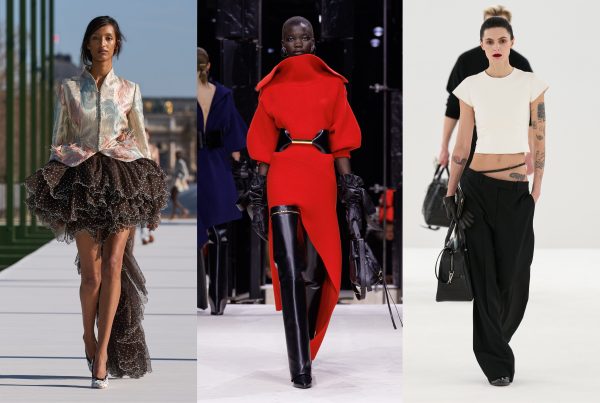
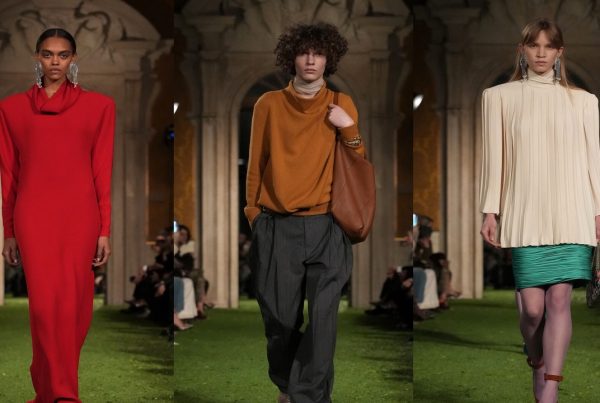
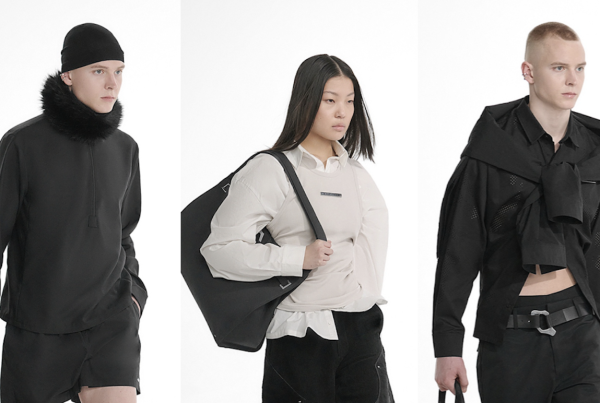
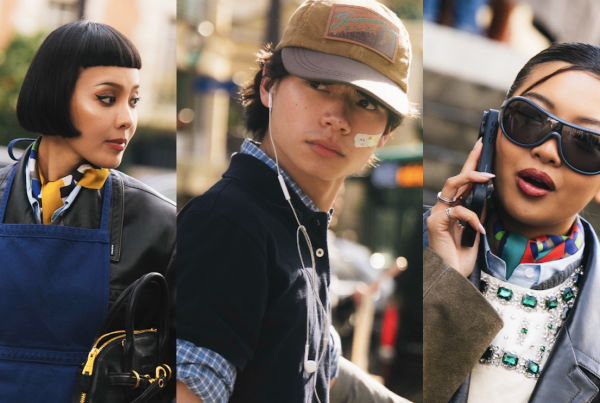
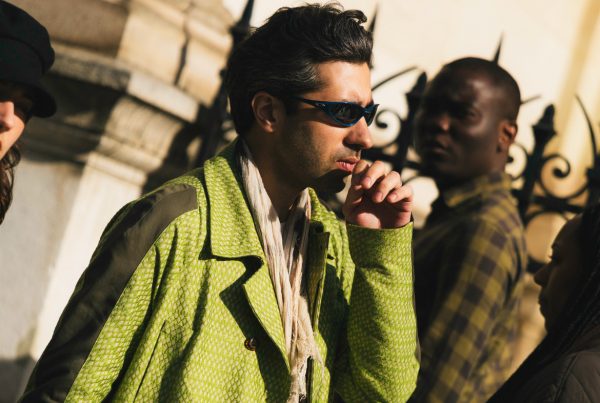




Our top picks from London Fashion Week's Fall/Winter 2026 showcases.
King Charles III and Little Simz in the same front row. Yes, you read that right. Tolu Coker opened FW26 with that kind of authority, a room buzzing with legacy and soundtracked in real time, setting the tone for a week that was about energy, not excess. London reminded us why it is still the capital for fashion that thinks as much as it moves.
FW26 was not about spectacle for spectacle’s sake. It was Joseph quietly recalibrating at Tate Modern, coats and knits cut with sculptural intent. It was Simone Rocha threading Irish folklore through sneakers and shearling, athleticism meeting story. Conner Ives asked whether the party is really over, channelling 1930s Berlin club life into gowns that were equal parts glamour and tension. TOGA made fabrics fold, buckle and collide, a controlled chaos that felt alive. And Chet Lo brought the neon-lit streets of Hong Kong into a London ballroom, letting the audience move through it, sip bubble tea, touch the clothes and inhabit the scene.
Across the week, FW26 was about clarity over flash, restraint with personality and tension in every silhouette. It was London leaning into what it does best: layered, intelligent, alive.
Here are PAUSE’s hand-picked highlights of the week.
Burberry FW26: The Night Shift
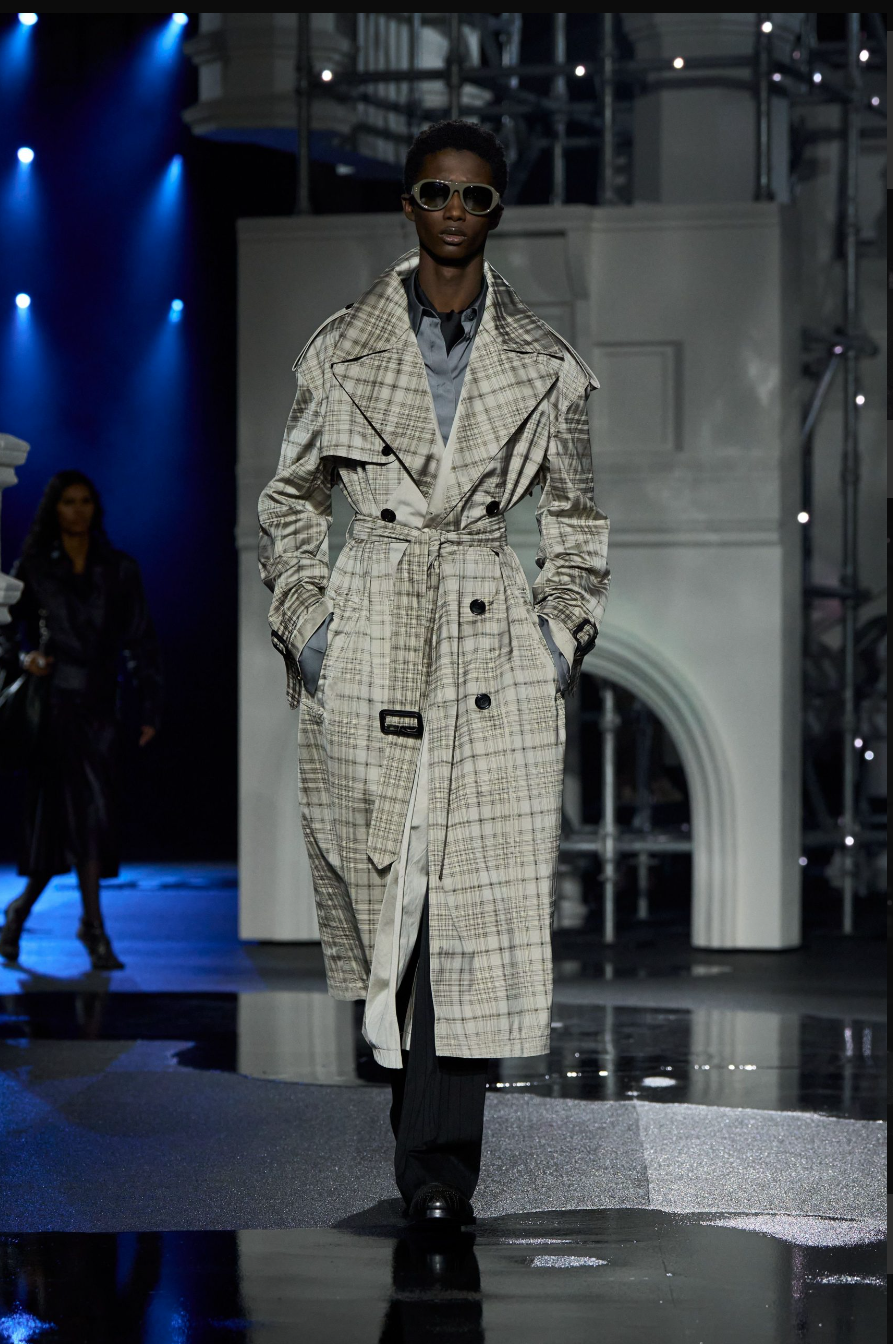
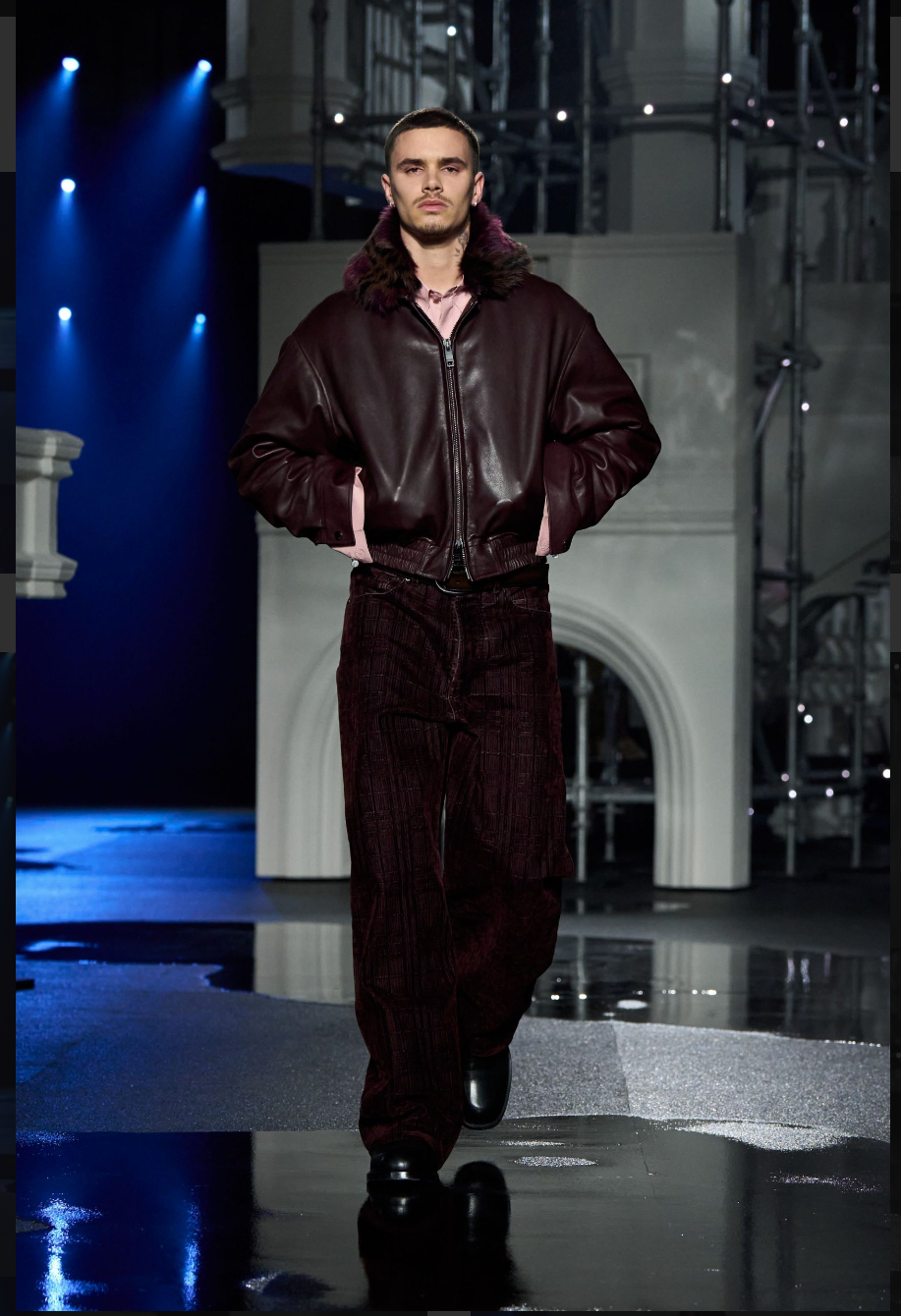
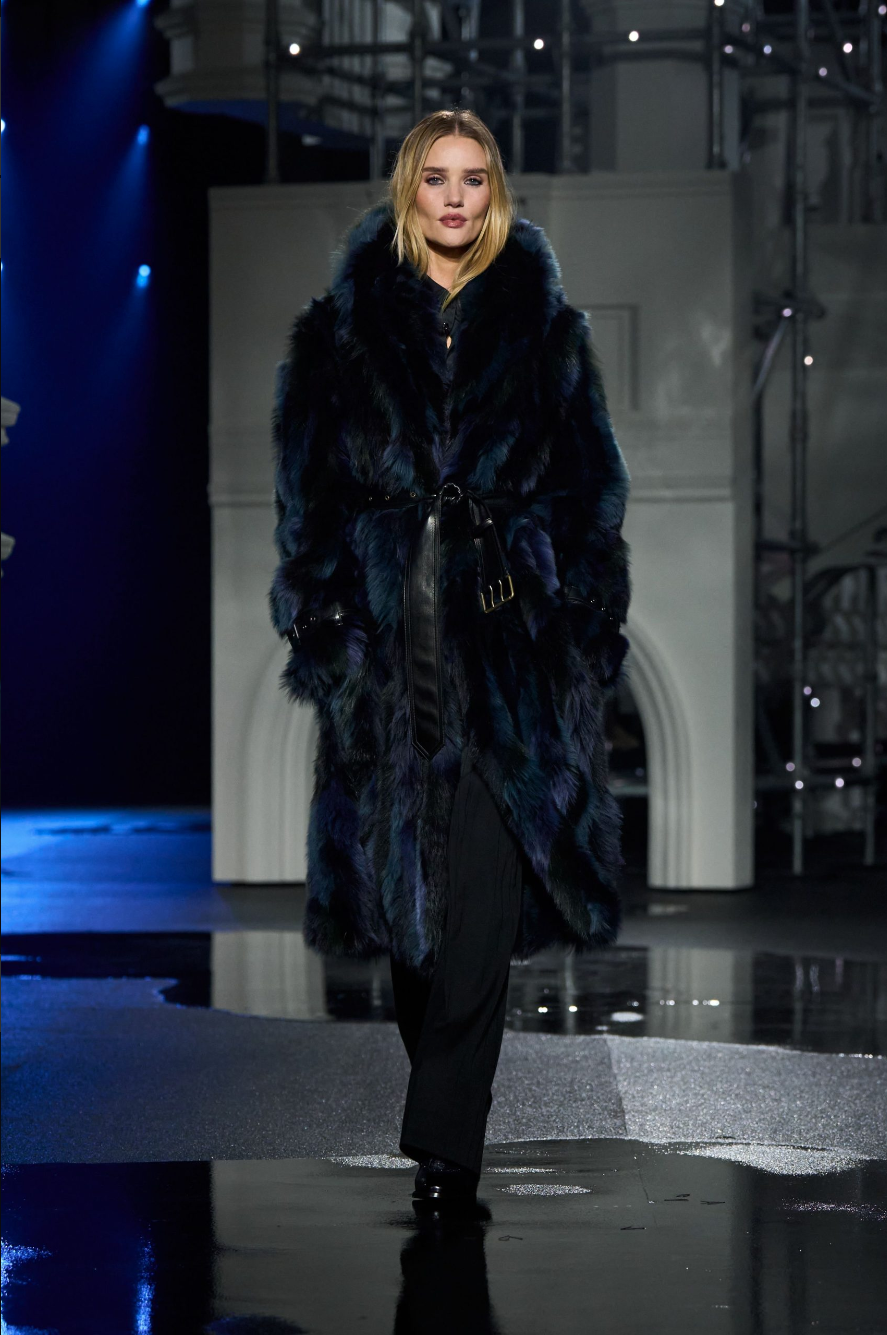
Burberry is “so back.” Daniel Lee pivoted from countryside romanticism to nocturnal London, staging the show against a high-gloss Tower Bridge set that felt cinematic but self-aware. FW26 leaned into the codes people actually associate with the house: trench coats recalibrated for evening, puffer jackets with presence, sharp bombers, checked fleece layered with intent. Less heritage cosplay, more lived-in London.
Outerwear, still the backbone, carried the collection. Silk poplin trenches skimmed the body, lambskin bombers felt lean, shearling was handled with restraint. The palette moved with confidence, grounded in deep city tones rather than pastoral nostalgia.
The casting cemented the mood. Romeo Beckham and Rosie Huntington-Whiteley walked, while the soundtrack from FKA twigs and Benji B rooted the show firmly in London’s creative ecosystem. Lee isn’t rewriting Burberry. He’s tightening it, familiar signifiers stripped of excess and placed back in the city they belong.
Simone Rocha FW26: Reworks Romance Through Sport
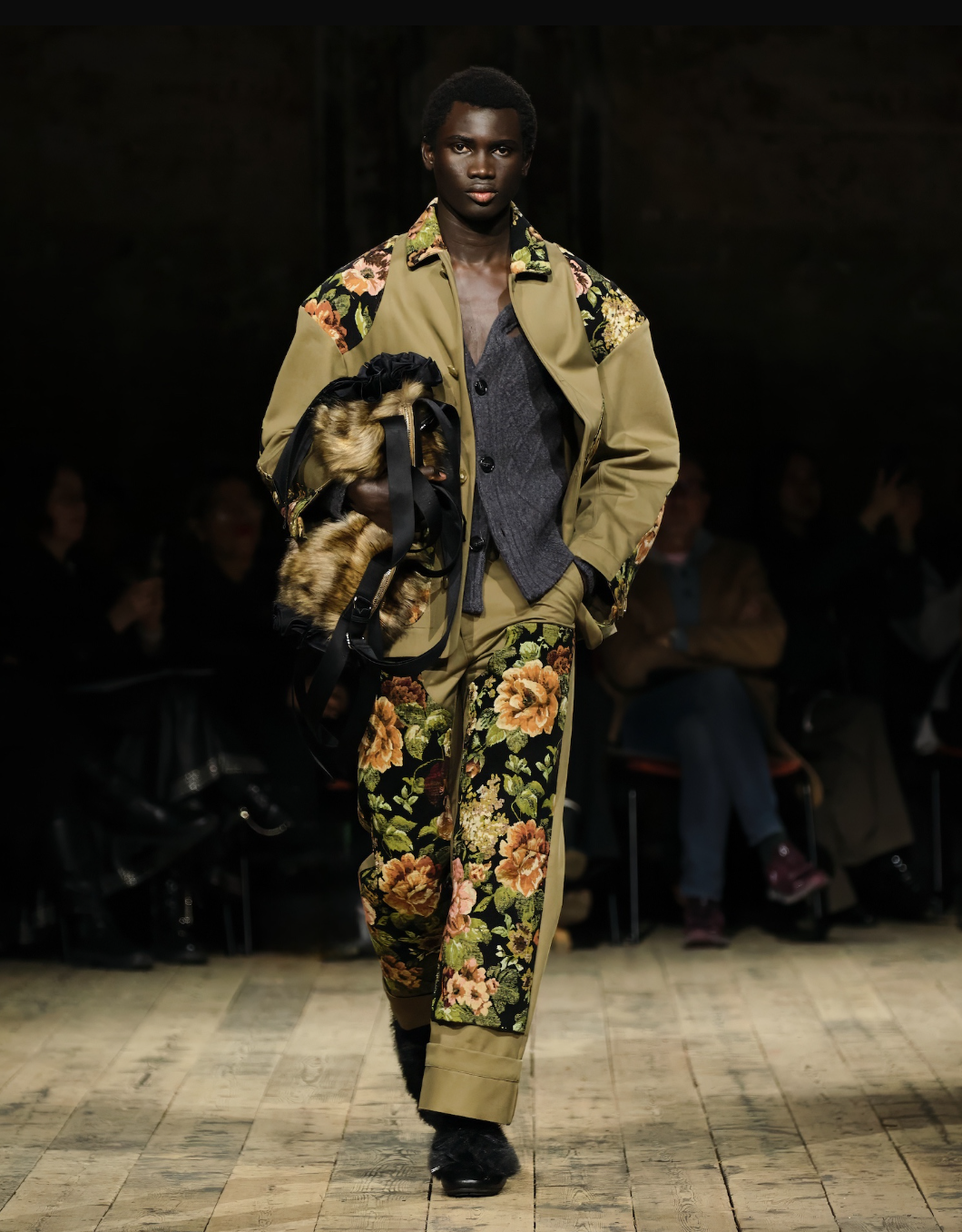
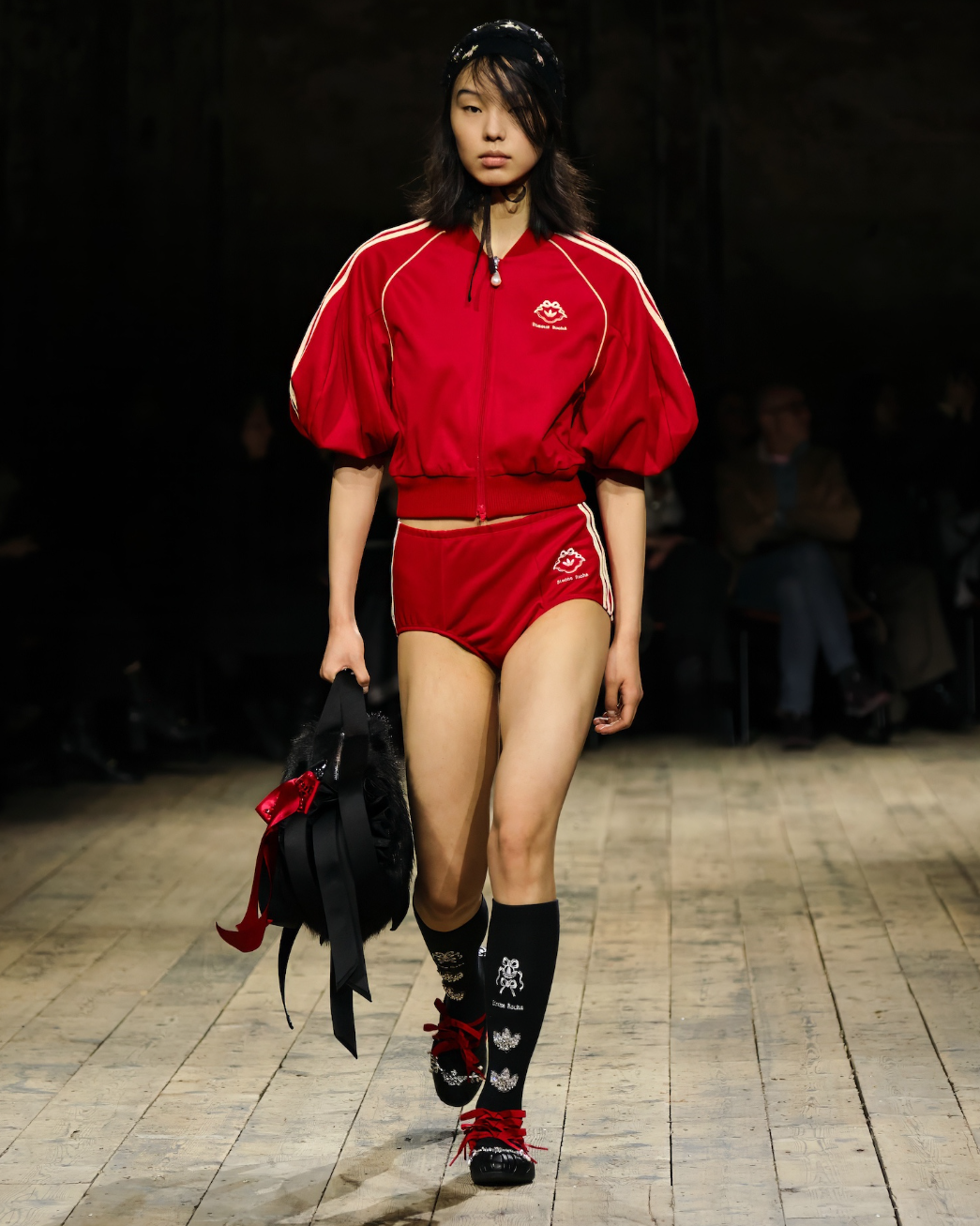
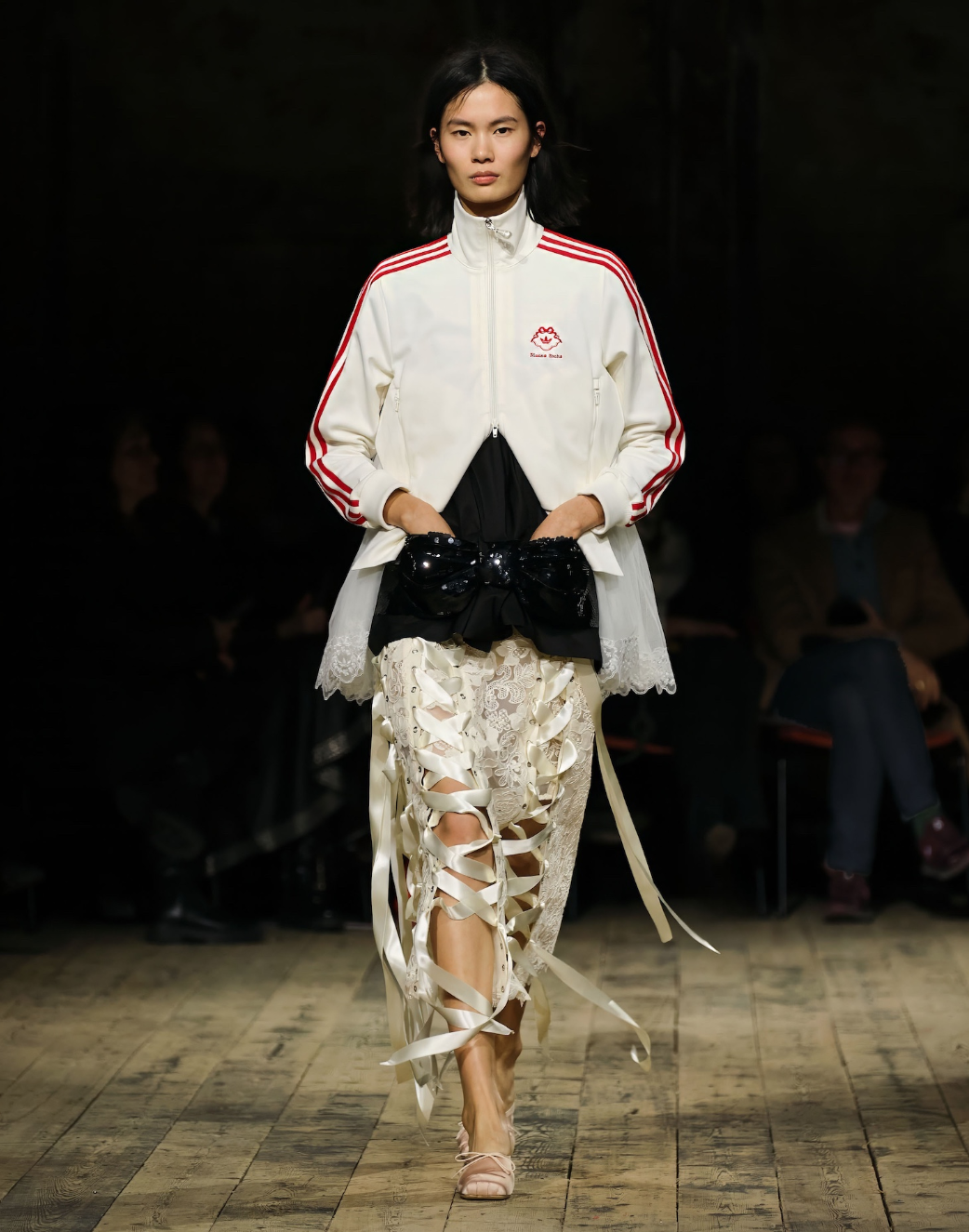
Presented in the round at Alexandra Palace, Simone Rocha’s FW26 unfolded like a story you half-know, the kind of Irish myth you absorbed in childhood. Drawing on Tír na nÓg, Rocha explored naivety and return, fantasy and consequence. As an Irish designer in London, that tension felt especially resonant.
The collection moved in chapters. Opening looks leaned on familiar codes: sheer tulle, tea dresses edged with lace, pearls tracing collars. But this season there was grounding: boxy wool tailoring, equestrian references, harness straps, sturdy boots, tactile shearling, softness interrupted by structure.
Colour drew from Jack B. Yeats’ painterly tones: moss, oxblood, muted gold, landscape over costume. Then came the Adidas Originals collab: stripes down lace-trimmed sleeves, track jackets over tulle skirts, silk sport shorts, bow-adorned trainers. Sport sharpened the mythic narrative. Rocha’s femininity is never sentimental, here it’s precise, poetic, and pointed.
Tolu Coker: Built From Memory
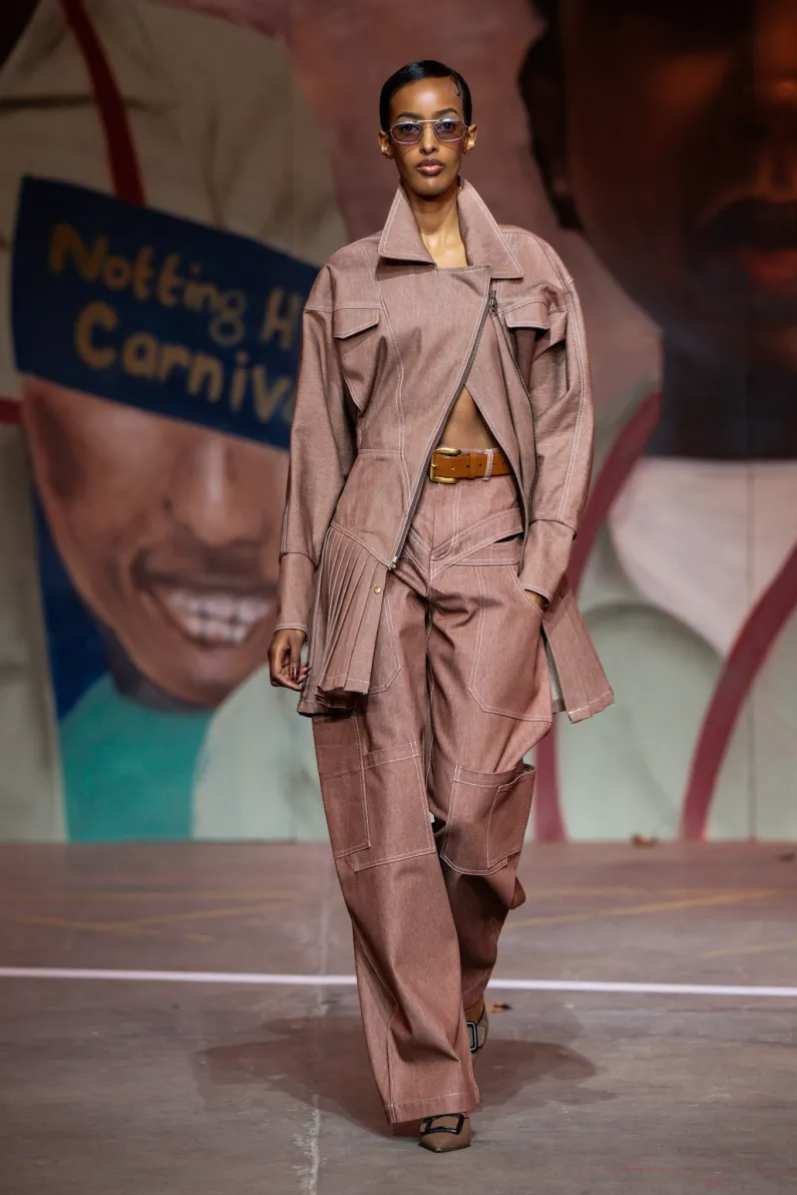
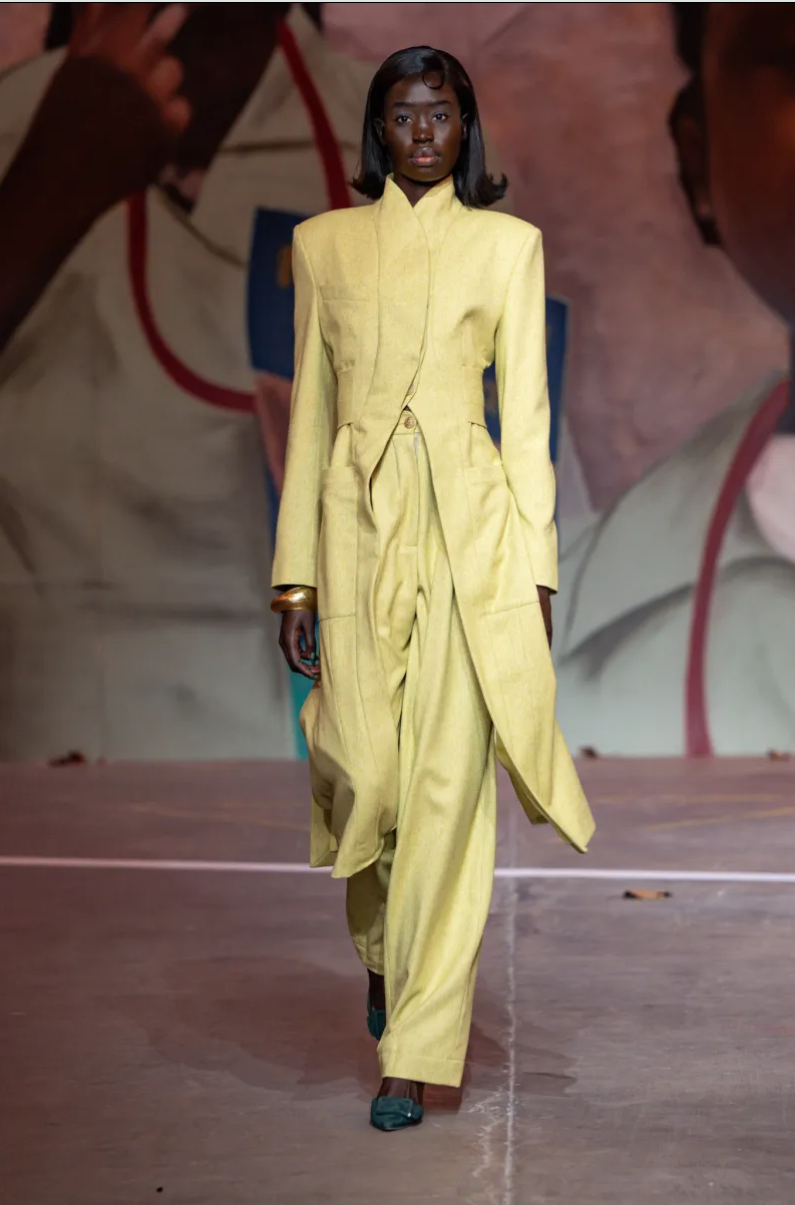
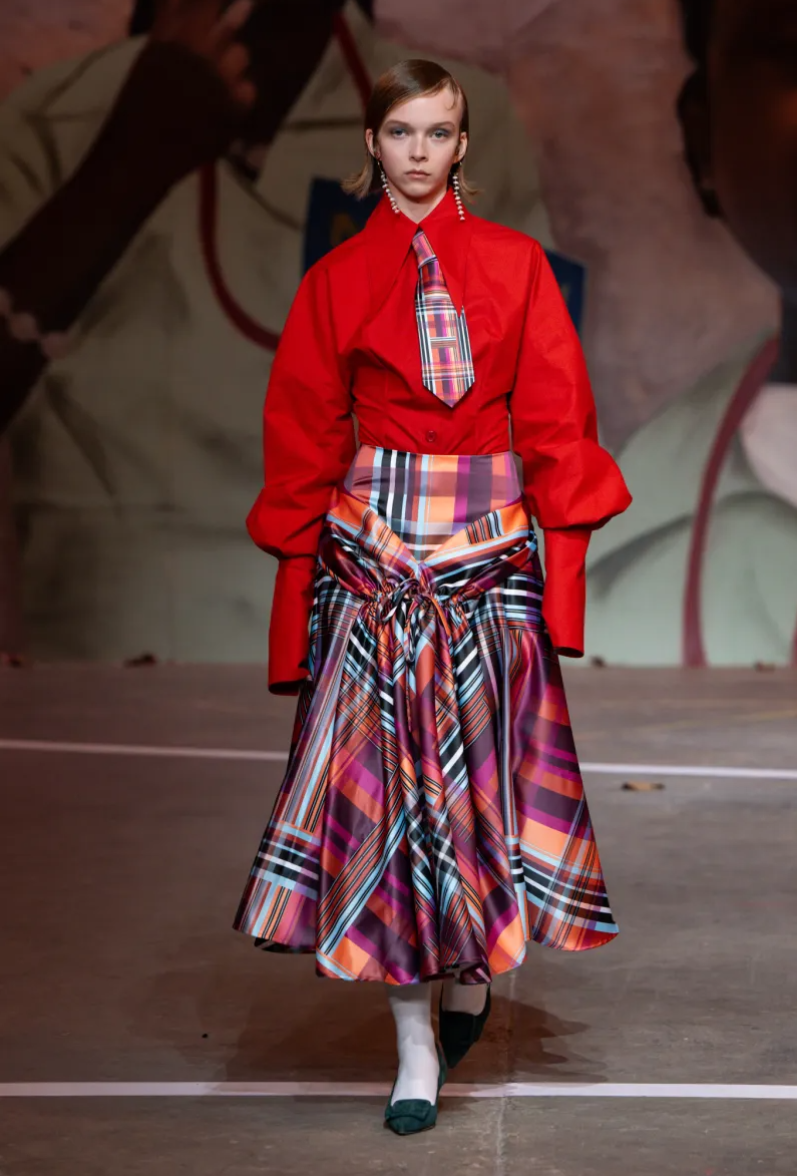
If there was any doubt about Tolu Coker’s London status, FW26 erased it. King Charles III and Little Simz in the same room, Simz live on the soundtrack, and you know the city is watching.
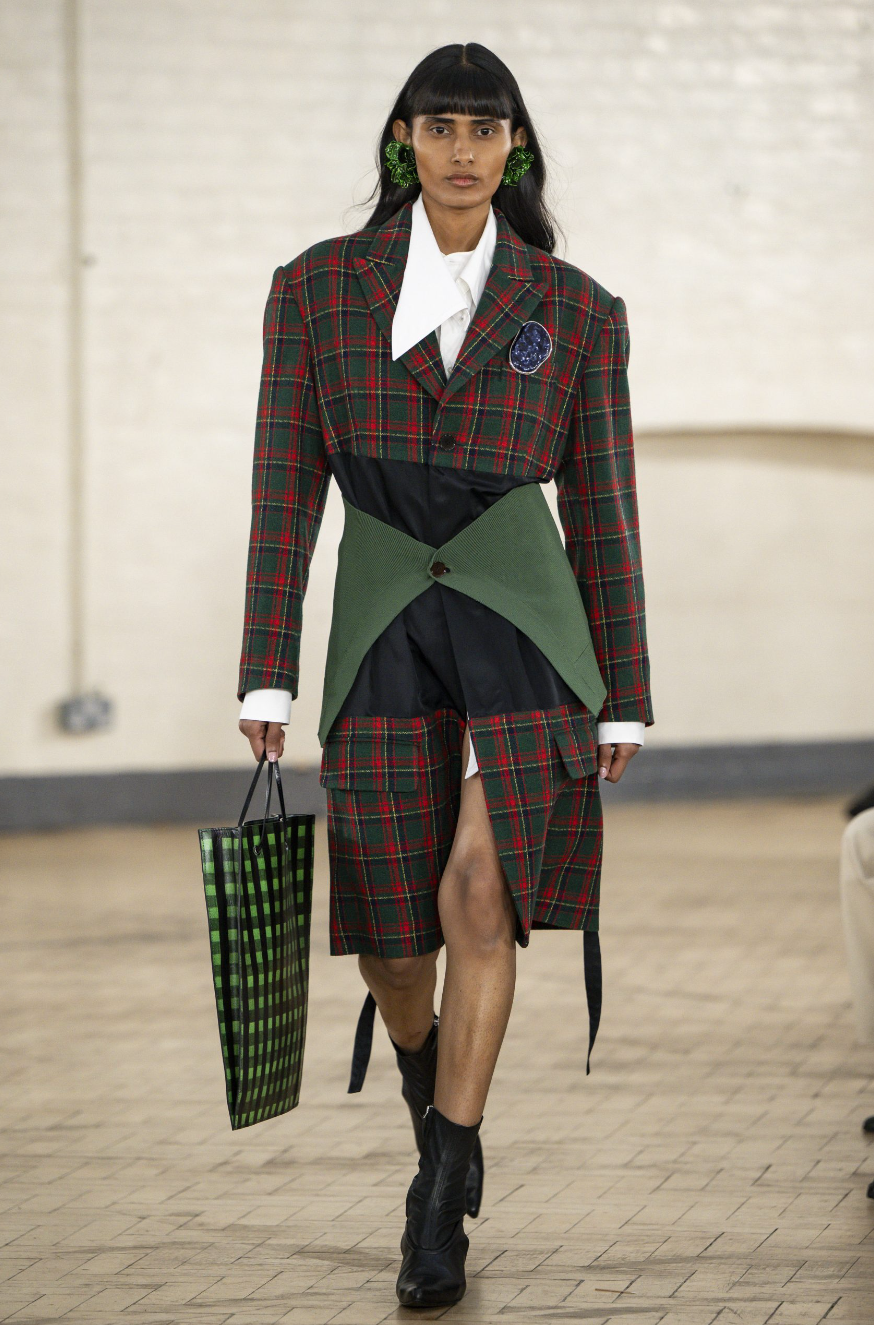
Survivor’s Remorse reframed Coker’s West London upbringing as foundation, not footnote. Preppy tailoring came razor sharp: sculpted shoulders, elongated coats, high-buttoned blazers worn with intent. Plaid and tartans felt familiar but never costume. Think “Sunday Best” recalibrated.
Coker’s strength is discipline. Cuts are clear, proportions restrained. Sentiment is held in place by structure. Softness appears – in a blouse, a sleeve curve – but is protected. The tension? Social mobility: what you carry when you make it out. Clothes built for rooms not designed for you.
TOGA FW26: Pull, Crumple, Pressed
A siren echoes across Yeomanry House, but this isn’t a drill. TOGA’s FW26 reminded us that fashion can be alive, kinetic, even anarchic.
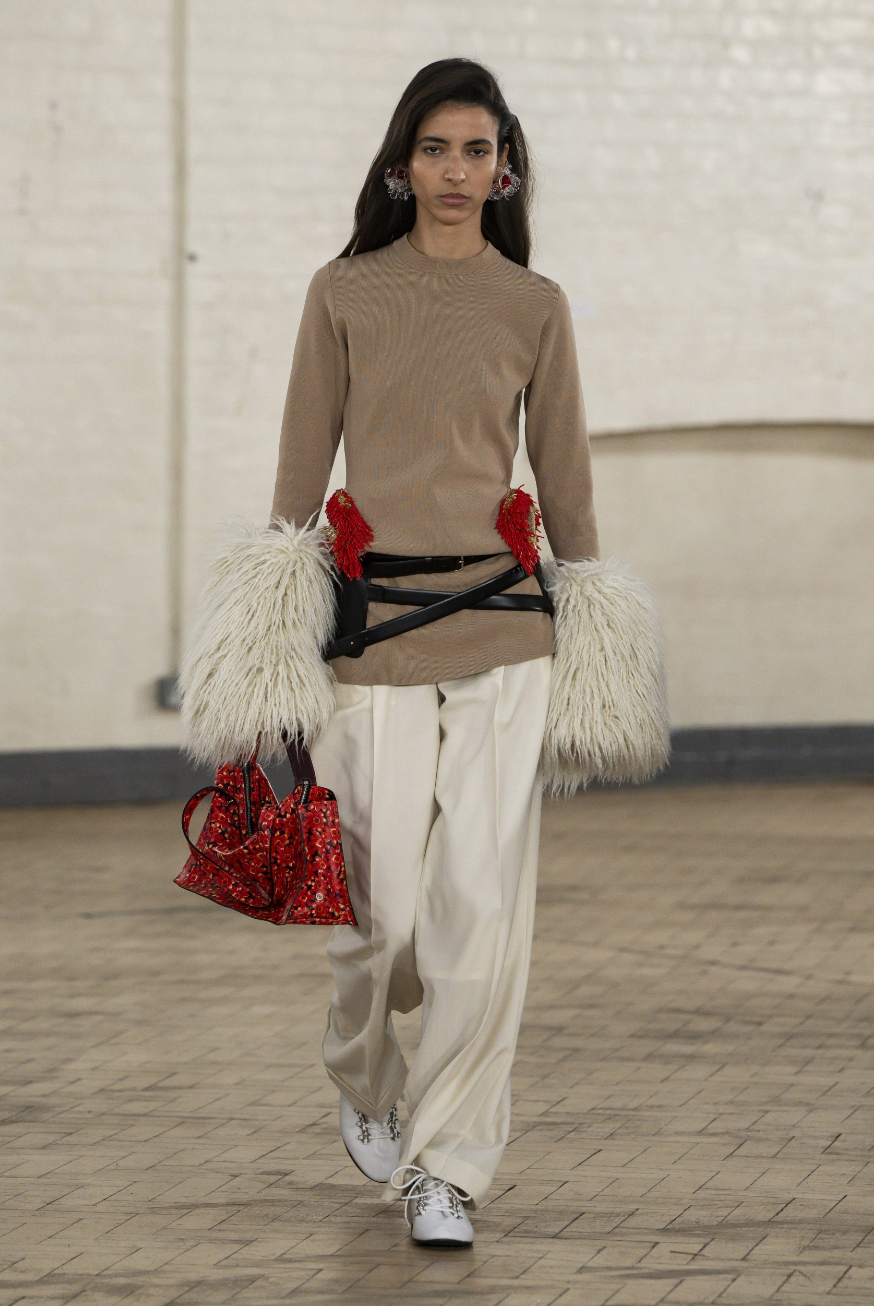
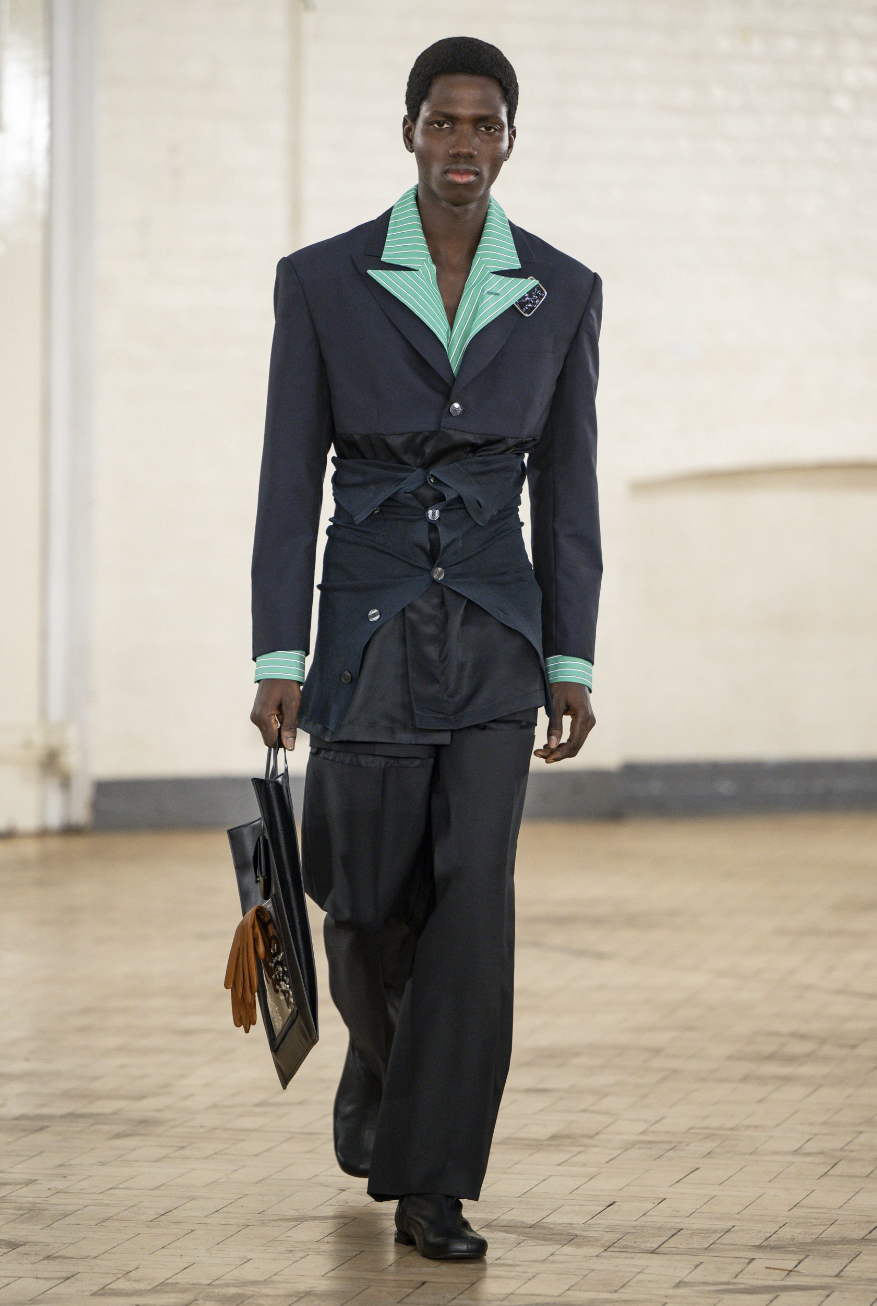
Furuta’s collection moves with the city’s pulse. Fabrics stretch, buckle, fold; tailoring deconstructs itself. Cropped blazers peek from oversized collars, trousers hint at cutouts, cardigans layered and scrunched. Nothing stays still; everything has purpose.
Contrasts define the collection: silk, leather, wool meet synthetics; faux fur arm-warmers against tailored suits; sheer dresses flirting with structure. Black, white, grey dominate, but bursts of cobalt, palm, ember keep it lively. Molten-stone brooches and sequins sparkle unexpectedly. TOGA isn’t quiet refinement; it’s controlled chaos, Tokyo energy meets London urgency!
Joseph FW26 Marks a Quiet Reset at LFW
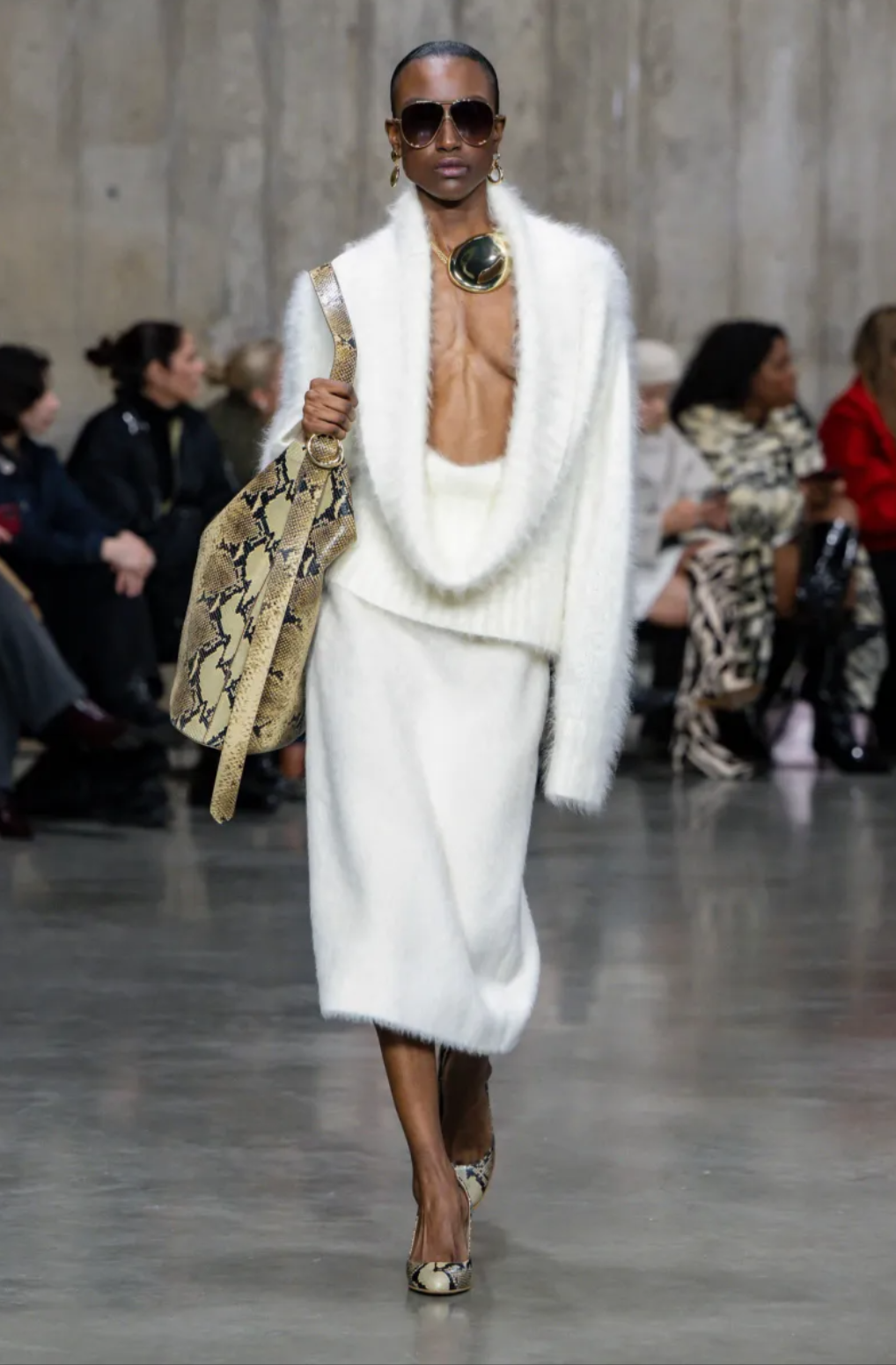
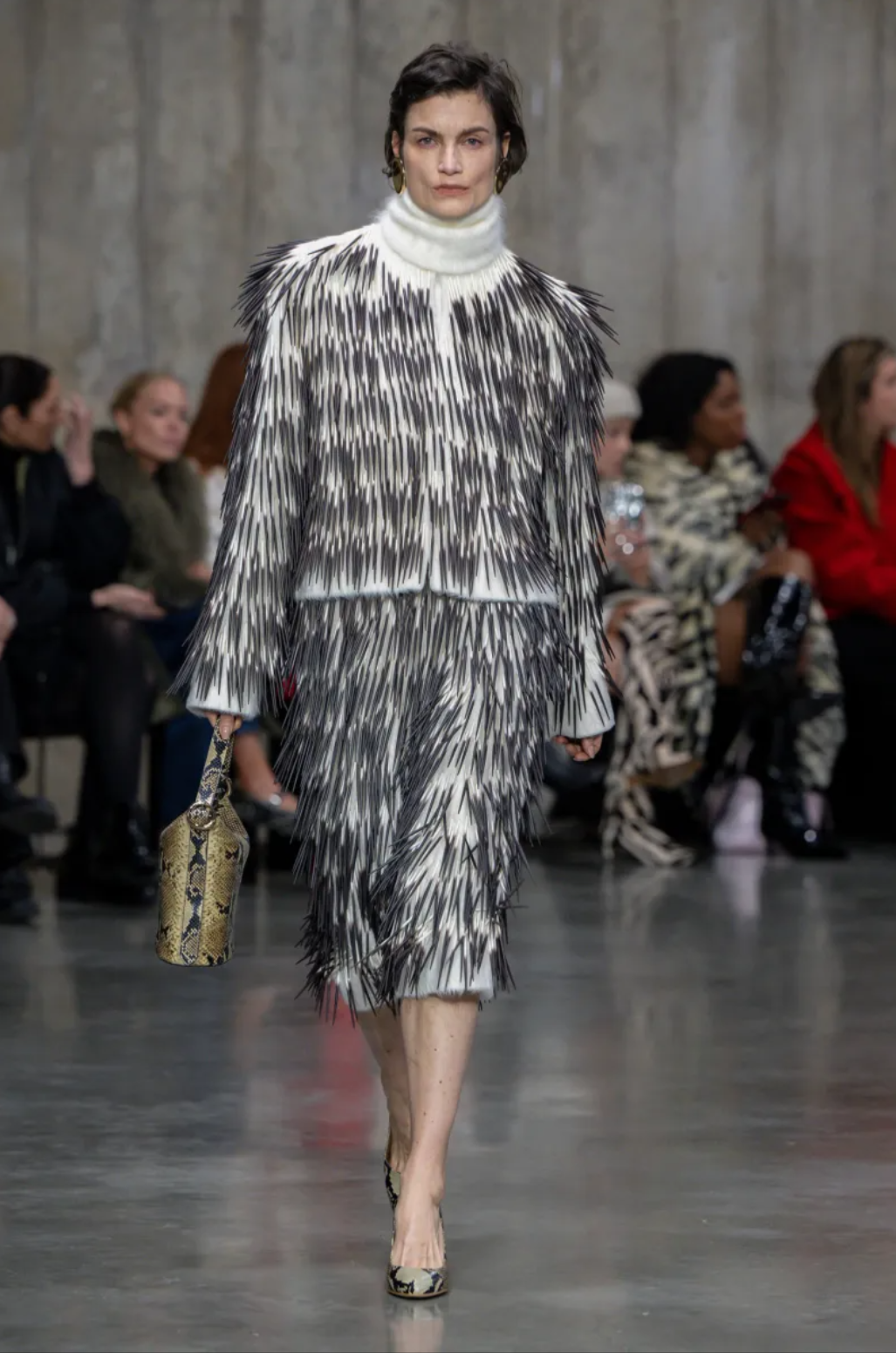
After nearly a decade, Joseph returned to LFW, not with theatrics, but control. Tate Modern provided the industrial backdrop. No gimmicks. No logos. Just product, sharpened.
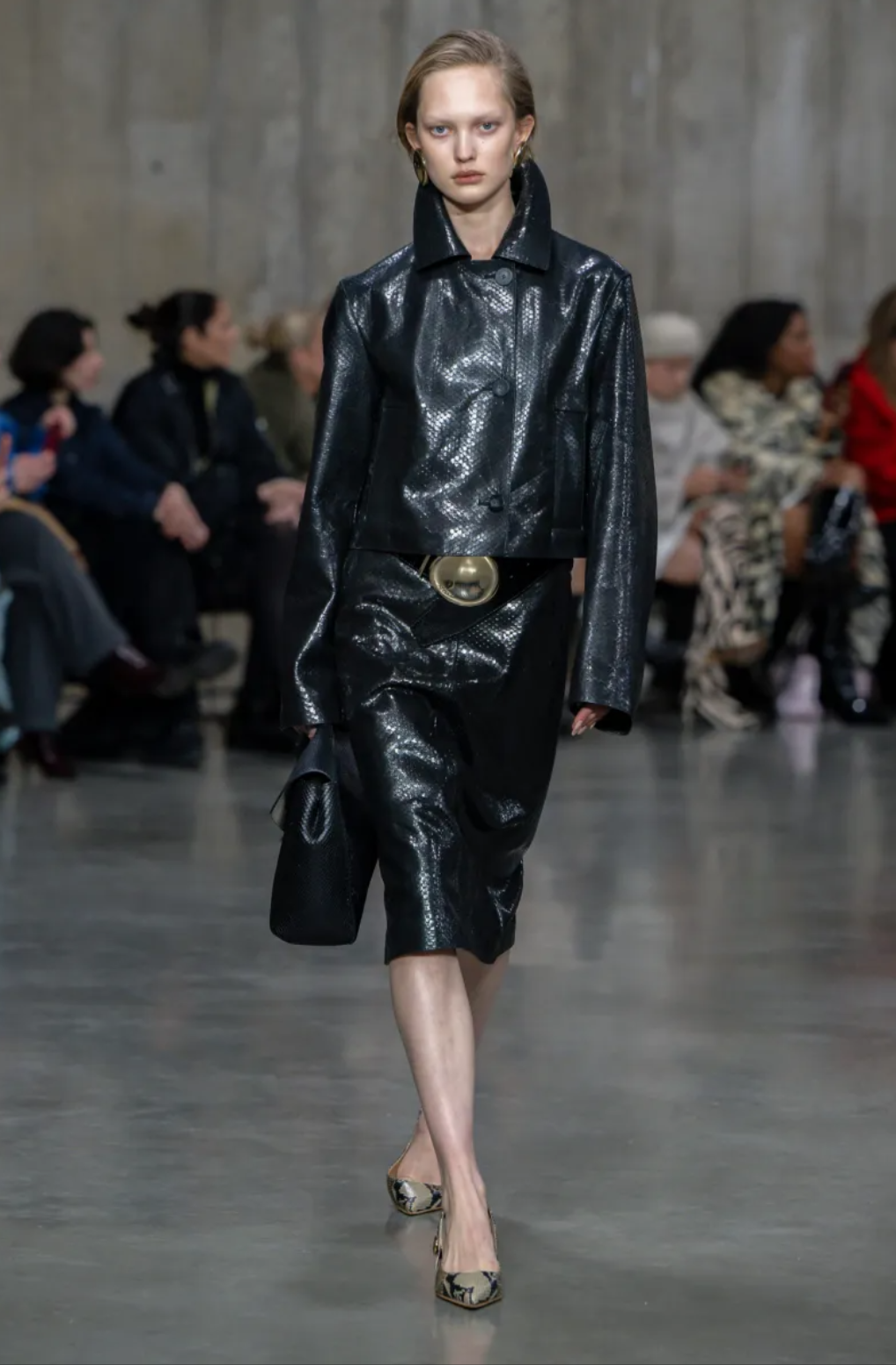
Mario Arena’s debut leaned into precision: long coats cut like sculptures, capes that moved with weight but never heaviness, oversized knits softened with fringe. Tailoring felt sculpted rather than styled. Accessories followed suit: exaggerated bags, molten-gold hardware, chunky jewellery. All considered.
Snake print slipped in. Neutrals dominated. Nothing screamed for attention, but everything felt confident. Joseph’s return wasn’t nostalgia. It was discipline, a reminder that in a market obsessed with spectacle, restraint still has power.
Chet Lo Turned FW26 Into a Hong Kong Night Market
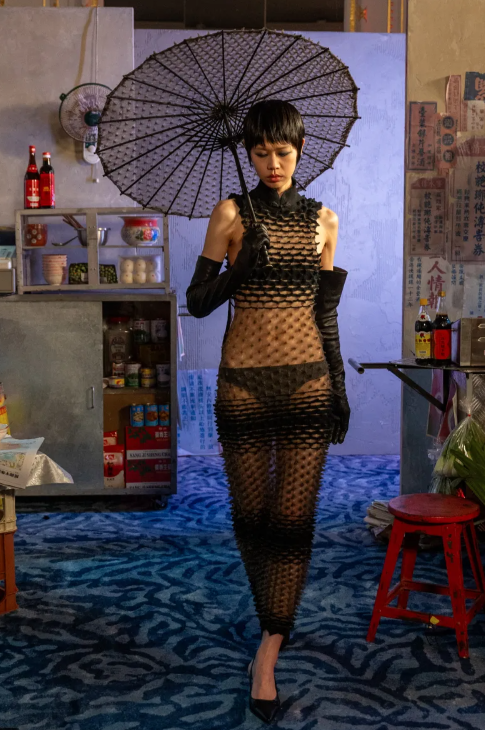
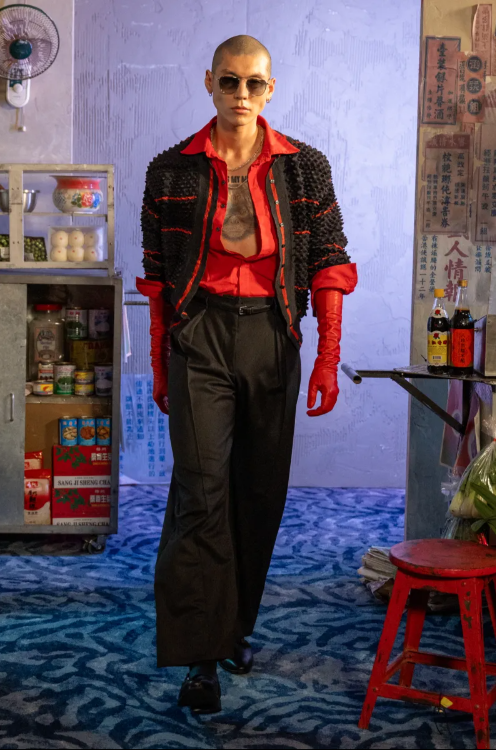
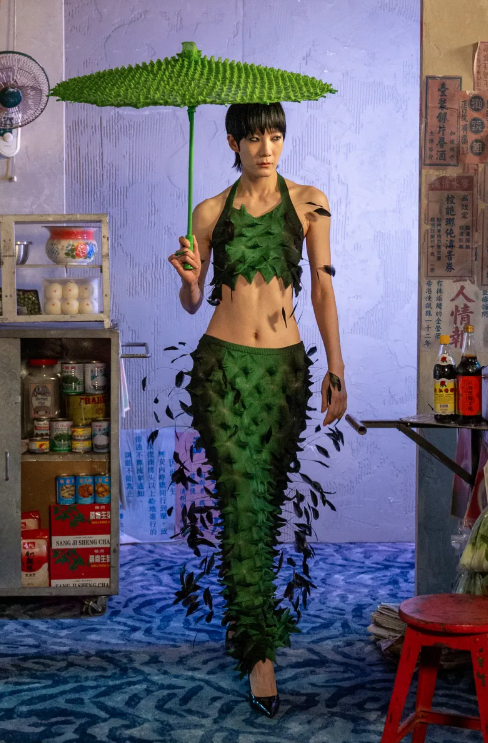
Chet Lo rebuilt Hong Kong’s night market inside the Mandarin Oriental. Guests could shop from stalls, bubble tea on every seat. Spikes remained but refined; silhouettes sleeker, knits bristling with control.
Neon brights clashed against black, feathers erupted, parasols reimagined. It was co-ed, playful, sensual. Not to mention, the Capri-Sun pouch collab added further nostalgia and social energy. Beyond the spectacle, proceeds supported the Asian People’s Disability Alliance, while immersive audio tech made it accessible to blind and low-vision audiences. Inclusion and innovation coexisting.
In a season heavy with concept, Chet Lo reminded us that shows can be lived, not just watched.
Conner Ives FW26: Is the Party Really Over?
If escapism is the mood, Conner Ives leaned in fully – but with a question mark. Eldorado pulled from 1930s Berlin club culture, filtered through Art Deco precision. Halter-neck gowns, spiral-cut dresses, bridal deadstock silk organza – glamorous, slightly unsettled.
The heart of the show? Freedom of expression, particularly around gender. Casting inclusive, intimate, celebratory. Ives understands contradiction: beauty and anxiety, hedonism and awareness. FW26 didn’t declare the party over – it asked how we’ll know when it is.