

















From Walsall to The World.
“Forever Ends Someday”. Sit with that for a moment and reflect on the terms duality. Bittersweet in feel, evocative of deep thought, yet the statement remains immensely powerful. With that in mind, there could hardly be a more fitting debut album title for Wesley Joseph to arrive with. The boy is back, and for fans who have noticed the void he has left for the last three years, the latest album ‘Forever Ends Someday’ is a beautiful culmination of everything that we love about him.
Throughout the album, hard-hitting, cinematic production lays a rich foundation for the Walsall-born artist to layer his signature flair and colour. It’s widely known that Wesley Joseph has been working on this project for a while, and him being the perfectionist he is, he has made us wait and boy, oh boy, is it worth it. The payoff speaks for itself.
Remember 2020? It goes without saying that many of you will, but this was when Wesley Joseph delivered his first song, and fan favourite ‘Imaginary Friends’, which was closely followed by a stream of releases that excited rap fans in the UK, because there was something so entirely different on our playlists. Ghostin? Hit. Martyrs? Hit ‘Thrilla’? Hit. By 2021, his debut EP ‘ULTRAMARINE’ had firmly established his voice, and in 2023, GLOW marked a clear elevation, with defining tracks like ‘MONSOON’ and ‘SUGAR DIVE’.
Fast forward to today and Forever Ends Someday is the icing on the cake for Wesley Joseph, an artist that meticulously works on his craft, sound and artistry. So, if anyone deserves the plaudits, it’s fair to say that he does. Across the album, Joseph pulls from the influences that have shaped himwhether that be soul and R&B from early on, the constant presence of rap, and the electronic and psychedelic records he found himself through hours online as a teenager.
PAUSE caught up with Wesley Joseph at a moment of transition, where something is clearly shifting, and we’re all listening.
PHOTO CREDIT: Ollie Heffernan
It’s nice to see you back, how have the last 3 years been?
It’s been good and bad in ways, but all of it contributed to the music. Overall, it’s been an intense time of growth, reflection, and work. I’ve been working very hard, and in the moments in between, I’ve just been present and channelling things. I think that, because I haven’t been online as much, everything has kind of been focused on the record at the same time.
Congratulations on “Forever Ends Someday”. It’s a flawless body of work, talk to me about the meaning and what probed the album name?
I used to jot down phrases from songs on a whiteboard, things that stood out in meaning, and one of them stayed there for the entire two and a half years while I was making the record. Over time, it became a kind of coming-of-age idea. I grew a lot during that period, and the phrase started to reflect that idea of looking back at who I was and ahead to who I’m becoming. It captured the feeling that youth and being present can seem like they last forever, but they don’t. That awareness made me want to appreciate it more. As I got older, youth began to feel like something borrowed rather than something you keep. The album became an honest reflection of that moment of growing up in real time. The title stood out because it contradicts itself, in the same way life does: it feels endless, yet you know it will end. I’d been searching for a name for ages, then realised it had been on the board the whole time. It just felt right… this is my “forever” right now, and it’s what matters.
PHOTO CREDIT: Ollie Heffernan
The album maps a personal timeline, drawing from childhood memories and teenage turbulence – what memory in particular sticks out?
I don’t think there’s one specific memory that stands out. But when I think about my teenage years, I touched on that in “White Tee”. That song is basically the soundtrack to a summer’s day in Walsall – there’s chaos and turbulence in everyday life, but at the same time it’s sweet, and ignorance is bliss. That contrast is in the music too. The drums come in angry and aggressive, then the chords soften into something more carefree, with a sense of heaviness underneath it all. The song is based on a real memory. We were out one summer day and ended up in a situation where a fight broke out one of my friends got bottled, another got knocked out. It was chaotic. But afterwards, we just left, laughing. We wrapped my friend’s head up ourselves because he didn’t want to go to hospital, then went back to a flat, smoked, and made music like nothing had happened. That’s what the song captures that feeling of youth, where everything is intense but also strangely carefree. Like a white tee it never stays clean by the end of the day. In the same way, innocence doesn’t last, but it’s there for a moment.
As someone who can rap and sing, clearly shown on the album, which form do you prefer and why?
It’s weird. I go through phases where I prefer one over the other. When I’m making music, I’m really drawn to how much the voice can shape the feeling melodically. A lot of the time, my rap vocals actually start as melodic scratch vocals, and then I turn them into bars because writing lyrics just comes naturally to me. But performing live is different. On stage, I often feed off the energy of rap, it’s what gives me that sense of power. Singing opens more doors creatively, but rap brings a different kind of intensity when I’m performing, so it ends up being a mix of both for different reasons. Even when I rap, melody is always at the core. I tend to follow the musical pocket of the song rather than forcing anything, and whatever comes out just feels instinctive. Right now, creatively, I’m very focused on melody. Making the album helped me discover a lot about my singing voice, and I’m really in that space. But it always changes, after this, I might just want to go back to rapping. It’s like one side always makes you miss the other. I remember Tyler, The Creator talking about that wanting to sing, then doing it, and eventually going back to rapping. That balance, or even the absence of one, is what pushes the other forward.
You recorded some of the project in Switzerland, reveal to me what that was like?
It was definitely a highlight. A lot of the record had been made in grey skies—rainy, cold, everyday life, so it felt like a complete contrast. One of my friends asked me where my dream place to make music would be, and I jokingly said the top of a mountain in Switzerland. I didn’t think much of it, but six months later he’d turned that idea into a proper pitch, and Carhartt ended up funding the whole thing for their magazine. We drove all our studio gear out there and spent a week making music. Being in that setting changed everything. Even just hearing the music there, it sounded different and it unlocked something mentally. When you’re stuck in one place, constantly chasing ideas, you can lose perspective. Taking the music somewhere completely new lets you hear it and feel it in a different way. That trip really shaped parts of the record. It led to some wild moments, probably a few terrible synth solos too, but also some of the most memorable ones. We were up on a mountain, drinking, watching the sun rise and set, completely immersed in it. It was a blur of good times, playing music, talking about it, going on walks. We made loads of tracks, some that didn’t even make the album. But overall, it just brought a different energy to everything. It was one of those experiences that stays with you.
With your previous album in mind, how does Forever Ends Someday move your sound on?
I approach every project as if it’s an era. If a record doesn’t feel separate, like its own film, then it just feels like I’m repeating myself. I always try to push into something uncomfortable or unfamiliar, where it feels new and a bit scary. At the same time, I couldn’t have made this record without the ones before it. You can hear the progression, how I’ve grown into my sound, both musically and vocally, and how I’ve learned to communicate ideas and emotion more clearly.
For example, at uni I was making a lot of house and dance-influenced tracks. Songs like Ur Room and Ghosting were early steps, moments where I thought, “this is good enough to release.” Those led to more refined tracks like Sugar Dive, where you don’t hear the dozens of attempts behind it, just the one that worked. From there, it evolved into songs like Time Could Talk and Pluto Baby, which feel more genreless, less like references to something else, and more like their own thing. But those songs wouldn’t exist without the earlier ones. It’s all part of the same process. The next record will come from what I’ve discovered here, just like this one came from before. This album has more of those “discovery points” than anything I’ve made. When people hear what comes next, they’ll be able to trace it back and think, “that’s where it started.” It’s just about repeating that process of constantly pushing and evolving.
I feel it’s almost like an A and B side, like one side is a lot more rap, and then you get to the other side and there’s a lot more singing. Is there a specific sound you were trying to tap into more on this album?
I wanted to make an album that felt big, not in a “hit record” way, but in a way that makes your heart race. I’ve always been driven by creating things that make people wonder, “How did you make that?” That disbelief is something I really value. Even early on, I remember a video I made being rejected from an independent award because they didn’t believe it was made on such a small budget. For me, that was better than winning, it meant we’d done something that felt bigger than it should have. Musically, I wanted the album to feel ambitious but still accessible, something people can get lost in and return to again and again, always finding something new. At the same time, I didn’t want it to be self-indulgent. Just because I could do something technically didn’t mean I should. It had to feel immediate and connect straight away. The goal was to make music that hits instantly but also has depth, something that feels simple on the surface but keeps giving over time. I didn’t want the message to get buried, even though I naturally lean towards a more layered, maximalist approach.
PHOTO CREDIT: Ollie Heffernan
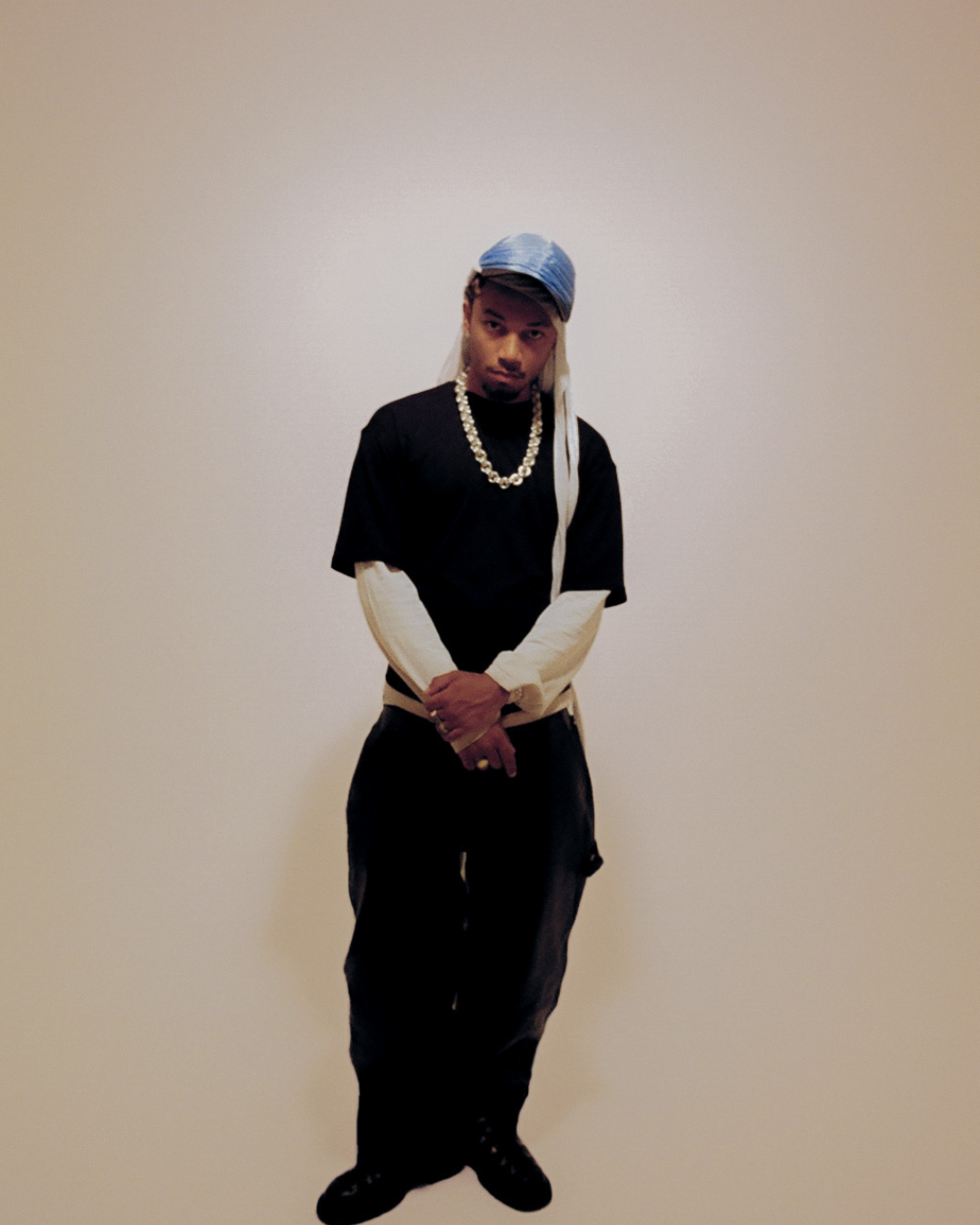
PHOTO CREDIT: Ollie Heffernan
How did the Danny Brown feature on “Peace of Mind” come about?
He’s always been one of my favourite artists. I’ve been a proper fan of his for years. Then, about three or four years ago, he followed me on Twitter. We ended up chatting in DMs for a bit, and he said he liked what I was doing. It was a short conversation, but he mentioned we should work together at some point. I don’t usually think about features before making a song, I wait until the track exists. When Peace of Mind came together, there was a gap in the verse, and I could just hear his voice on it. I knew he already liked my music, so I sent it over. He sent the verse back the next day. I only met him properly in person the other day – it was jokes. We were just hanging out in the green room before his show for a few hours, chatting and messing about.
Do you feel that this is the next album to get you to those new heights you deserve?
I feel like it deserves that level of belief. Everything I make has a bit of delusion of grandeur in it, but I try not to rely on expectations, because that can be dangerous. When you’ve put everything into one path, you can’t depend on things happening exactly how or when you want them to. With music especially, the payoff rarely comes on your timeline, or in the way you expect. The first stuff I put out did better than I thought, but then the year after felt like a flop, nothing was really happening. Then later, things picked up through word of mouth, and the work took on a life of its own. Even now, a song I made years ago could suddenly take off. So when I release something, I obviously hope for the best, and I’ve worked for it, but I stay aware that it might not happen straight away. If it does align with what I believe it’s capable of, then it could change everything. And if it doesn’t, I’ll just keep going and make more work to build towards that anyway.
Your studio sessions. Set the vibe of what those usually look like?
A good day in the studio is full of energy. I’m barely sitting down, if I am, I’m on the edge of my seat. The music’s loud, something great is looping, and ideas are flying around. Everyone’s locked in, and there’s this shared understanding of what we’re chasing in real time.
Things move quickly, someone hears a drum sound, someone else jumps on a vocal idea, we’re pulling in gear, tweaking sounds, layering parts. It’s constant momentum, with everyone contributing and reacting instinctively. By the end, the studio’s a complete mess, but in the best way. It’s a sign that something’s really happened in there.
What are the three songs you feel listeners will keep returning to?
Honestly, I wholeheartedly think, depending on who you are, what you’re going through… every single song, amazing.
and Finally, have you got any shows coming up?
I’m going on tour in May across Europe, so dates coming soon.
Follow Wesley Joseph
on Instagram
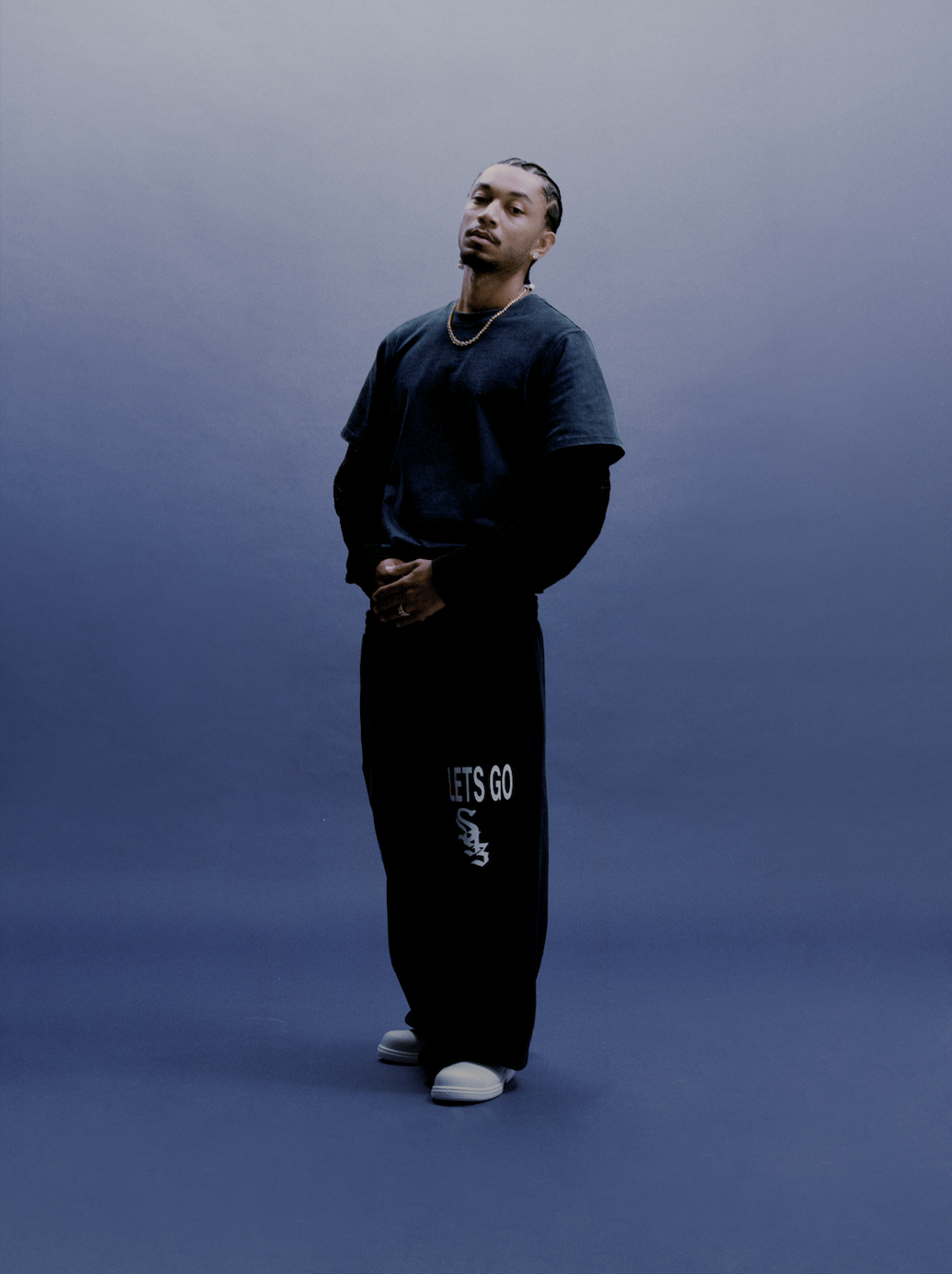
PHOTO CREDIT: Rashidi Noah