










From Japan to Paris.
Maison Kitsuné has been on a fast ascendance, steadily positioning itself as a cultural referent within the global fashion landscape. Founded in 2002 by Gildas Loaëc and Masaya Kuroki, the house was born from the intersection of music and style, a creative dialogue between Paris and Tokyo that would soon evolve into one of the industry’s most distinctive hybrid identities.
Years later, the brand deepened its roots in Paris, cementing a stronger connection with the European market while refining its design language. What began as a label built around sound and subculture gradually expanded into a fully realised lifestyle universe — spanning ready-to-wear, accessories, beauty and cafés — cultivating a vision where clothing, music and community coexist under the same aesthetic rhythm.
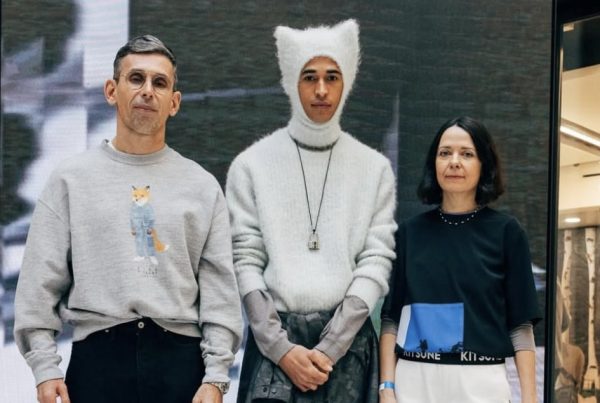
For Fall/Winter 2026, that vision enters a new chapter. We speak with newly appointed Creative Director Abigail Smith alongside co-founder Gildas Loaëc about the collection, the evolving codes of the house, and how Maison Kitsuné continues to navigate the space between heritage, modern wardrobe, and cross-continental dialogue.
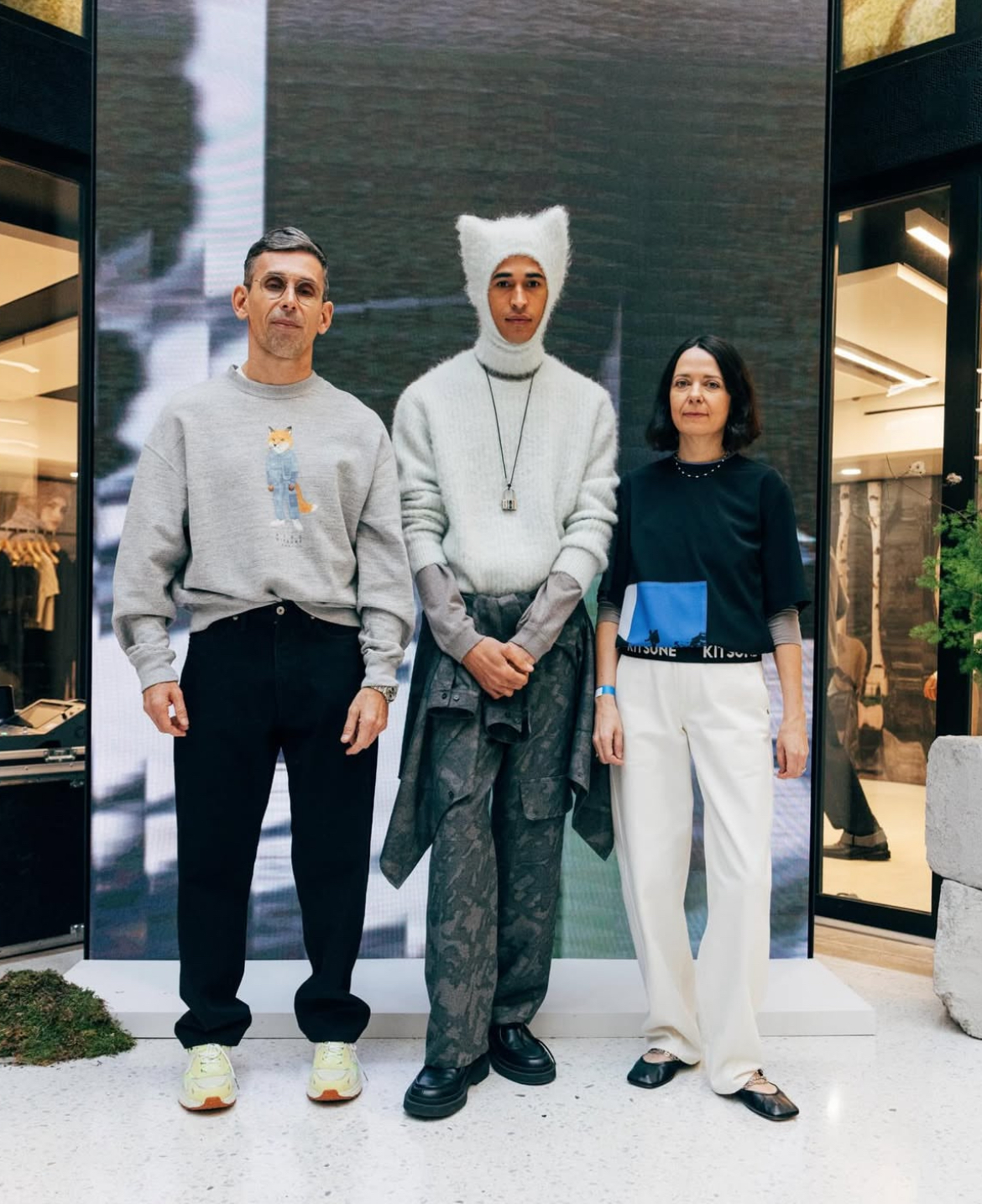
Hello Abigail, hello Gildas. How are you today on the day of the presentation? How do you feel?
Gildas: It’s so good. I feel good. It feels like the day after working a lot, especially the days leading up to the collection. Everything is very rushed, but in a good way.
Abigail: It’s always a journey, right? We were just talking about that this morning. Of course it was pretty hectic last night, even this morning, but we said it was a really good kind of energy. No one lost it, everything came together, and honestly I think everyone feels really energized.
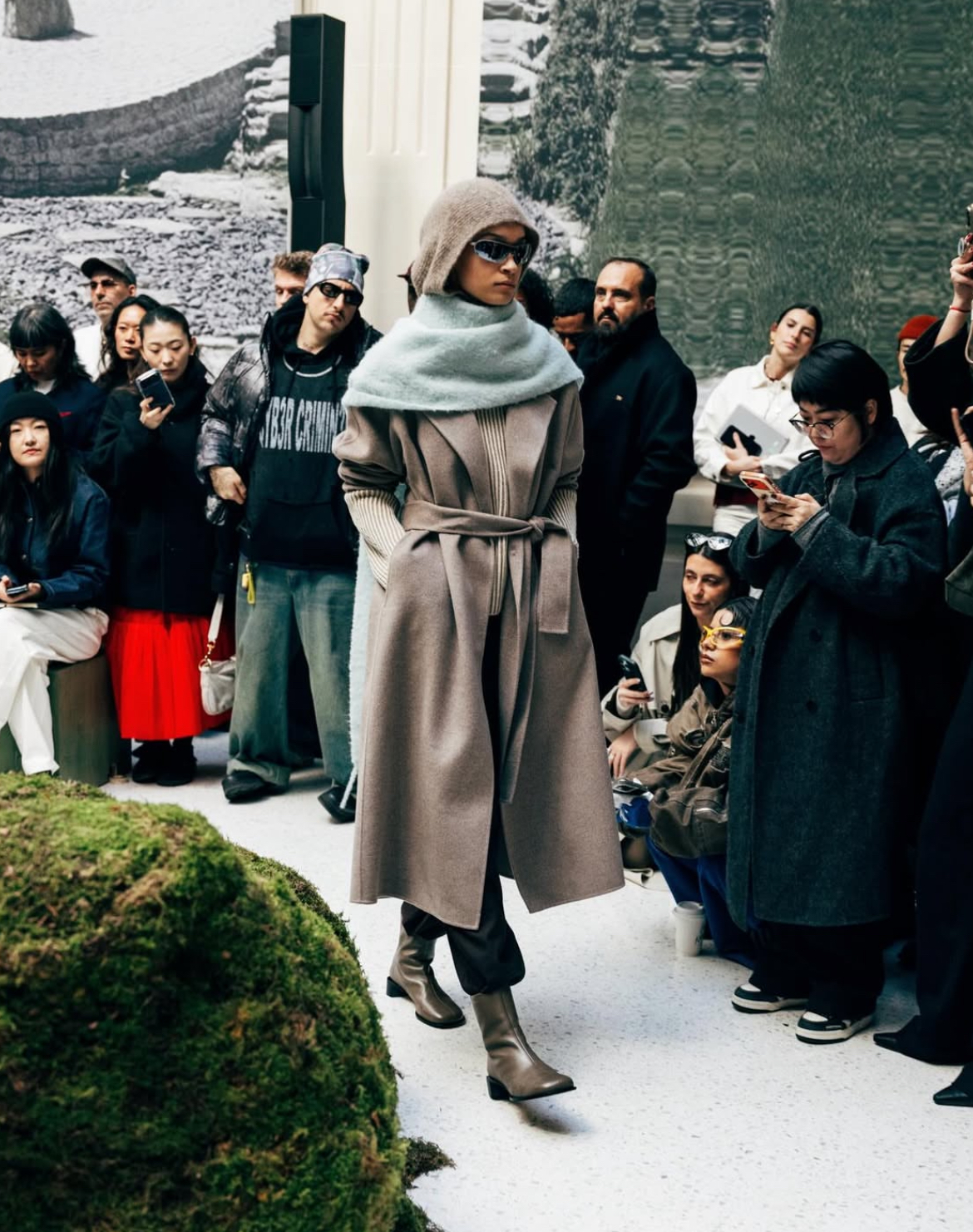
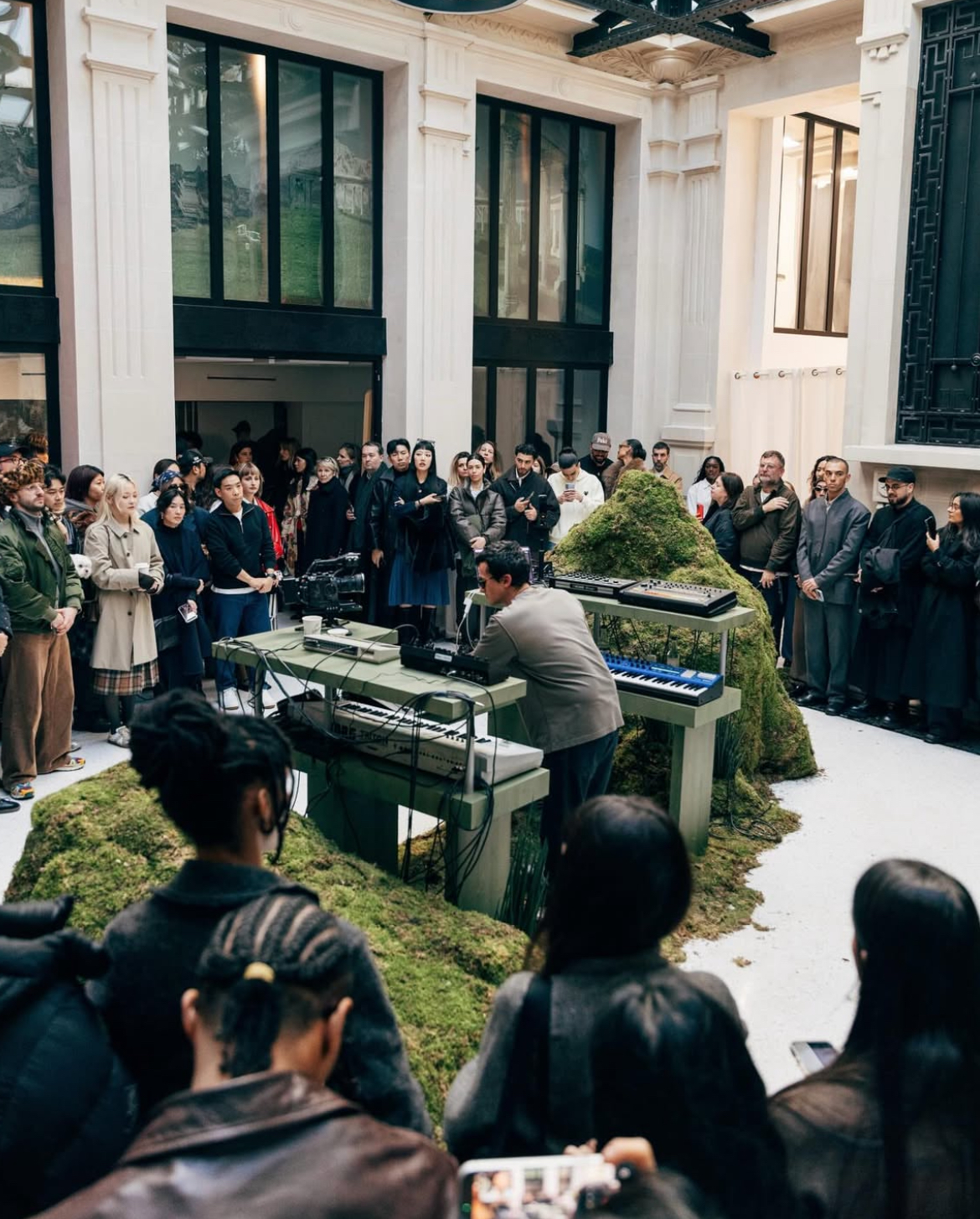
As I was walking in, the first thing I noticed was the installation. Can you tell me more about the installation or the presentation?
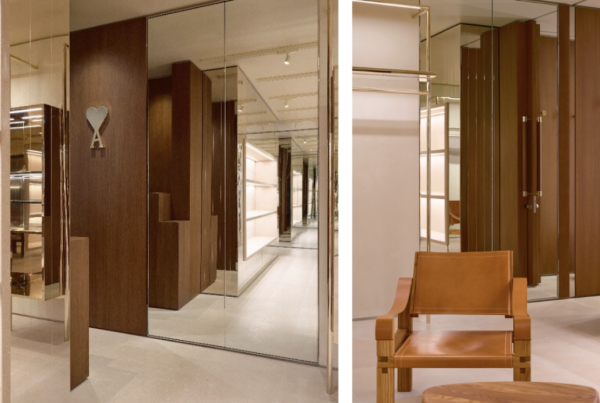
Abigail: When we decided to do a presentation, what made the most sense for the brand was really bringing the whole world together. It was important for us that Kitsuné Music also came into Maison Kitsuné, because it’s a lifestyle. That’s one of the things that attracted me to the brand, it’s not just about clothes, it’s a vibe. It’s a world, a tribe you want to be part of. So having the DJ booth — what’s on the label — mixing with this energy was super important. Visually, it’s about the contrast between nature and the city, that duality of Paris and Tokyo. In Tokyo you can see Mount Fuji at times there’s this strong mountain presence so I wanted to explore that.
I also discovered the Noguchi Garden in Paris, a UNESCO Noguchi garden, and I loved that link: this famous Japanese sculptor with a UNESCO site in Paris. I loved the duality between this mid-century urban Paris background and his very zen Japanese expression. So it was about how we express that in the space and in the clothes.
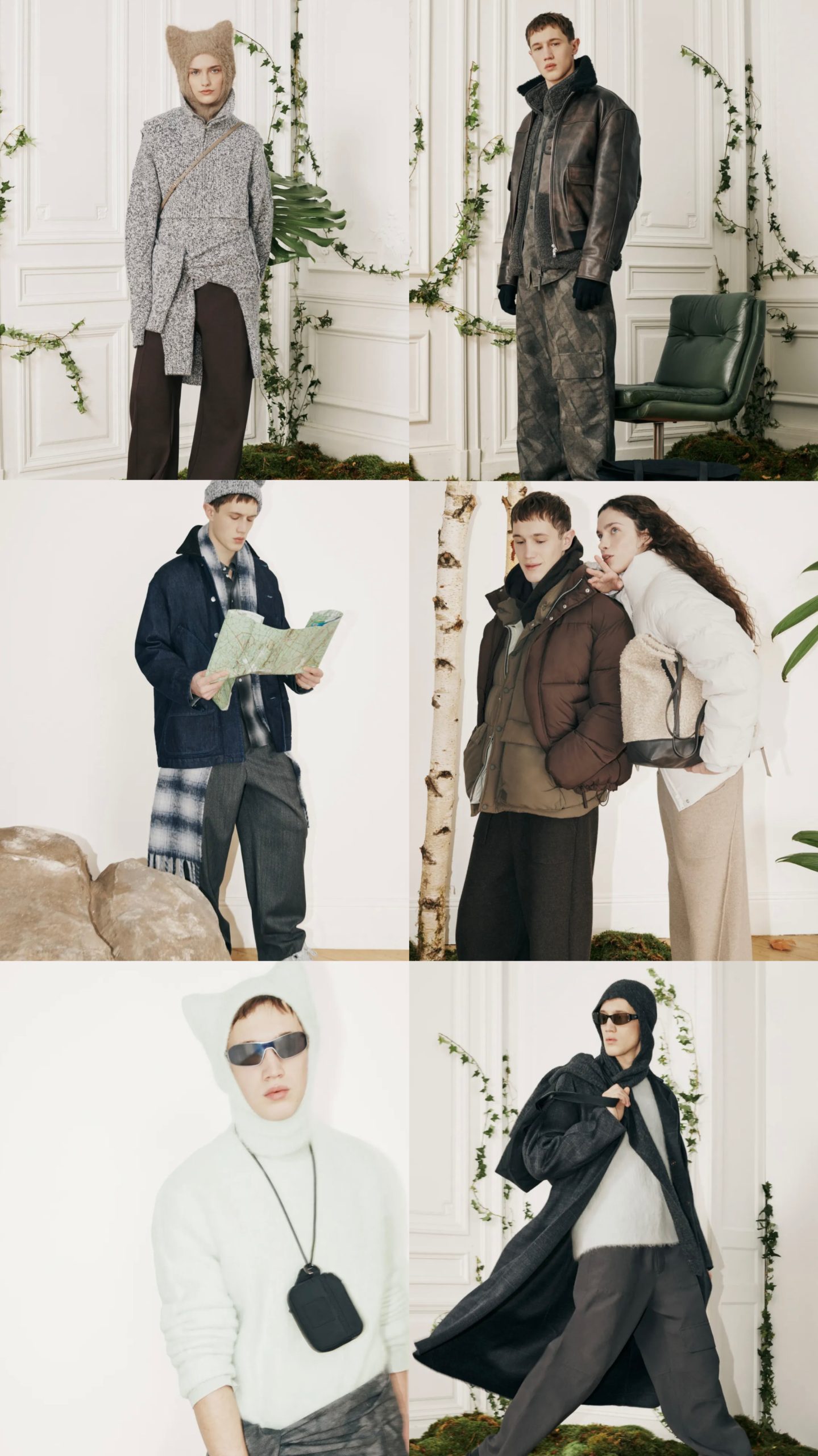
Can you talk to us about the Fall/Winter 2026 collection you’re presenting?
Gildas: I’m not directly designing the silhouettes or the story behind the collection, so Abigail can speak more about the spirit of it. But overall, we focus on the day-to-day modern wardrobe — mixing fabrics, textures — giving a sense of cool throughout your day in the city, in Paris especially.
Abigail: But for me, you’re the embodiment of the brand — a Parisian in Tokyo. You’re a French man living in Tokyo, constantly sending me references: brands, collaborations. It’s great having someone on the ground bringing that perspective back to Europe. There’s a real dialogue between Paris and Tokyo, even between us, bringing Japanese brands and ideas into the mix.
Gildas: Yes, it starts with precise choices: fabrics, colours, washes. Working through those to create interesting silhouettes and something unique. We think about what’s best for a city like Paris: easy to wear, but slightly elevated through cut, finishing, body shape, and fabric quality.
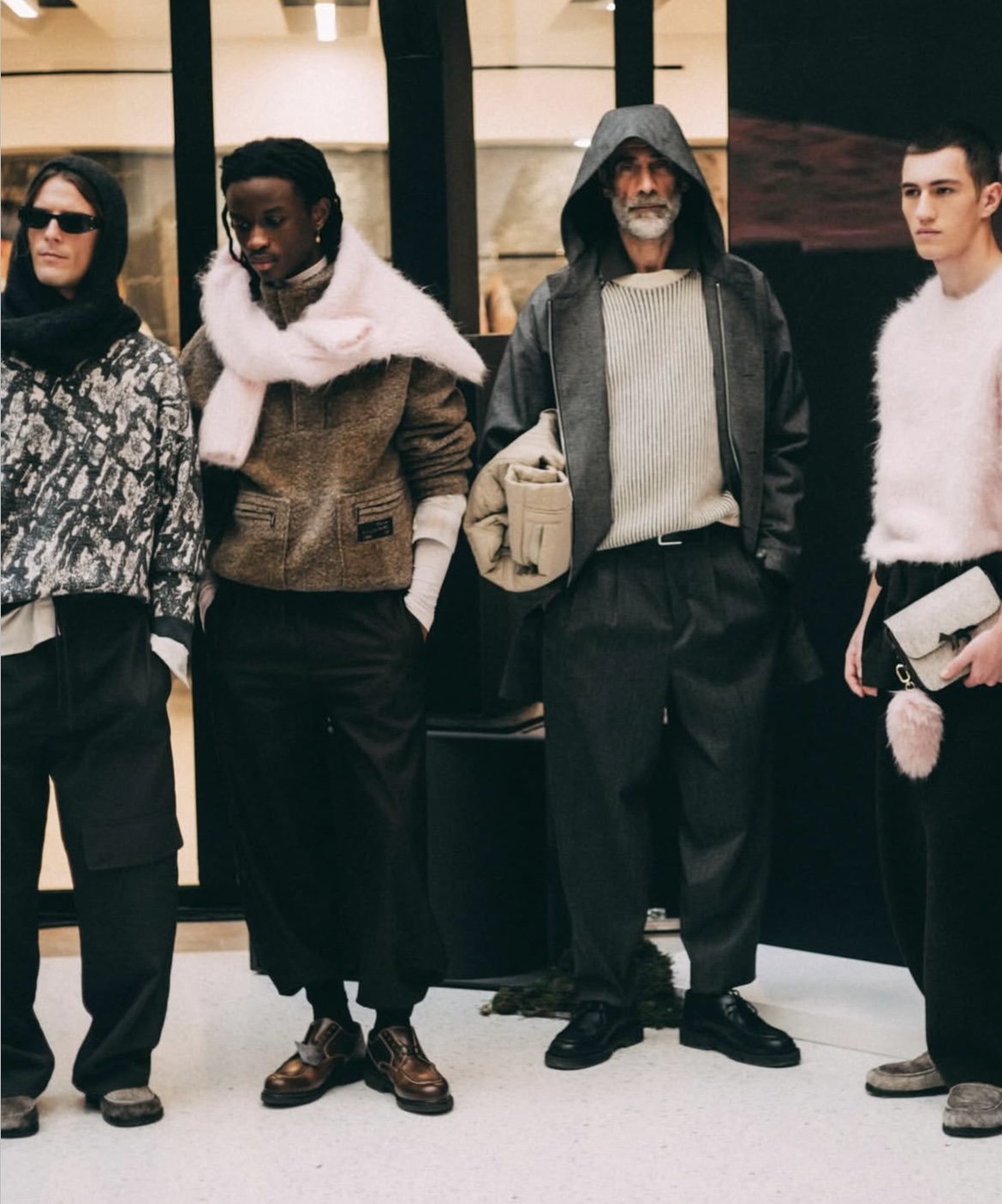
Abigail: We’ve also started putting more importance on Japanese fabrics. We’re using a lot more of them because that’s something Japan is very strong at. Blending Parisian savoir-faire with Japanese innovation. To me, that’s perfection.
Gildas, you live in Tokyo and you’re based in Paris. Is it ever hard working together at a distance on a collection?
Gildas: We’re very happy with how we collaborate. Abigail really leads the creative direction from A to Z: The story, the collection, everything. I bring some direction sometimes, but most of the creativity comes from her — her savoir-faire, her knowledge of fabrics and construction. I might work on individual pieces, but building the whole collection story requires skills she brings.
Last season in the showroom, I saw you introducing more everyday lifestyle pieces and garments you could wear from vacation to the city. Is that where the brand is heading?
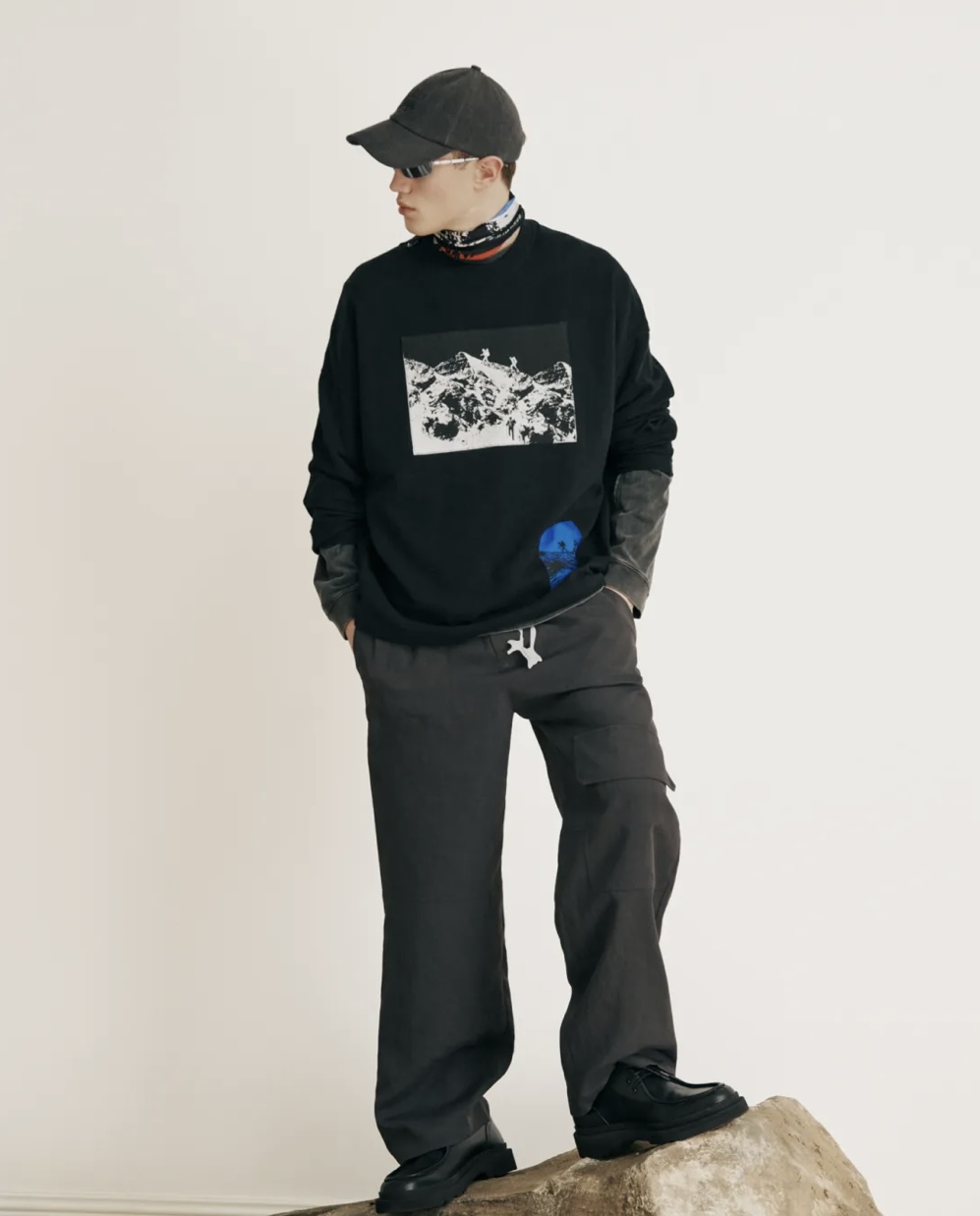
Abigail: Yeah, yeah. We’re a full lifestyle brand. It’s always been in the DNA, but now we’re really expressing it. Historically we were more known for menswear, but we wanted the womenswear expression fully developed too, closer to the body, day-to-evening dressing. Every iteration of a modern functional wardrobe and what it needs in all situations. Now it feels more complete and natural.
Craftsmanship is also important — last season there was a lot of craft. How does that translate into this collection?
Abigail: We’ve continued that. We have a hand-knit piece like last season — made entirely by hand — you’ll see it in the presentation. It has a large twist cable, a very special technique, made in Marseille by artisans there. We also have a seamless 21-gauge silk knit dress, extremely innovative. I’m not even sure those machines exist in Europe. It speaks to the most premium expression of Paris and Tokyo. So we continue from everyday pieces all the way to pinnacle craftsmanship.
Japanese brands often explore neutrality and minimalism. Have you thought about going further into minimalism, or do you want to keep colour and playfulness?
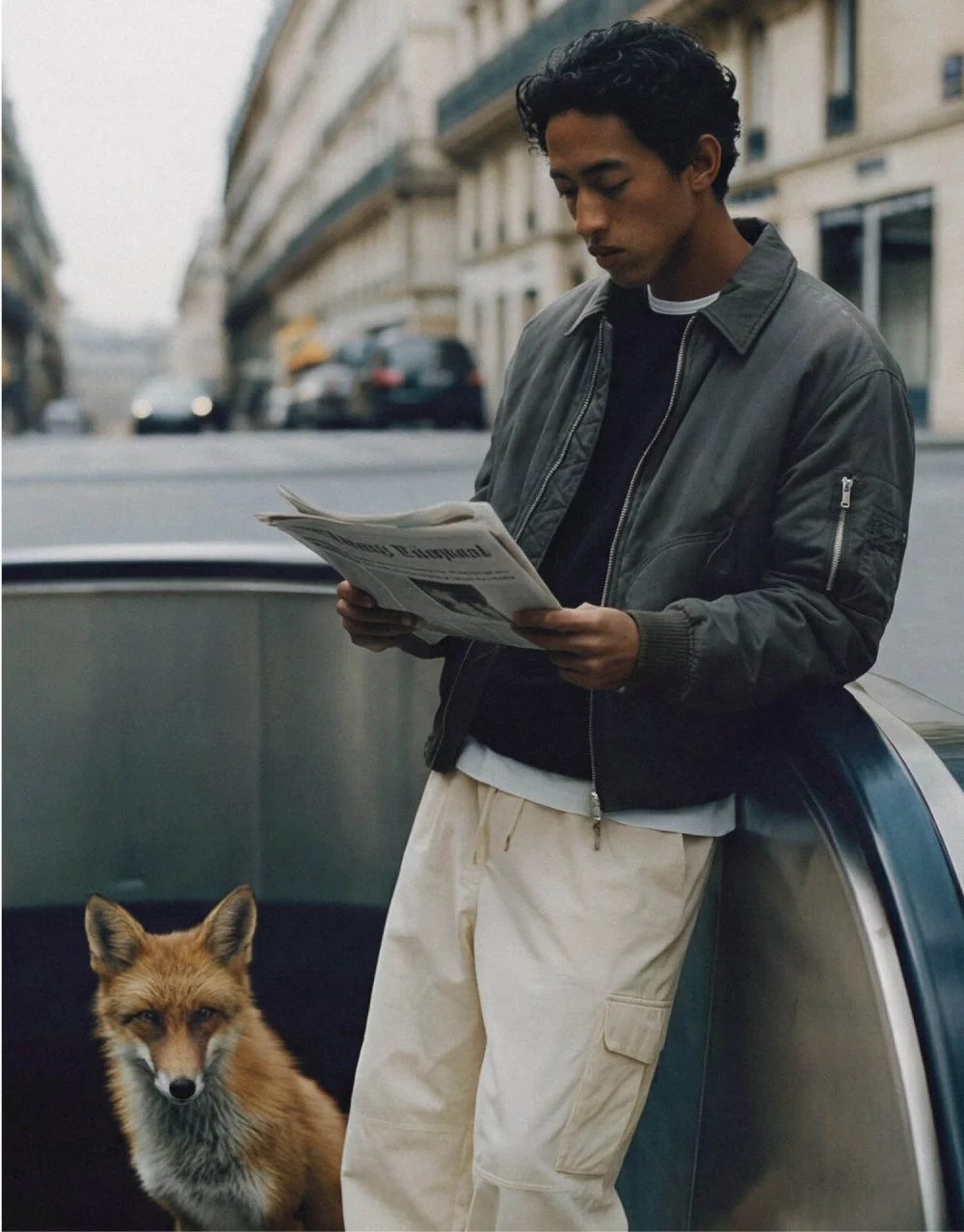
Abigail: We actually amped up graphics and colour this season. There’s still Japanese expression like the dress box references, but more colour throughout. A bit more playful too. The brand always had humour like the fox details, the little ears — that kawaii Japanese expression. The challenge is doing that while keeping it elevated.
Gildas: Quality is always the core. We want beautiful pieces that feel premium but remain accessible, balancing the commercial side while keeping design integrity.
It’s getting harder to stay accessible while maintaining high quality. Is that challenging for the brand?
Abigail: That balance is key. It has to feel like good quality at a fair price. We’ve kept the same entry price point but pushed the quality further, while adding a slightly higher tier on top. I’ve worked in luxury and honestly this is harder, but we’ve kept that luxury vision without losing accessibility.
Gildas: Some brands raise prices just as a marketing statement, even when quality doesn’t justify it. We try to stay fair with good product, fair price and stay honest about how we make things.
If you could pick one piece from the collection which one would be?
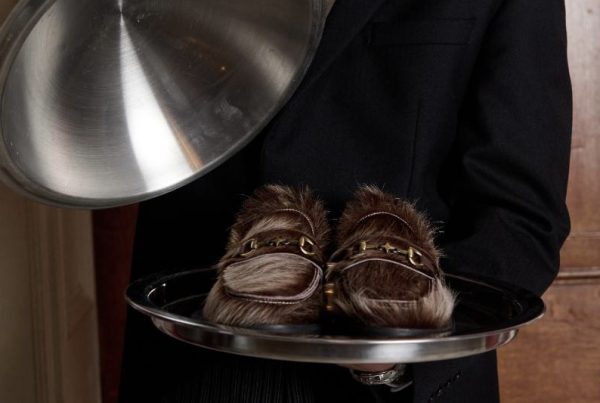
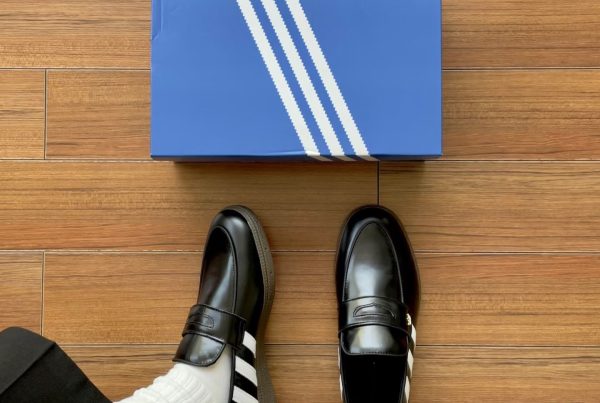
Gildas: The loafers are very strong. Also some blazers and a flight jacket I really like. There are many pieces that speak for themselves.
Abigail: The double-lapel coat on the mannequin, 100% cashmere, seamless, double-face construction. It’s amazing we can offer that at this price point. It feels like a win when you achieve that luxury expression without compromise.
What can we expect next from Maison Kitsuné?
Gildas: We want to keep collaborating with Abigail and refining the Maison Kitsuné silhouette, keeping it strong and consistent, maybe exploring slightly more rock influences too.
Abigail: Yes, the focus now is consistency. The brand has gone through different phases, so we want to stabilise and refine the DNA we’ve built. Today is the first step in a new journey of how we present the brand, and that’s where we see future potential.
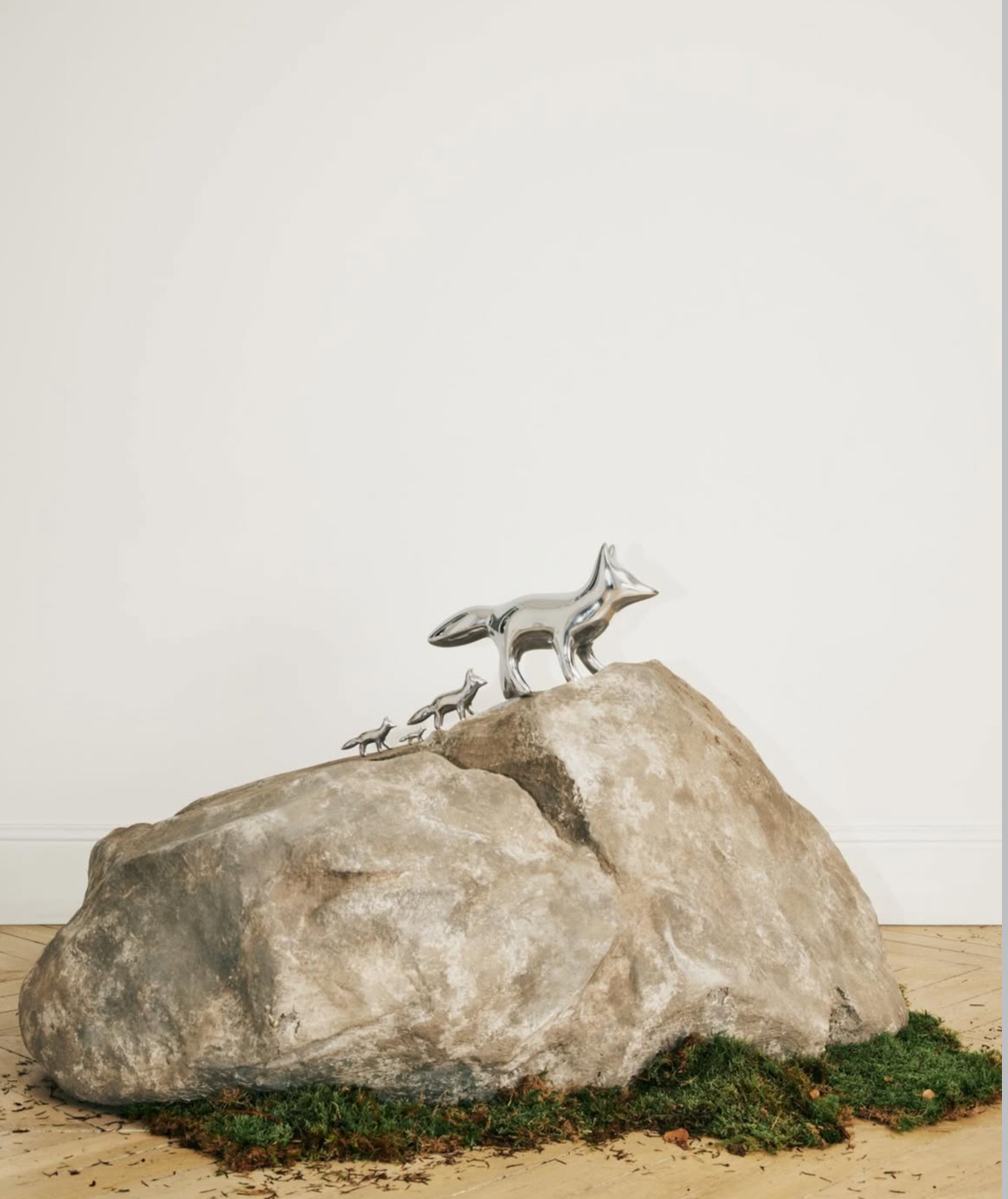
PHOTO CREDITS: Maison Kitsuné and Alex Dobé