













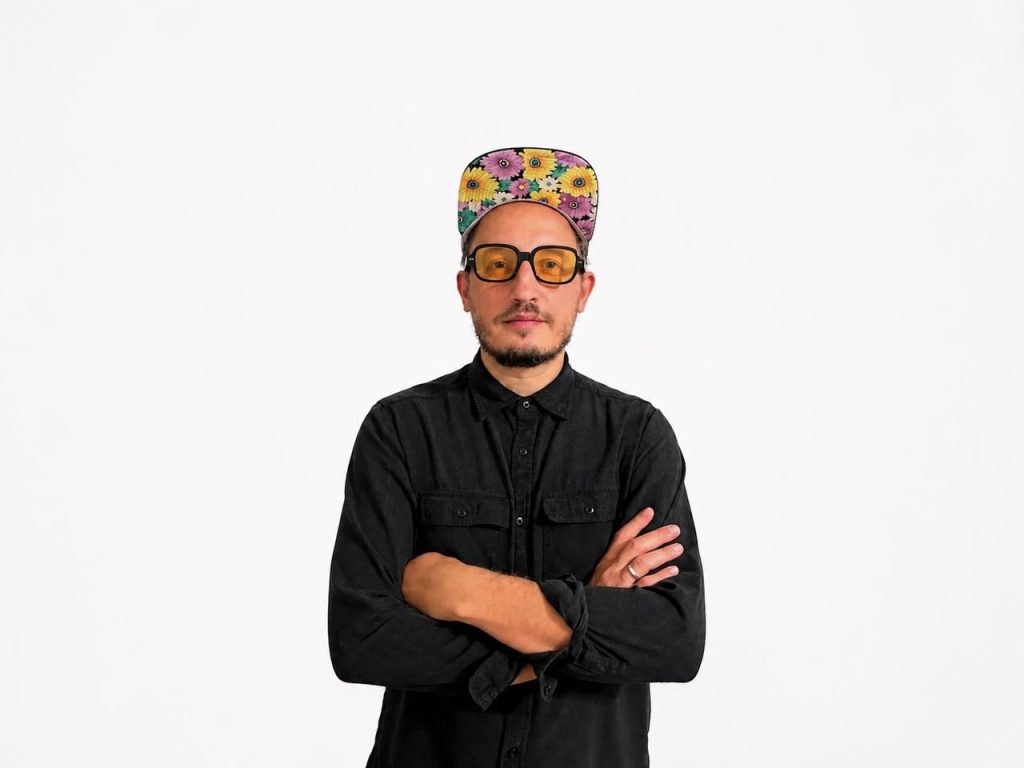
 After years of watching the beauty industry prioritize trends over individuality, a hairstylist and educator in Los Angeles designed his own methodology to bring personalized hair design back to the center of the profession.
For decades, the beauty industry largely operated around one dominant idea: standardized beauty sells best. Fashion magazines, salon chains, beauty schools, and later social media platforms all helped reinforce the same visual formula – symmetrical, polished, easily recognizable “perfect” looks designed for mass appeal. Over time, hairdressing itself increasingly turned into repetition. Clients brought the same references from magazines and Pinterest boards, while salons reproduced identical silhouettes regardless of a person’s individuality.
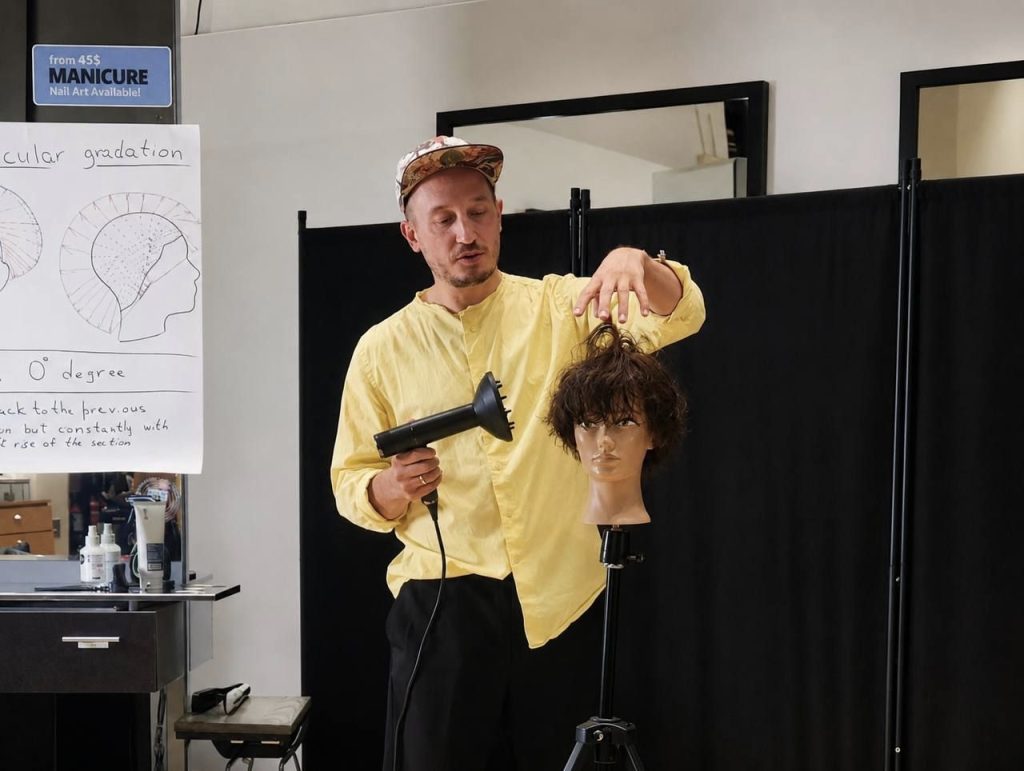
As social media accelerated beauty trends into a global conveyor belt, the problem became even more visible. Hairstylists were often taught to recreate viral looks quickly and efficiently rather than analyze a person’s proportions, texture, movement, or character. Inside the industry, individuality gradually started disappearing behind templates.
When everyone starts to look the same, specialists who can bring new things into the profession and help people gain individuality are involved in solving the problem. Andrii Gerashchenko is a licensed hairstylist in California, originally from Ukraine, seventeen years in the industry: from an apprentice at a large Kiev salon to a creative director, teacher and author of his own haircut technique. He recently joined the jury of the international Global Impact Summit & Awards, which evaluates contributions to education, innovation, and the creative industries. But to understand why this is natural, we need to start not with the awards, but with the problem that he saw earlier than most colleagues.
When Gerashchenko entered the profession in the late 2000s, beauty was still largely shaped by fashion houses, glossy magazines, and runway culture. Trends moved from catwalks to salons, and hairstylists were expected to reproduce them accurately. Technical precision was often valued more highly than personalization. Over the following decade, however, Instagram, Pinterest, and later TikTok dramatically accelerated this process. What had once been seasonal trends became an endless stream of instantly replicated looks, creating a growing tension between standardization and individuality.
Andrii’s professional path began in Kyiv, where he studied at a large hairdressing school before joining one of Ukraine’s leading salon groups. Over the following years, he became deeply involved in large-scale creative projects connected to fashion shows, music productions, beauty exhibitions, and educational events. During that period, Gerashchenko participated in major industry events, including Fashion Week and Beauty Expo. Working in those environments exposed Gerashchenko to the mechanics of visual image creation at a very high level. Hair no longer functioned simply as a salon service – it became part of performance and personal branding. He worked backstage at runway presentations, collaborated with Ukrainian famous bands Quest Pistols, Numer 482, ONUKA etc, and designer Valery Kovalska.
But while the industry around him constantly pursued trends, he became increasingly interested in something else: why certain looks worked for one person and failed completely on another. “At some point during my work at fashion events, I realized that a haircut should not be based on copying trends or links on social media. Each person has different proportions and movements, this is very noticeable in the frame and on the podium. For me, hair design has become closer to architecture: you create a form specifically for a person. This is especially true for fashion events – the more interesting your image is, the more attention people will pay to you,” Gerashchenko explains.
The question reflected a broader challenge facing the industry. While beauty trends were becoming sophisticated, professional education often lagged behind. Stylists learned techniques, but were rarely taught how to interpret individuality. As clients demanded more personalized results, the gap between technical execution and genuine customization became increasingly visible. By the mid-2010s, Gerashchenko had become convinced that the industry needed a new framework for thinking about hair design itself. In 2016, he launched an educational program that combined years of salon experience, fashion production work, and his deep understanding of the Vidal Sassoon system. The program became the first practical foundation of what would later evolve into his proprietary methodology.
“I have noticed that many young stylists are taught to repeat techniques mechanically, but they are rarely taught to analyze form and personality. I wanted to create a system in which a hairdresser would understand why a haircut works, and not just how to copy it, and teach it,” he says.
His first course was based on a deep knowledge of the British Vidal Sassoon system combined with the principle of individual adaptation: students learned to understand the logic of the form. The program was suitable for both beginners and experienced stylists who wanted to go beyond the template approach. Dozens of graduates of the course subsequently found jobs in prestigious salons or built independent careers. In parallel with teaching, Gerashchenko began working as a creative mentor for several large salons. It was a new format: not one-time workshops, but systematic work with teams aimed at changing the very approach to the profession.
By the early 2020s, the premium beauty market was undergoing another transformation. Clients increasingly expected hairstylists to function not simply as service providers, but as image consultants capable of understanding personal identity, public image, and visual communication. Hair was becoming part of personal branding. After moving to Los Angeles, Gerashchenko found himself working in exactly this environment.
At Luxbae, he collaborated with Suzzie Monroe, one of Los Angeles’ leading colorists and a senior educator associated with the Vidal Sassoon Academy. Together, they conducted training programs for professional stylists, helping salon teams refine advanced techniques while adapting them to individual client needs. Later, Gerashchenko expanded his educational work through Bokaos Aveda, where he continues teaching and organizing professional masterclasses. 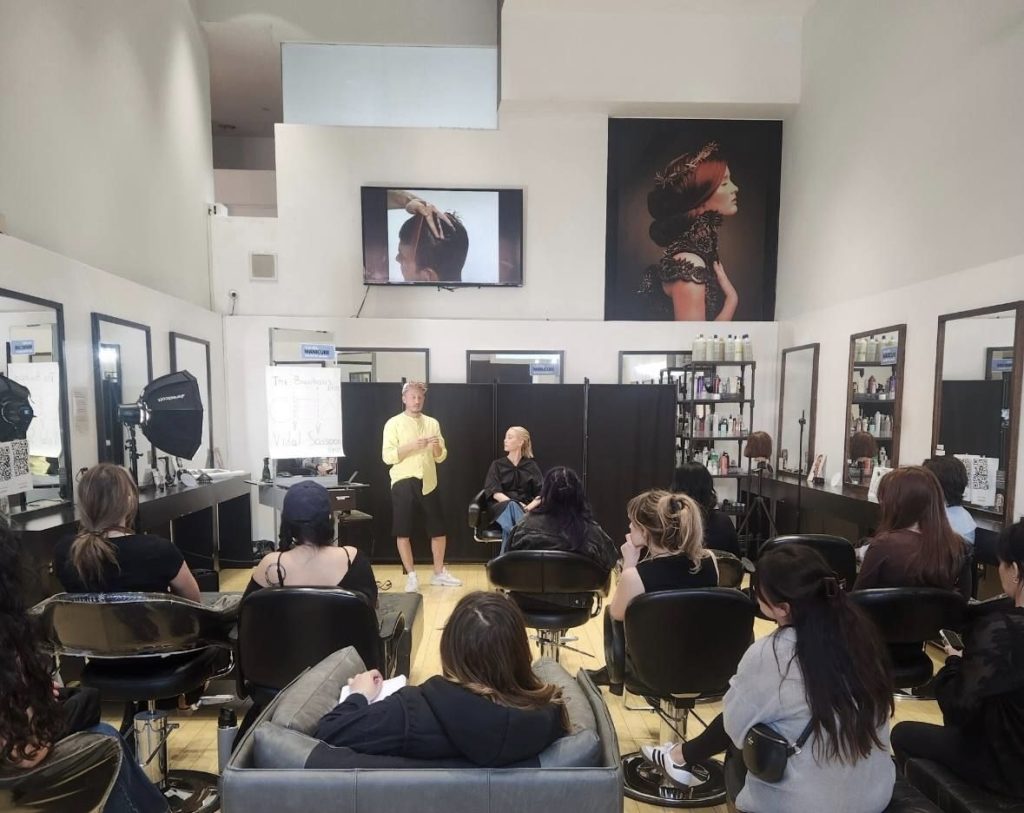
In February 2026, Gerashchenko held his own master class at Bokaos Aveda, entirely dedicated to the “Authentic Shape”. At twenty participants, including both young stylists and experienced professionals, art directors and influencers from the Los Angeles creative community, he demonstrated two advanced haircuts: a structured bob and circular grading on curly hair, which are one of the most difficult haircuts. Against this background, his invitation to serve as a jury member at the GISA became part of a wider shift happening across the beauty industry itself.
The beauty industry may be entering another transition. Artificial intelligence can already recommend hairstyles, algorithms can distribute trends globally within hours, and salons can reproduce them faster than ever before. Yet the value of a hairstylist increasingly lies not in access to trends, but in interpretation.
“I think the future belongs to professionals who understand people. AI will offer the most unusual ideas for haircuts, but none of this is true. You can use any tool, but it will never replace human professionalism. The real skill is understanding which one belongs to a specific person,” Gerashchenko predicted.
If the last decade was defined by the rapid spread of beauty trends, the next one may be defined by their adaptation. In many ways, Gerashchenko’s own career mirrors that transformation – from an industry built around trend production to a profession increasingly focused on understanding individuality, identity, and personal image.
Author: Maria Ivanova