








































 Your perfume fades by noon, and you’re left wondering why you spent $120 on it. The answer usually isn’t the fragrance itself, it’s your skin. Dry skin holds almost nothing, so scent molecules lift off within a couple of hours. Layering a body oil underneath your perfume changes that entirely. The oil gives those molecules something to cling to, slowing evaporation and keeping the scent close to your skin all day. This isn’t some niche trick; perfumers have long recommended moisturizing before applying fragrance. You don’t need a matching lotion from the same brand either, since most well-formulated body oils do the job. What matters is picking the right oil and applying everything in the correct order. Get those two things right, and you can make your perfume last longer by layering it with body oil without changing a single thing about the fragrance you already love.
Why Body Oil Creates a Better Base for Scent
Body oil works as a fixative because fragrance molecules bond more readily to lipid-rich surfaces than to bare skin. On dry skin, perfume has little to hold onto, so it evaporates quickly and the scent fades within a couple of hours. A layer of oil changes that by giving the fragrance a surface to cling to. This is why applying a long lasting pheromone body oil before your perfume can noticeably extend its wear, especially when the oil carries a warm vanilla scent. Vanilla’s rich, fatty base acts as a natural anchor, so any perfume sprayed over it diffuses more slowly and projects for longer. The top notes still bloom right away, but the middle and base notes release gradually rather than all at once. The result is a scent arc that stretches across hours instead of minutes.
How Skin Dryness Shortens Fragrance Life
Dry skin lacks the natural oils that trap and slow down scent release. Research from the Fragrance Foundation has noted for years that hydration level is one of the biggest factors in how long a fragrance performs on any given person. Your skin absorbs dry fragrance spray and the alcohol evaporates fast, taking the scent compounds with it. Moisturized skin can’t absorb the fragrance as aggressively, so more of it stays on the surface where you and everyone around you can actually smell it. The difference is noticeable. Most people who layer consistently report their fragrance lasts three to four hours longer on average, with no extra sprays needed.
Why Oil Outperforms Regular Lotion
Unscented lotion helps, but body oil performs better as a fragrance base. Lotion is mostly water, and that water evaporates along with your perfume. Oil is pure lipid. There’s nothing to evaporate, so it stays on skin and keeps the fragrance anchored far longer. Jojoba, sweet almond, and argan oils are particularly popular choices because they absorb without leaving a greasy film, and their faint natural scent doesn’t compete with your chosen perfume. If your oil does have a scent, pick one whose base notes complement rather than clash with your fragrance. Warm, sweet, or neutral oils pair well with most florals, musks, and woody scents. That compatibility is what separates a good layering combination from one that smells muddy.
How to Layer Body Oil and Perfume the Right Way
The order of application matters more than most people think, and getting it backwards is probably the most common mistake. You want the oil on your skin first, before any fragrance, so it can act as a base layer. Apply it right after a shower while your skin is still slightly warm. Open pores absorb oil more readily, and the warmth helps it spread evenly. Don’t wait too long, though; if the oil fully dries down and forms a tight film, it loses some of its ability to bond with the fragrance you apply over it. Aim for about 60 to 90 seconds after application, then spray your perfume.
The Application Order That Actually Works
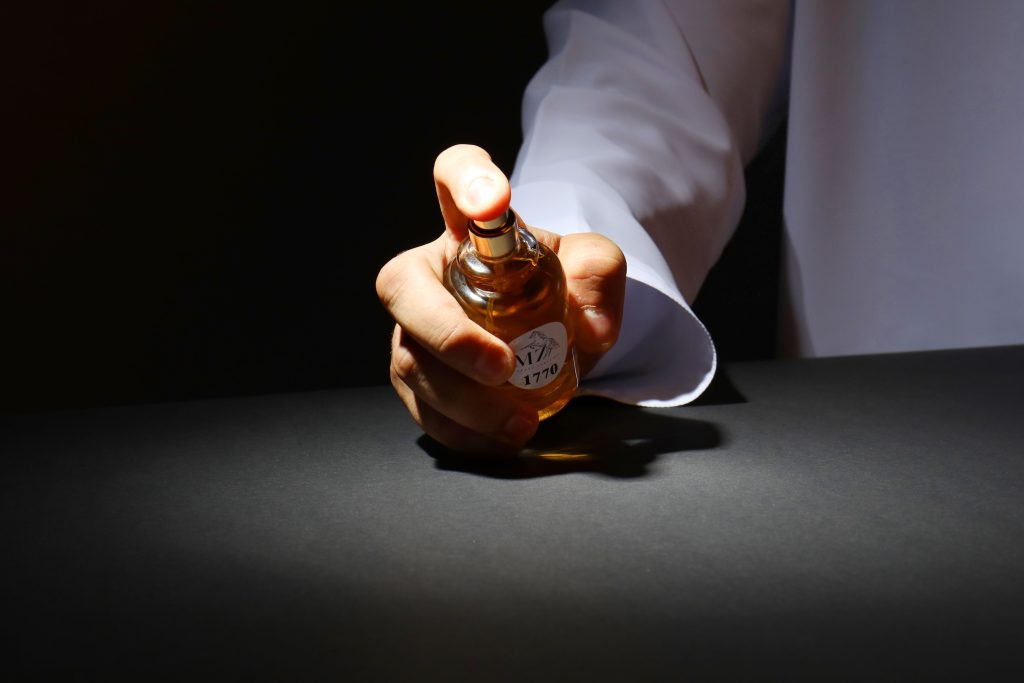
Start with a light, even coat of body oil on your pulse points and anywhere you plan to spray perfume. Pulse points, including the inside of your wrists, behind your ears, the base of your throat, and the inside of your elbows, radiate heat, which helps the oil absorb and the fragrance project. Let the oil sink in briefly, then spray your perfume directly on top of those same spots. Don’t rub your wrists together after spraying; that breaks fragrance molecules and changes how the scent develops. One or two sprays on oiled skin go further than four sprays on bare skin, so you’ll actually use less perfume overall. That’s worth keeping in mind, especially with expensive fragrances.
Pulse Points and the Areas You’re Probably Missing
Most people spray perfume on their wrists and neck and stop there. The backs of your knees and your ankles are strong options when you want scent to rise throughout the day. Heat travels upward from those areas and carries the fragrance with it. Your hair holds scent well too, though spraying perfume directly on strands can dry them out because of the alcohol content. A better move is misting your oil-coated palms and running them lightly through the ends of your hair. And if fragrance disappears from your neck quickly, try applying a thin layer of oil to your collarbones before spraying there. The collarbone holds warmth without the friction your wrists constantly face.
Picking an Oil That Pairs With Your Fragrance
Scent compatibility is the part of layering that takes a bit of thought. Not every oil and perfume combination works, and the wrong pairing can flatten your fragrance or introduce an odd note you didn’t expect. The safest starting point is a fragrance-free or lightly scented oil with a neutral profile, something close to your natural skin scent. From there, you can move to oils with warm base notes like vanilla, sandalwood, amber, or light musk, which complement most mainstream fragrance families. Fresh citrus and aquatic fragrances pair well with light, neutral oils like jojoba or fractionated coconut oil, which add staying power without muddying the top notes. Heavier florals and oriental fragrances hold up well under richer oils. The simple test: apply the oil, wait a few minutes, and take a quick sniff before adding your perfume. If the oil alone smells pleasant against your skin, it’ll work as a base.
Conclusion
The best way to make your perfume last longer by layering it with body oil comes down to two things: applying the oil first and choosing a scent profile that complements your fragrance rather than competing with it. Dry skin is the real reason most perfumes fade fast, and oil corrects that by giving fragrance molecules something to hold onto. Focus on your pulse points, let the oil absorb briefly before you spray, and resist the urge to rub. It’s a small shift in routine that genuinely changes how long your fragrance performs. No extra sprays, no fragrance-wardrobe overhaul required.