
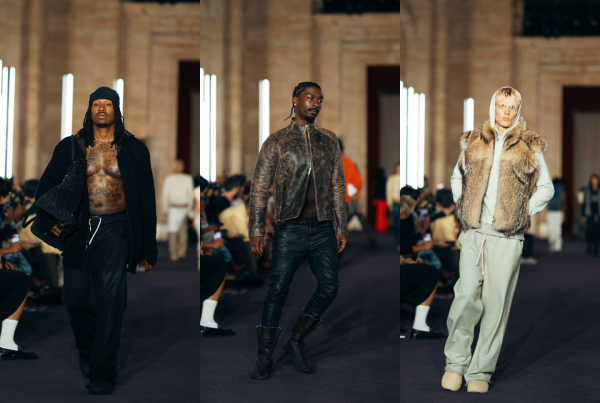


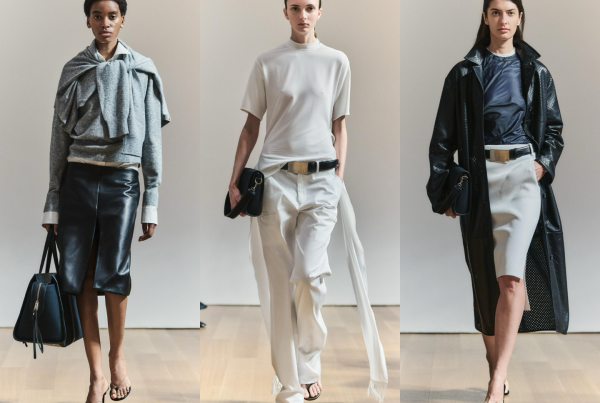




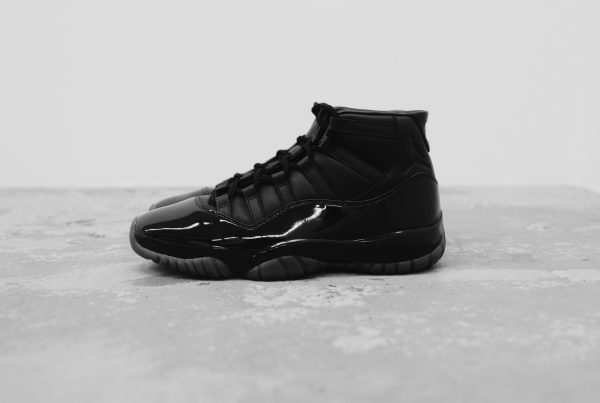







































 There was a moment, somewhere between the third lockdown and the current run club boom, when the gym bag stopped being a separate object. It merged with the weekend bag. The trainers you sweat in became the trainers you wear to dinner. The fleece you bought for a cold morning became the fleece you wear over a shirt in October. Nobody announced it. It just happened, and now the average British wardrobe looks less like a wardrobe and more like a kit list.
This is the most interesting shift in menswear in a decade, and it has almost nothing to do with catwalks. It has to do with how men actually spend their time, what they do at 7am, and what they carry in their bag at 6pm. Style and health culture have collapsed into each other, and the result is a set of new rules that most people are following without ever having read them.
Here’s what’s driving it, what’s worth stealing, and a few things about your clothes and your kitchen that you probably didn’t know.
Gorpcore grew up and moved in
The word itself is younger than you’d think. “Gorpcore” was coined in 2017 by a writer at The Cut, borrowed from the American hiking acronym GORP — “good old raisins and peanuts”, the trail mix people eat halfway up a mountain. It described a joke at first: city kids wearing serious outdoor equipment to buy oat milk.
The joke aged into an aesthetic, then into a default. Technical shells, chunky trail runners, packable down, boxy fleeces, cargo pockets that hold a phone the size of a paperback. What made it stick wasn’t novelty. It was that the clothes worked. A shell that keeps rain off in the Cairngorms also keeps rain off on the Kingsland Road, and it does it without the shape-collapse of a wet wool overcoat.
The trickle-down is everywhere now. Tailoring borrowed the four-way stretch. Denim borrowed the gusset. Loafers borrowed the lug sole. Even the most conservative British brands are quietly using bonded seams and recycled ripstop and hoping nobody points it out.
Tip: the fastest way to update an outfit without buying anything new is to swap one traditional piece for its technical equivalent — the coat, the trousers or the shoes, but only one at a time. Change two and you look like you’re on your way to a mountain. Change one and you look current.
The run club is the new night out
Ask anyone under 35 in a British city where they met their last three friends and there’s a decent chance the answer involves a Tuesday-evening 5k and a coffee afterwards. Run clubs have absorbed a large slice of the social function that pubs and clubs used to hold, and with that came an entire style economy: singlets, split shorts, caps worn low, socks with opinions, and the specific brand loyalty that only exists in communities where everyone can see what everyone else is wearing.
The clothes got better because the audience got tougher. A run club is a peer-review process for kit. Anything that chafes, rides up, holds sweat or looks bad in a group photo gets discarded within a season.
Unusual fact: merino wool, the material that quietly took over base layers, is measured in microns. Fine merino sits around 17 microns in fibre diameter. A human hair is typically around 70. That fineness is the entire reason it can sit against skin without the itch people associate with wool jumpers, and it’s why the same fabric turns up in both trail kit and £200 knitted polos.
Fabric literacy is the actual flex
The old status signal was a logo. The new one is knowing how to look after what you own. This sounds boring and it is the single biggest difference between men whose clothes look good after two years and men whose clothes look tired after two months.
Four things worth knowing:
- Fabric softener ruins technical kit. It coats the fibres and clogs the wicking structure that the fabric was engineered around. Wash performance gear inside out, cool, no softener, and air dry. Tumble dryers are where elastane goes to die.
- Merino doesn’t need washing as often as cotton. Air it overnight and it recovers. Over-washing is what wears it out.
- Rotate your trainers. Foam midsoles need time to decompress between wears. Two pairs alternated will outlast two pairs worn consecutively.
- Learn one repair. A replaced zip pull, a re-waxed jacket or a re-soled sneaker costs a fraction of a replacement and there’s a small industry of UK cobblers and repair specialists who’ll do it by post.
Unusual fact: “denim” comes from serge de Nîmes, a fabric from the French city of Nîmes. “Jeans” comes from Genoa, where a similar cotton twill was made for sailors. Two cities, two fabrics, one pair of trousers that ended up carrying both names.
Bodies change, and wardrobes should be built to allow it
This is the part most style writing dodges. Men who take up running, lifting, climbing or cycling change shape, and so do men who don’t. Shoulders, waists and thighs move over a year in ways that make rigid, slim-cut tailoring a poor investment.
The practical response isn’t a body goal. It’s a wardrobe strategy: buy the pieces that tolerate change and get everything else altered. Knitwear, overshirts, pleated trousers, drawstring waists and unstructured jackets all flex. Very slim suit trousers and skinny denim do not.
Tip: find a local tailor before you need one, and take them something cheap first. A £15 taper on a £40 pair of trousers teaches you more about what actually suits you than a £400 purchase ever will. Most British high streets still have someone doing this, usually in a shop with a hand-written sign.
What’s in the shaker, and why label-reading is a style skill
Here’s where the two halves of this culture meet properly. The same men who now read a garment’s composition label — 88% nylon, 12% elastane, bluesign approved — have started reading the back of the tub in the kitchen with the same eye. It’s the same instinct: what is this actually made of, and is the label telling me the truth?
Protein powder is a useful case study, because for years it was the least transparent corner of the supplement aisle. Tubs arrived with proprietary blends, unspecified flavour systems, artificial sweeteners, thickeners, anti-caking agents and a list of ingredients longer than the label had room for. If you’d been trained by clothing labels to ask what things are made of, the answer was often “we’d rather not say”.
That’s what has shifted. Brands like Naked Nutrition built their entire identity around the short ingredient list, publishing what’s in the tub and where it came from rather than burying it behind a blend name. Their range of organic and grass-fed protein powders leans on sourcing detail — pasture-raised dairy, cold-processing, single-ingredient options — for the same reason a good jacket lists its fabric weight. The information is the product.
The point isn’t that a powder is a special ingredient. It’s food, and it should be judged like food: what’s in it, where it’s from, what it tastes like, and what it costs per serving. Read it like a composition label and you’ll make better choices than any marketing claim will give you.
Unusual fact: whey isn’t an invention of the supplement industry at all. It’s the liquid left over when milk curdles during cheesemaking — the “curds and whey” of the nursery rhyme, a byproduct that Italian cheesemakers have been recooking into ricotta for centuries. Ricotta literally means “recooked”. The stuff in the tub has a longer history than the tub does.
Tip: ignore the tub and think about the recipe. Unflavoured powders are far more versatile than flavoured ones — they go into porridge, pancake batter, overnight oats and soups without turning everything into a milkshake. Flavoured tubs lock you into one use, and most people get bored of that use by the third week.
For anything beyond the label itself — what a balanced week of eating actually looks like, and how the food groups are meant to fit together — the NHS Eatwell Guide is the plain-English reference point in the UK, and it’s free. If you have specific dietary questions or medical needs, that’s a conversation for a GP or a registered dietitian, not a comments section and not a brand.
Recovery became a look
The final piece of this is the aesthetic of doing nothing on purpose. Saunas, cold water, stretching, long walks, early nights. It has produced its own uniform: heavyweight loungewear, slides, robes worn without irony, and a genuinely enormous market in blank, well-cut sweats.
Unusual fact: the Finnish sauna was added to UNESCO’s list of intangible cultural heritage in 2020. Finland has roughly one sauna for every two people. The thing British cities have spent the last few years rediscovering as a wellness trend is, in Finland, closer to a kitchen.
Style-wise, this category rewards restraint. Loungewear is the one area where logos, slogans and technical detailing all look worse than plain. Heavy cotton, a good colour, a cut that fits at the shoulder. That’s the whole brief.
Five things to take away
- Swap one traditional piece for its technical equivalent, not three.
- No fabric softener on performance fabrics, ever.
- Alternate your trainers rather than wearing one pair into the ground.
- Buy the pieces that tolerate a changing body, and alter the rest.
- Read the back of the tub like you read the inside of a jacket.
The uniform has changed. It’s softer, more technical, more legible, and considerably more concerned with what things are made of. That last part is the real story here — a generation that learned to interrogate a fabric composition label has started asking the same question everywhere else, and the brands worth paying attention to in both aisles are the ones happy to answer it.