


































 In the UK today, log cabins are being bought for several uses, such as garden rooms, home offices, and guest accommodation. Many homeowners struggle to make timber-rich spaces feel modern rather than old-fashioned. This guide introduces the Layered Modernisation Method, a strategic approach to styling cabins that balances rustic and contemporary elements. The Layered Modernisation Method is a 6-step framework that views log cabin styling as a process of balancing rather than hiding rustic elements with contemporary design. Wood treatment comes first, followed by colour, furniture, lighting, textiles, and storage in that precise order to prevent the space from feeling either too cold and modern or overly cabin-like.
Step 1: Choose Your Wood Treatment Strategy
To begin modernising a log cabin interior, the first thing to consider is the wood itself. The choice of wood treatment is one of the key factors affecting the overall aesthetic, determining whether the space has a heavy, traditional look or a light, contemporary feel. Many cabin suppliers in the UK offer a choice between a traditional internal log finish and a more contemporary plasterboard finish, which can be decorated like an ordinary room.
Step 2: Establish a Cohesive Colour Palette
For a modern UK interior, the colour palette should be chosen to balance the rustic feel of a log cabin. The aim is to create a harmonious backdrop that complements the timber without making the space look dated or overly themed. Shifts towards warm minimalism and neutral palettes can be seen in modern cabin design trends for 2025–2026.
Modern Neutral Palettes That Complement Timber
Choose warm neutrals such as taupe, sand, stone, cream, and greige with light woods like oak, birch, and maple. To create complementary contrast without clashing, use terracotta, rust, sage, olive, navy, or deep teal with medium to dark timber. These nature-inspired warm neutrals work beautifully with warm wood tones and organic textures.
Using the 60-30-10 Colour Rule in Small Log Cabin Spaces
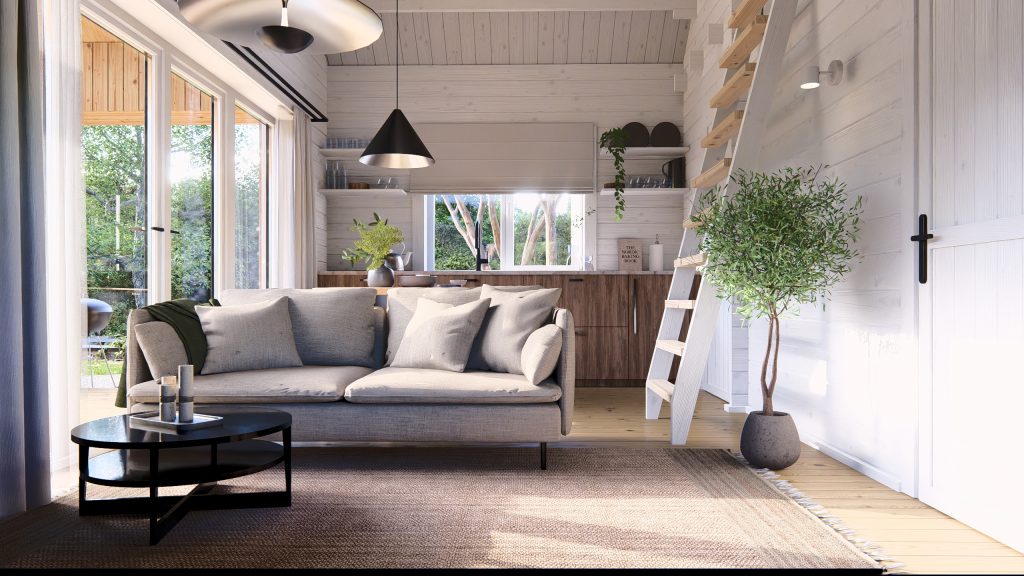
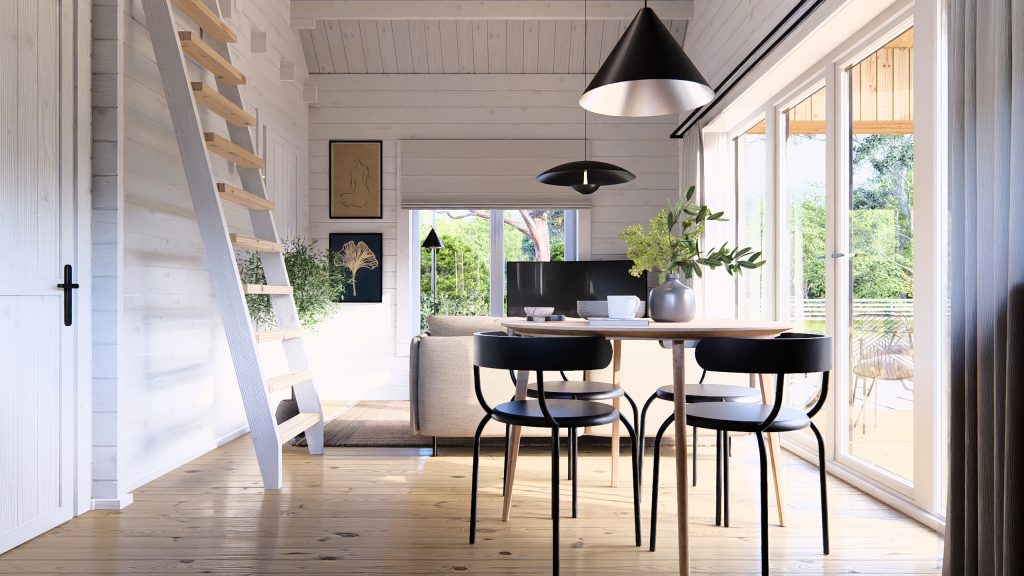
Make use of the 60-30-10 rule: the dominant neutral colour should cover around 60% of the space, for example through a light wall treatment. The secondary colour, which takes up around 30%, can be introduced through furniture or larger textiles. The accent colour, which accounts for the remaining 10%, can be used for cushions, artwork, and other decorative details. This approach maintains balance without overpowering smaller log cabin interiors. A pale neutral or white also creates a visual break from large timber surfaces and prevents the space from feeling too heavy.
Step 3: Select Furniture with Clean Lines and Multiple Functions
Selecting the right furniture can play an important role in creating a more modern look in a log cabin rather than a heavy, traditional feel. Scandinavian and mid-century modern styles work well as they rely on clean lines, functionality, and light-toned woods. Demand for modular, foldable, and convertible furniture is rising in the UK homeware market due to space constraints and hybrid working trends.
Scandinavian and Mid-Century Modern Furniture Styles
Designed to fit the proportions of log cabins, these styles offer sleek forms that do not compete with the timber. Brands such as HAY, Muuto, and Normann Copenhagen offer modern designs that are often compact and flexible. Their pieces typically feature lighter wood tones, clean minimalist lines, and practical designs.
Space-Saving Furniture Essentials for Compact Log Cabin Interiors
To maximise utility in small spaces, look for furniture that includes built-in storage, such as storage ottomans and benches. Stackable bins and wheeled storage units are flexible storage solutions that can be moved around as needed. For example, drop-leaf tables with cabinets provide a desk that can fold away while still storing office supplies.
Step 4: Layer Modern Lighting to Counter Timber Darkness
Log cabins can feel darker because of their timber-rich interiors, making layered lighting important for creating a contemporary atmosphere. The aim is to create bright, functional, and atmospheric illumination that highlights architectural features while preventing excessive shadows. In England and Wales, electrical work should be carried out or certified by a suitably qualified electrician, where required.
 Why Log Cabins Need Layered Lighting
Timber walls and ceilings can make a cabin feel darker, so it is necessary to use a mixture of ambient, task, and accent lighting. Solar, battery-powered, and plug-in lighting can provide practical alternatives where mains wiring is not feasible, particularly for temporary or non-permanent lighting.
Combining Pendant Lights, Wall Sconces, and LED Strips
Use ceiling pendant lights for ambient lighting, wall lights for decorative or task lighting, and LED strips to highlight architectural details or shelving. Generally, a minimum IP65/IP66 rating is recommended for exposed outdoor locations.
Step 5: Incorporate Contemporary Textiles and Soft Furnishings
Textiles can soften the inherent hardness of timber and introduce modern patterns and textures without making the space feel overly rustic. Current interior design trends favour warm minimalism, biophilic materials, and layered textiles.
Modern Rug Styles That Ground the Space
Choose rugs with understated geometric patterns, natural fibres such as jute or wool, or muted solid colours. This gives the space warmth and substance without creating visual clutter. Linen or open-weave woven fabrics with a heavier texture also work effectively with wood, as their natural variation complements the timber.
Cushions, Throws, and Curtains in Geometric or Minimalist Patterns
Choose cushions and throws in tactile materials such as linen, wool, or bouclé, with small-scale geometric patterns, abstract designs, or textured finishes. Stay away from busy patterns or traditional cabin designs. Mohair, alpaca, cashmere, and richly embroidered textiles are prominent materials for 2026.
Step 6: Add Sleek Storage and Minimise Visual Clutter
In smaller log cabins such as garden rooms, effective storage helps maintain a modern and uncluttered look. Built-in and concealed solutions make excellent use of available space. Corner cabinets with pull-out access can also maximise storage functionality in a log cabin.
 Built-in Shelving and Concealed Storage Solutions
Consider custom-designed shelving that fits a recess in the wall or sits along a less conspicuous section of wall. Use the same timber treatment as the surrounding wall for a seamless appearance. Consider under-bench storage, window seats with hinged lids, and cabinets that reach the ceiling. Wall-mounted shelving units are among the most versatile and space-efficient storage solutions for log cabins.
Modern Storage Furniture That Doesn’t Compete with Wood Panelling
Choose furniture that is sleek and simple in design, preferably in a colour that complements your chosen palette. Stay away from elaborate or heavy pieces that can make the space feel visually cluttered. Keep surfaces visually clear by using concealed storage and effective cable management, both of which are increasingly important in modern home offices.
Conclusion: Your Modern Log Cabin Transformation
Using the Layered Modernisation Method to create a modern log cabin interior in the UK is fully achievable. While the timber can add visual weight and colour to the space, homeowners can create a fresher, more contemporary look by focusing first on wood treatment, followed by colour, furniture, lighting, textiles, and storage. By carefully layering these elements, the cabin can feel modern and inviting while preserving the natural character of the timber. This approach creates a well-designed and practical addition to your contemporary property that could be used as a home office, guest accommodation, or for a variety of other purposes.