

















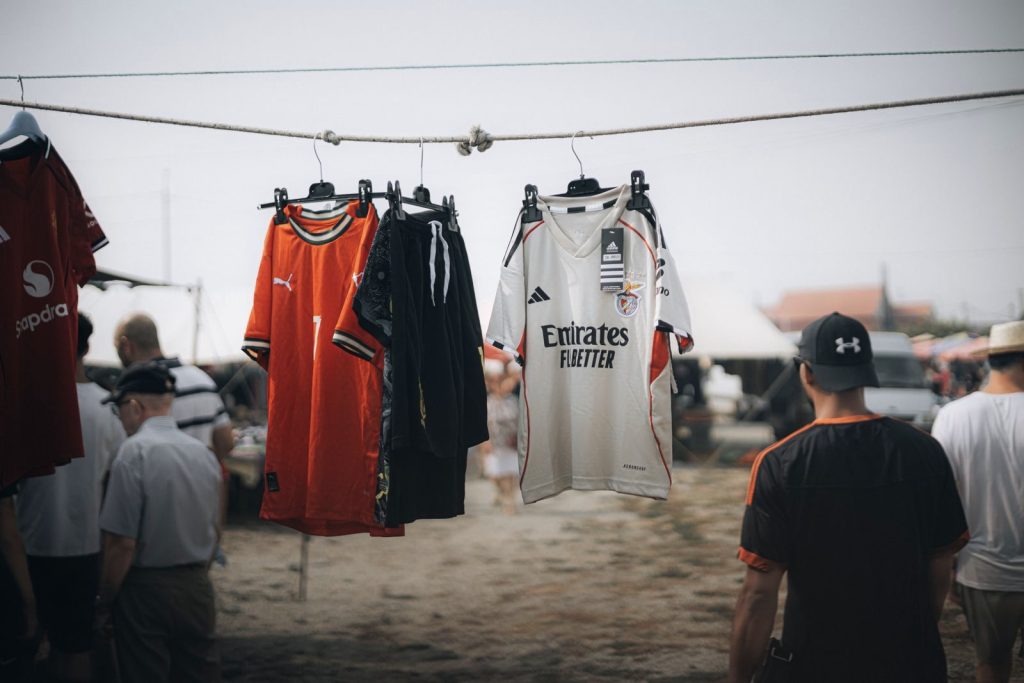
 A football shirt brings colour, graphic structure and an existing identity into an outfit before anything else is added. The crest, sponsor and shoulder details already compete for attention. Wearing one as everyday menswear therefore involves a different decision from choosing a plain T-shirt: the rest of the outfit has to respond to a design that arrives with its own associations.
Designer collaborations make that relationship visible. A shirt can remain matchwear while its colour, silhouette or presentation reaches people interested in clothing as much as the team. Its place in men’s streetwear is best understood by looking at those specific design choices, rather than declaring that football suddenly discovered fashion.
Why a kit works as a graphic system
Stripes divide the torso. A large central sponsor establishes a focal point. A contrasting collar frames the face, while sleeve trim can connect the shirt to another colour in the outfit. Those features affect how the garment reads even when the wearer has little interest in the league table.
Retro kits introduce another variable: shape. A wider body, longer sleeve or different collar can change the proportions of the whole look. A historical design reproduced today may also use a different cut from the original. The year on the description does not answer how the actual garment will sit.
Compare measurements rather than relying on the size label alone. Shoulder width, chest width and length explain whether the shirt will work over another layer or under a jacket. A fitted performance version and a roomier supporter version are not interchangeable styling tools.
Try the shirt with the layer intended underneath it. Extra fabric at the shoulder can work as part of a relaxed silhouette, while restricted movement suggests the measurements need another look.
Wales Bonner: cultural references inside matchwear
adidas’s February 2023 Jamaica announcement identifies Wales Bonner as the designer of the collection for the national teams. Home and away kits sat beside a pre-match jersey and reversible anthem jacket. The partnership made the connection between Jamaican culture, football and fashion explicit.
For a menswear reader, the useful point is the range of pieces. The shirt can supply the strongest graphic statement, while the surrounding garments provide another way to carry the same references. A complete collection does not require a wearer to reproduce the campaign outfit from head to toe.
Matchday identity extends beyond the garment
A shirt also identifies the event someone is following, and the phone beside it can carry a parallel version of the match. Scores and team news serve different purposes from a wagering interface. An adult opening an online betting game APP before kick-off needs to identify the cash stake, selected market and accepted odds rather than treating the screen as another piece of fan merchandise. Player markets introduce questions about selection and expected minutes. The crest on a shirt cannot answer any of those questions.
Checking a price also takes more information than recognising a club. A regulation-time result and a selection to qualify describe different events. When reviewing football markets on MelBet in the build-up to a fixture, the relevant comparison concerns the same selection and settlement conditions at each quoted price. Extra time and penalties should not be assumed to count in every market. Those distinctions keep sporting analysis separate from the visual allegiance expressed by an outfit.
Y-3 changed the treatment, not the recognisability
Y-3’s March 2024 Real Madrid collection provides another concrete example. Its purple fourth kit used a rose motif, with accompanying goalkeeper, pre-match and fanwear pieces. A recognisable club identity remained available while the designer introduced another visual language.
The styling lesson is about emphasis. A shirt with a prominent motif needs space around it if the detail is meant to register. Repeating the same intensity in the trousers, jacket and footwear can make the outfit harder to read. A quieter companion garment lets the kit’s distinctive treatment remain visible.
Start with the silhouette, then choose the details
Three combinations create different relationships with the shirt:
- Straight trousers let a graphic jersey become the central colour statement.
- A plain jacket can frame the collar and chest without repeating every motif.
- A simple long-sleeved layer changes the sleeve proportions and adds coverage.
The right choice depends on the shirt’s actual dimensions. A long hem under a short jacket produces a different balance from a shirt ending near the waistband. Check the outfit while standing and sitting rather than judging it only from a carefully arranged photograph.
Footwear can repeat one colour without matching the entire kit. The same principle applies to a cap or bag: a small connection may be enough. Adding every club-branded accessory changes the result from an outfit using a football shirt to a more complete expression of supporter identity.
Before buying a vintage piece, inspect the collar, printed areas and seams as well as the front graphic. Read its care label before washing, especially where names, numbers or sponsor transfers are present. A shirt that looks right on a hanger still has to withstand the way it will actually be worn.