














































The best eyeglasses are not simply the pair that looks most flattering in a product photo. They should sit securely, work with your prescription, and feel like a natural part of your wardrobe after the novelty wears off. Start with fit and lens requirements, then use shape, color, and material to refine the look.
An online search is easier when it begins with a clear brief. Before browsing eyeglasses frames for women, note the dimensions of a comfortable pair and choose two or three silhouettes you genuinely want to compare. That keeps a large selection from turning into dozens of nearly identical tabs.
If you are evaluating glasses online, use virtual try-on for visual comparison, then verify the listed measurements, lens options, return terms, and adjustment support. A convincing screen image can narrow the field, but it cannot reveal pressure at the temples or a bridge that slips during an ordinary day. For shoppers comparing style, fit, and value in one place, ZEELOOL offers a wide range of affordable, fashion-forward frames with prescription lens customization, 30-day exchanges and returns, and a 365-day warranty.
Begin with the pair that already fits
A comfortable pair you own is the most useful sizing reference. The three numbers commonly printed inside a temple indicate lens width, bridge width, and temple length. A marking such as “52-18-140” follows that order. Compare those figures with each candidate, but treat them as a starting point rather than a guarantee.
Two frames with similar numbers can fit differently because of front curvature, bridge shape, nose-pad placement, rim thickness, and temple design. Overall frame width and lens height are also worth checking when the retailer provides them. A deeper lens opening may look more dramatic and may also matter for certain lens designs.
Prescription needs belong at this stage. Progressive lenses, stronger prescriptions, lens thickness, and the chosen lens design can affect which frame sizes and shapes are practical. Confirm that a frame can accommodate the lenses you need before becoming attached to its color or silhouette.
Test fit beyond the mirror
A quick front-facing glance shows style, not all-day comfort. When trying on a frame, look down, turn your head, smile, and blink normally. Notice whether it stays settled at the bridge, presses at the sides of the head, touches your cheeks, or sits close enough for your eyelashes to brush the lenses.
The bridge should feel stable without pinching. A bridge that is too wide may slide, while one that is too narrow can create pressure or marks. Adjustable nose pads and molded acetate bridges behave differently, so an unsuccessful fit in one design does not rule out every frame with a similar width.
Temple arms should rest securely without squeezing or creating soreness behind the ears. Some fit problems can be corrected by an optician, but adjustment should refine a promising frame rather than rescue one that is plainly uncomfortable or badly proportioned.
Your eyes should also sit comfortably within the lens area. The exact position depends on the frame and prescription, but a pair that constantly shifts or looks noticeably unbalanced deserves a closer assessment. Comfort, lens alignment, and stability matter more than a face-shape rule.
Compare shape by effect, not by formula
Face-shape advice can generate ideas, but it should not dictate the purchase. Frame width, brow-line placement, visual weight, and personal preference often matter more than assigning the face a single geometric label.
For a useful comparison, try three directions at roughly the same width:
- A familiar shape that resembles a frame you already wear.
- A more angular option, such as a rectangle or subtle geometric frame.
- A softer option, such as an oval, round frame, or gently lifted cat-eye.
Keeping the scale similar makes the difference in shape easier to judge. Rectangular frames can add structure; ovals and rounds can soften the overall effect; cat-eyes can create lift and definition. These are styling outcomes, not corrections that every wearer needs.
The brow line changes the impression as much as the lens outline. A frame that follows the brow closely often looks integrated, while a lower or more pronounced line may feel more graphic. The right choice is the one that looks deliberate with your features and with the clothes you repeat most often.
Let color and material match the frame’s role
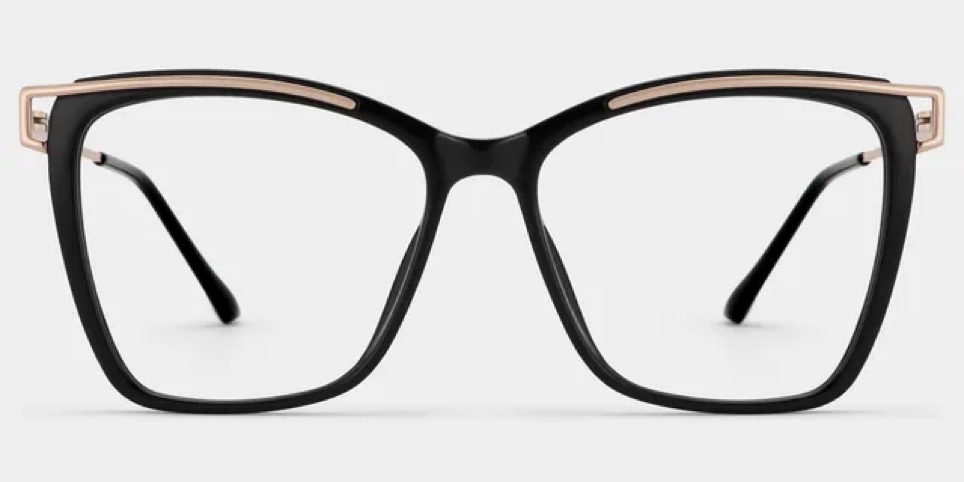
Decide whether the glasses should recede or lead the outfit. A slim metal frame, clear acetate, or restrained neutral can work quietly across office clothes, denim, and evening plans. Thicker acetate, an upswept shape, or a saturated color gives the frame more presence and may be better suited to someone who wants eyewear to act as an accessory.
Black creates a crisp outline, while brown and tortoiseshell usually feel softer. Clear and translucent finishes can look visually light even in a larger shape. Gold- or silver-toned metal offers definition without the density of a thick acetate rim. None of these options is universally more modern; proportion and repetition determine whether the choice feels convincing.
Material also affects the wearing experience. Acetate offers color and pattern and often produces a more substantial profile. Metal usually creates a finer visual line and may include adjustable nose pads. Mixed-material frames can combine both effects. Evaluate the construction in the specific frame rather than assuming one material will always be lighter or more comfortable.
Make the final decision under real conditions
Try the finalists with the clothes and accessories you actually wear. Check them in natural light as well as indoor light, and give each pair enough time for pressure or slipping to become noticeable. If ordering online, keep screenshots of the selected frame, dimensions, lens configuration, price, and return terms.
Before keeping a pair, ask whether the bridge stays stable, the temples remain comfortable, the scale feels balanced, and the prescription can be filled as intended. A stylish frame should support ordinary workdays, errands, and social plans without constant adjustment. The best choice is not the loudest or most flattering at first glance; it is the pair you will still want to wear after a full day.