




Between Craftmanship and Community.
We’ve all heard the whispers that “fashion month is over,” but anyone saying that clearly hasn’t been paying attention, just a few days ago we were in Lisbon, the beating heart of Portugal, for ModaLisboa’s Fall/Winter season. Like every city that hosts a fashion week, Lisbon unveiled a bold lineup of designers, Béhen, Bárbara Atanasio, and the ever-exciting Sangue Novo Awards, each with a story, a statement, a vision.
This season felt like a reset, a creative ignition: personal narratives collided with rebellious experimentation, and the city’s designers pushed further into new, confident directions, fusing craftsmanship with art. From the Mudé Design Museum to iconic venues across the city, we were front and center, witnessing the next generation of Portuguese talent take flight. And don’t worry if you missed it, here’s our roundup of the highlights that are already setting the tone for what’s next.
ARNDES
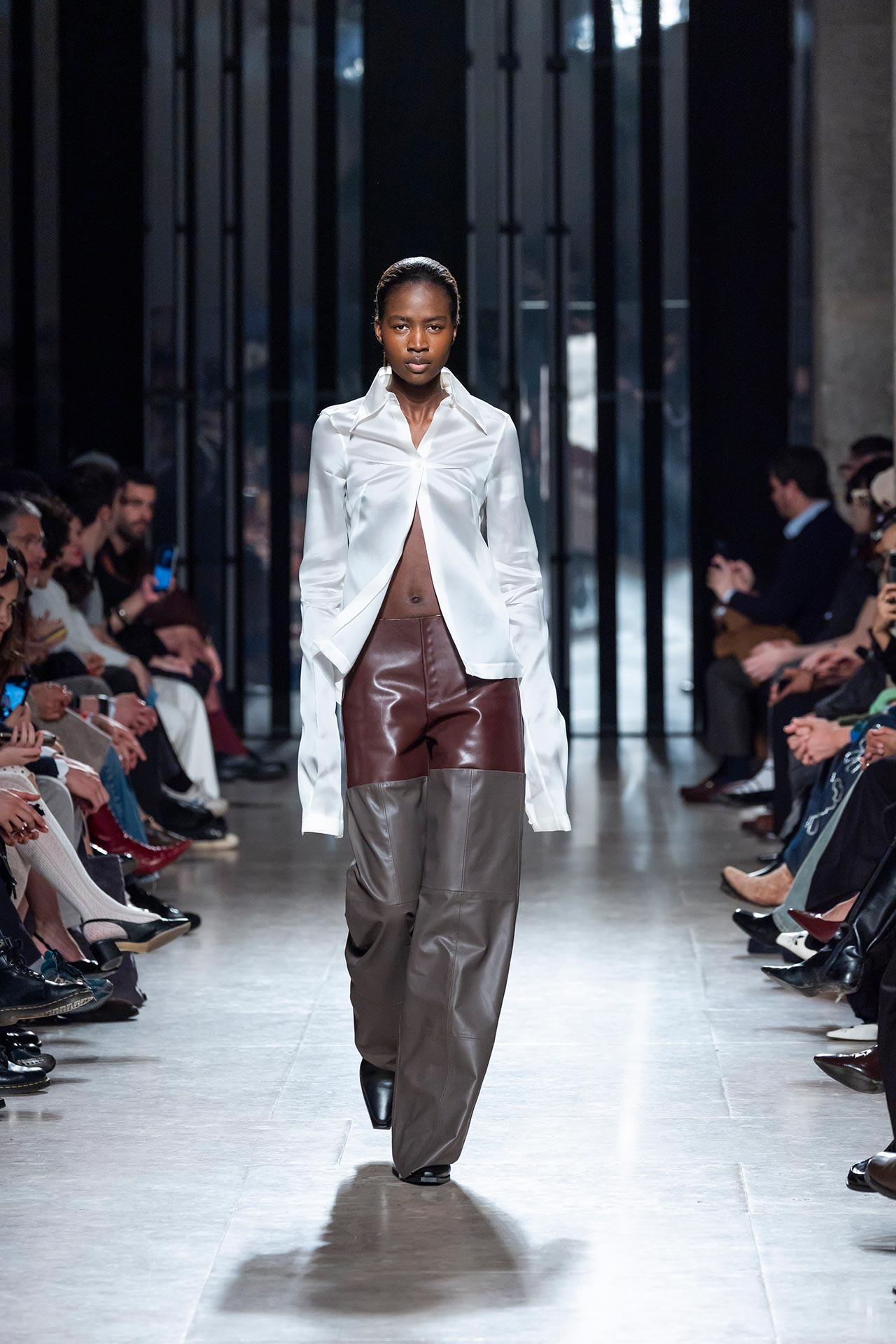
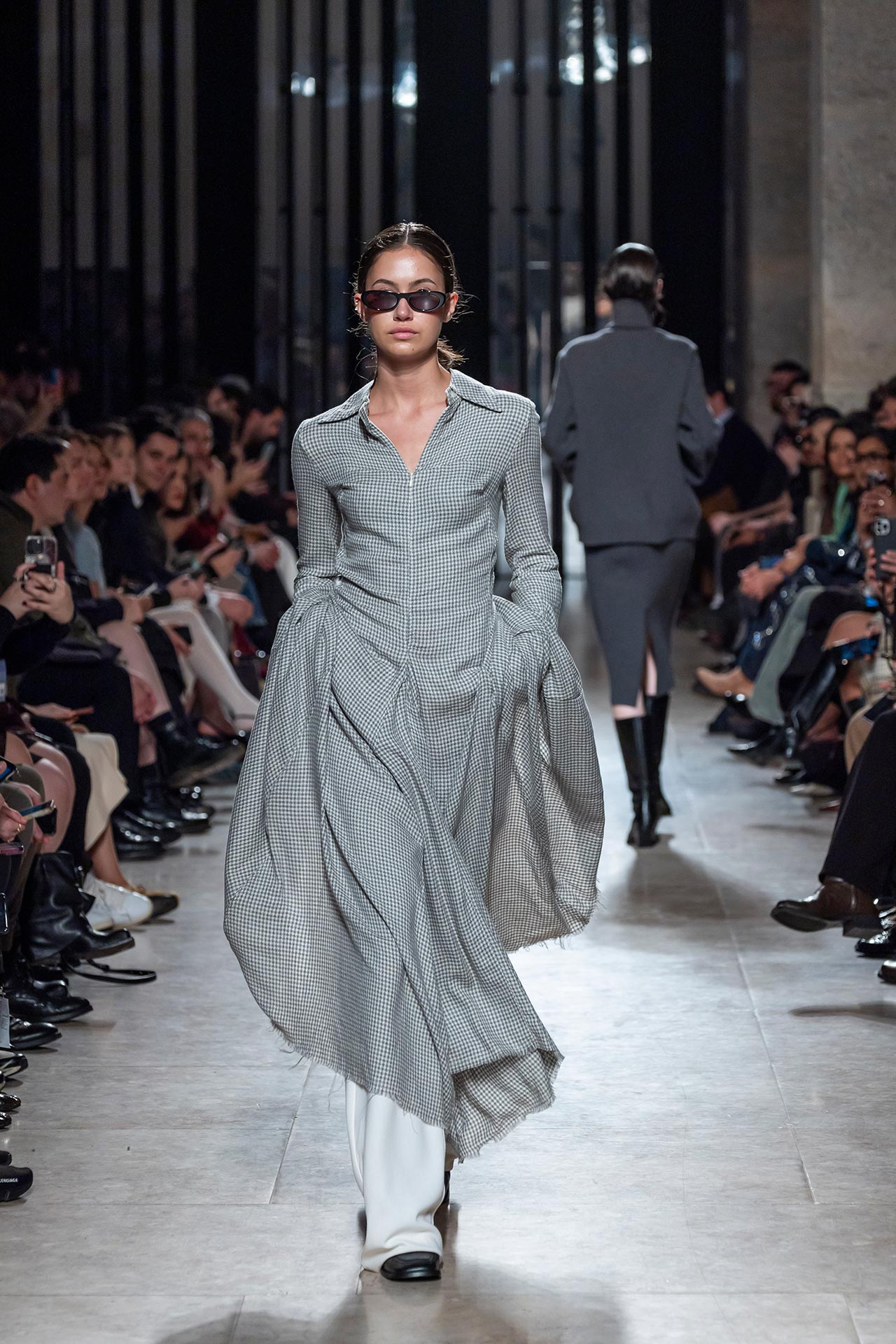
Over at Workstation, ARNDES reminded us that a collection it’s a continuous, evolving journey. The show opened with a sharp contrast: double-layered leather trousers paired with a simple white shirt, setting a tone that was both intentional and experimental. As the runway progressed, we saw a shift into soft tonalities and fluid shapes that danced between being “of the now” and completely timeless. The interaction between different material weights created a harmony that felt both complex and intimate.
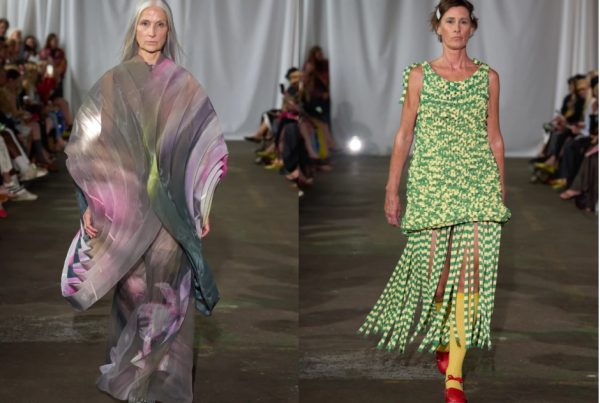
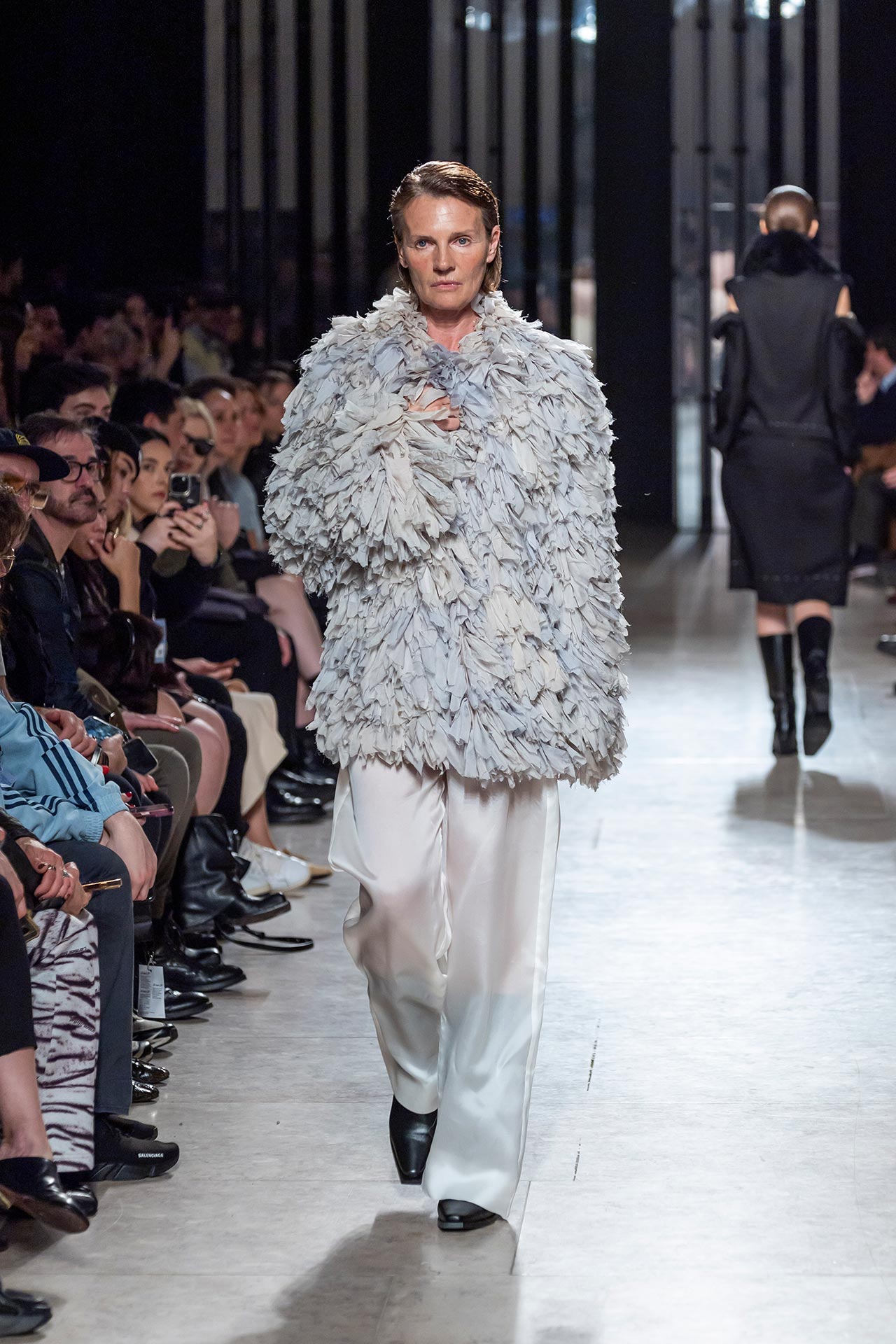
The undisputed show-stopper was the voluminous, shaggy coat and matching skirt in a muted dusty lavender. Constructed from hundreds of jagged, fringed layers, the “feathered” effect created a high-drama silhouette that was pure sculptural art. It was a sum of rich textures and ambiguous chronologies that pushed past the limits of the body.
SANGUE NOVO
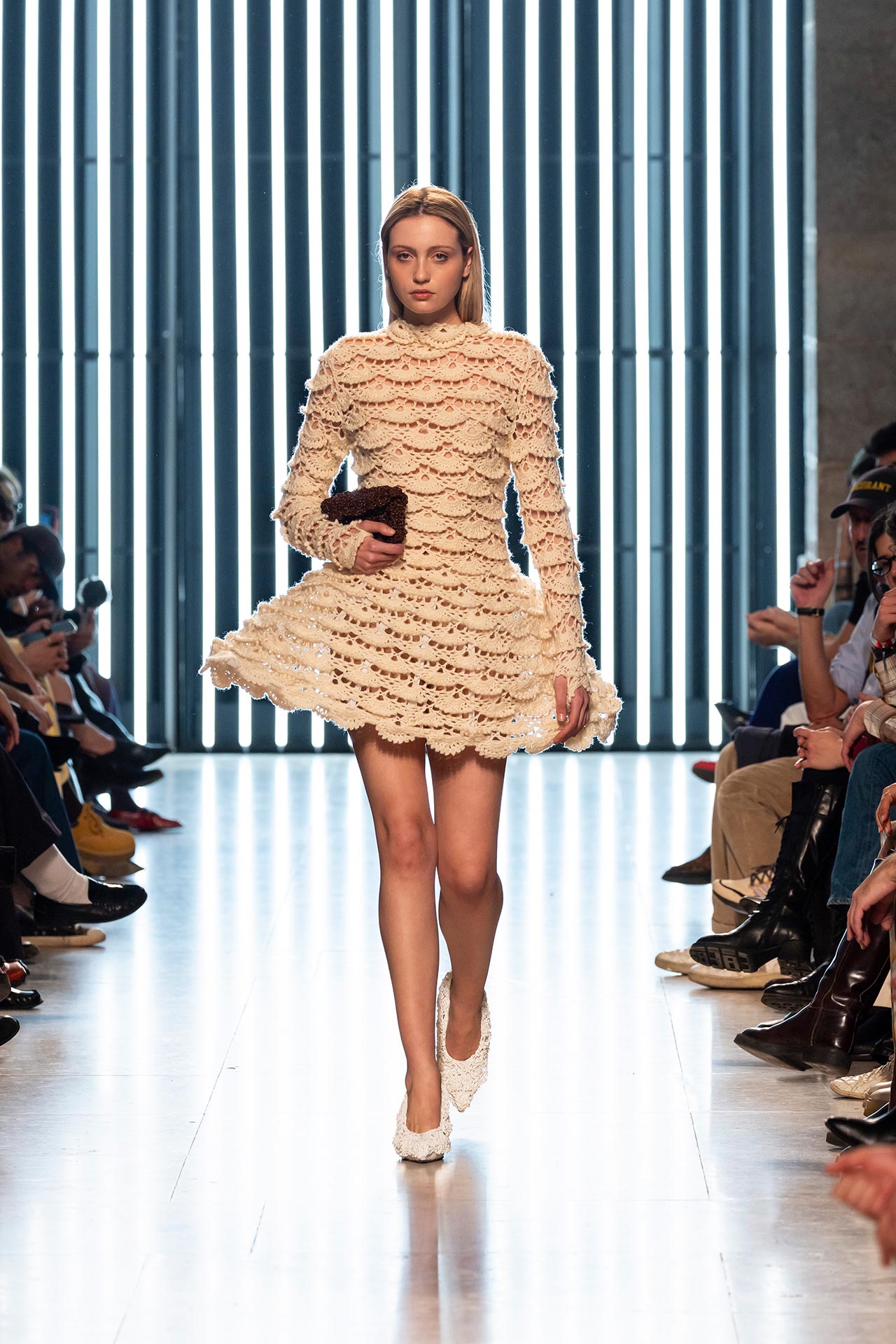
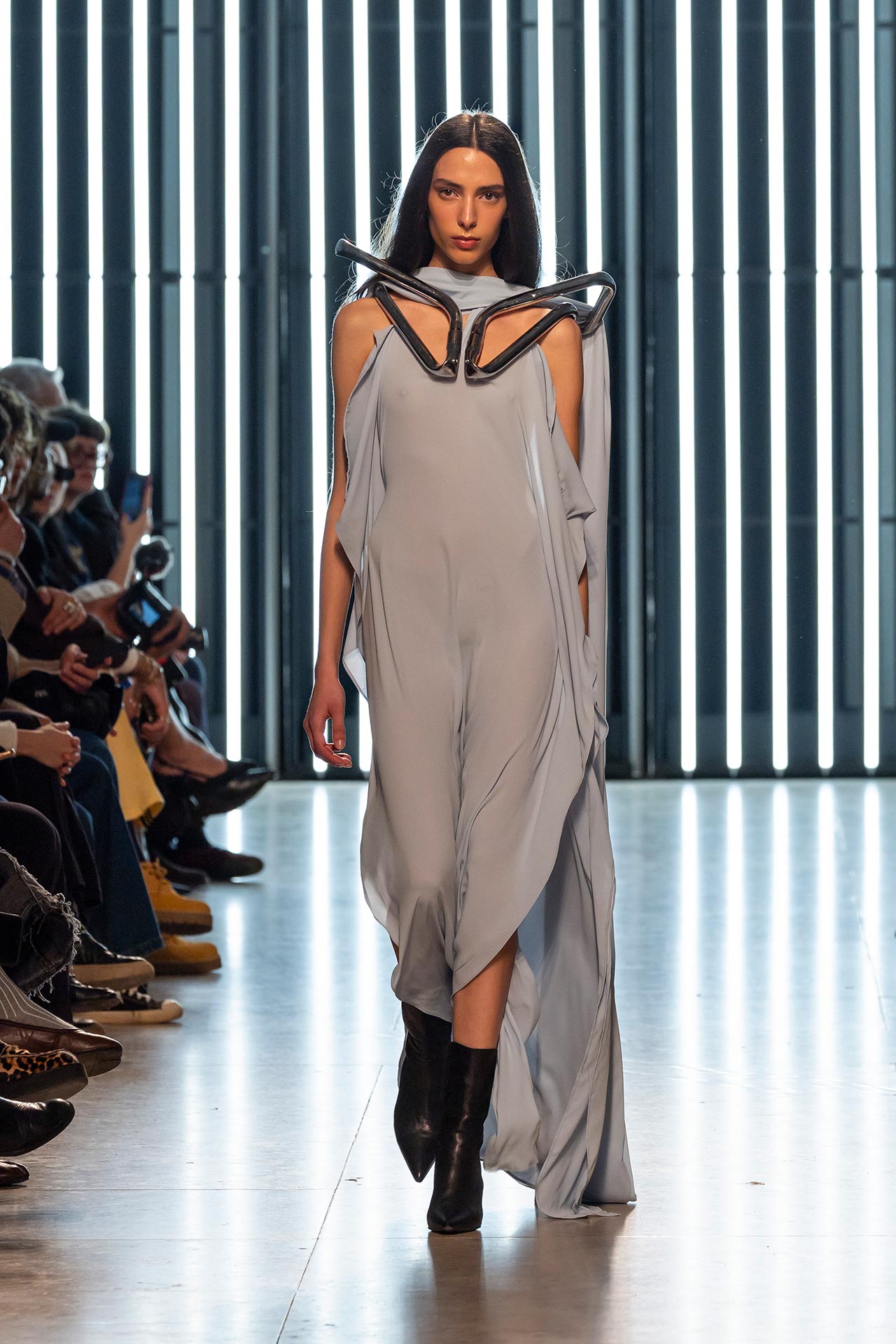
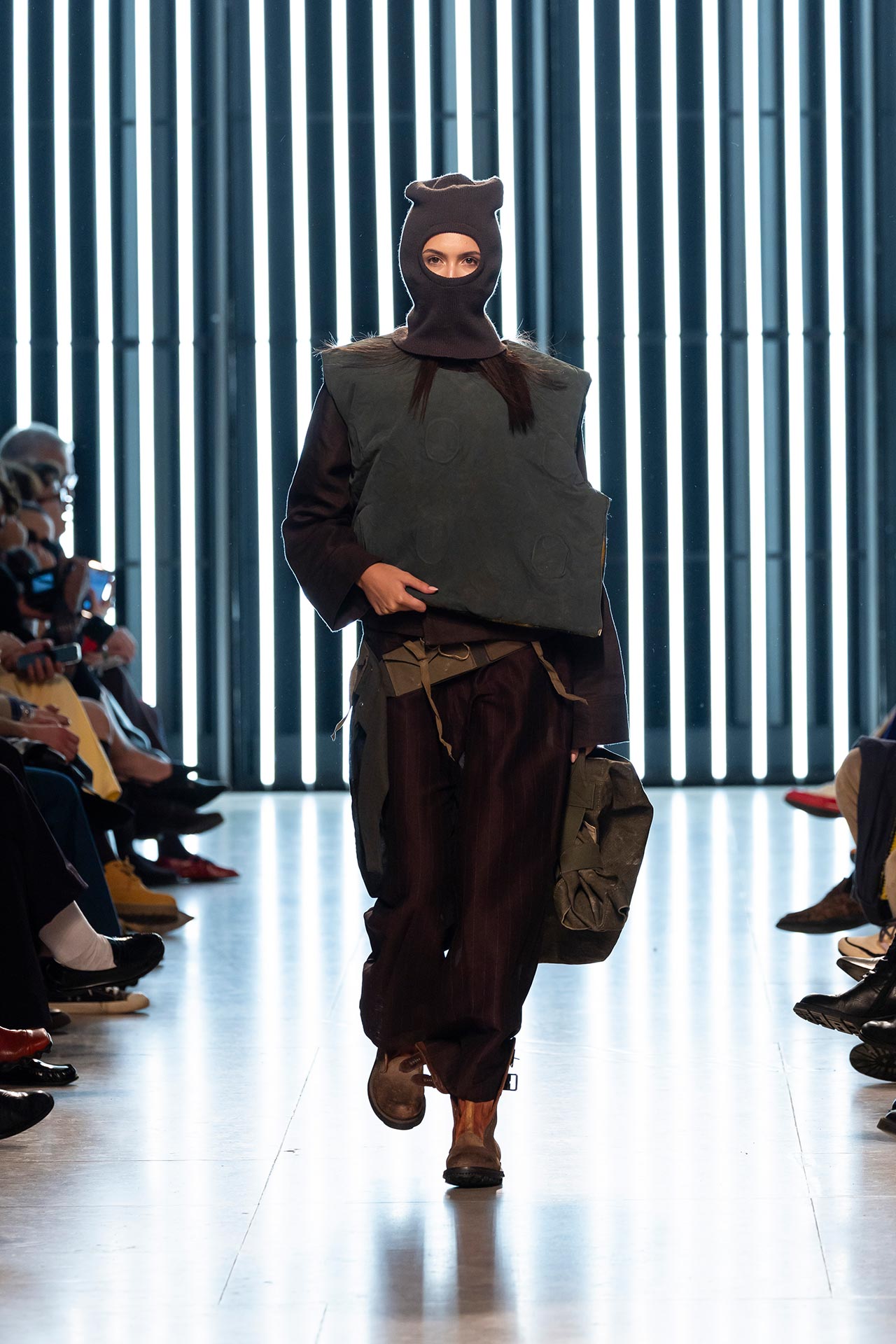
If there’s one thing that’s clear, it’s that students are no longer amateurs. This year, after a rigorous selection process, five designers took the seasonal runway to present their collections, each exploring their identity, whether through their homeland, roots, or the daily habits that shape who they are. Through craftsmanship and silhouettes, each designer delivered a distinct yet cohesive and solid collection:
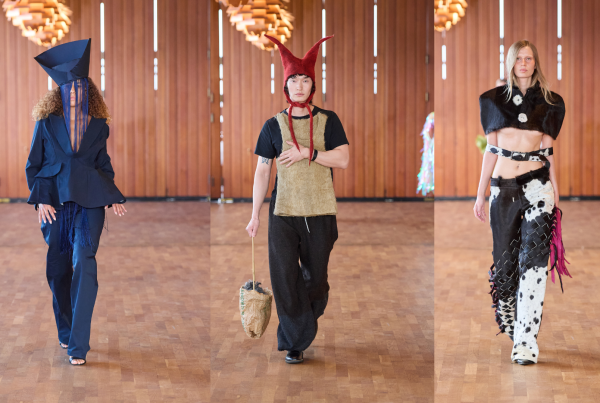
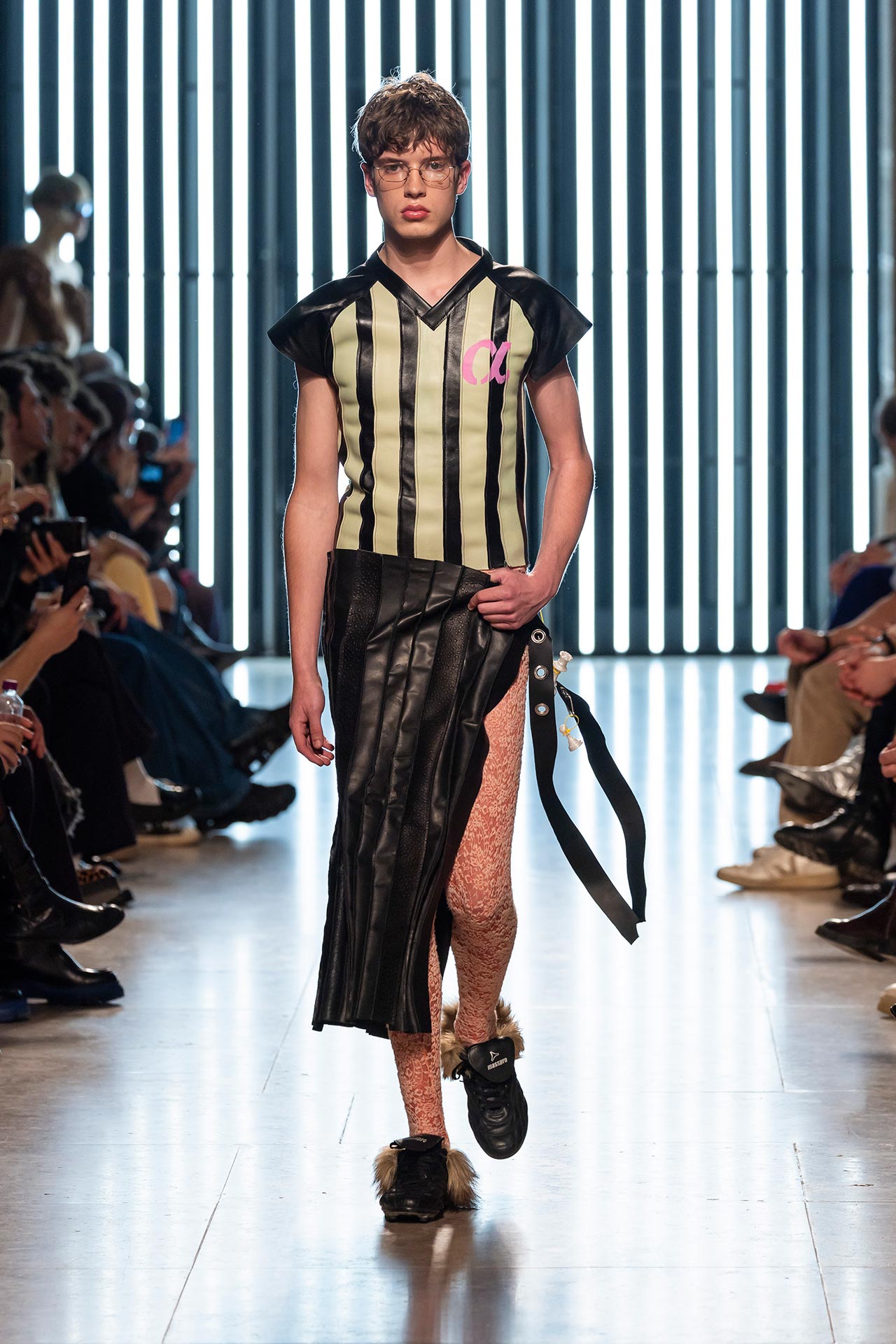
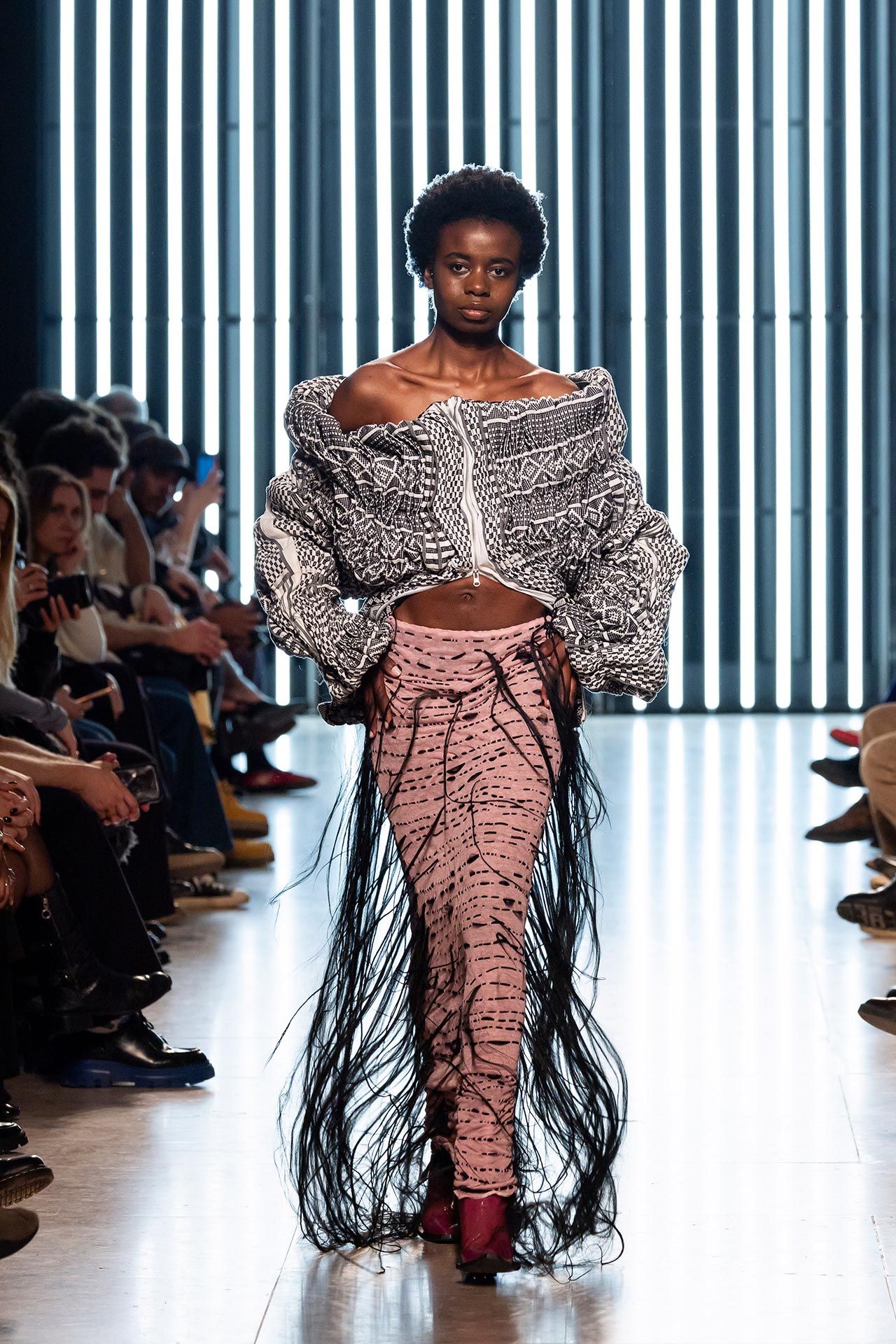
This season’s showcase felt like a high-voltage collision of grit, heritage, and pure aesthetic guts. Adja Baio set the pace with PATAKERA, where cultural excess and kitsch became a rhythmic language of oversized braids and traditional textiles. Ariana Orrico followed by putting the “Alpha Male” under a microscope, using rugged leather and zero-waste patchwork to expose the fragile line between power and a total checkmate, a vision that earned her the ModaLisboa x Burel Factory Award. Mafalda Simões kept the energy tactile and tender with SOFT TISSUE, weaving a slow-burn narrative of resilience through knitwear that mimicked the body’s own scars and strengths, ultimately taking home the ModaLisboa x IED – Istituto Europeo di Design Award. Mariana Garcia found poetry in the pavement, mixing the ethereal flow of Dickinson with the industrial edge of seat belts and chrome handlebars, while Xabier Silva clocked in for EXTRA HOURS, proving that the most honest art was built from the daily grind and the personal archives of his own family.
BÉHEN
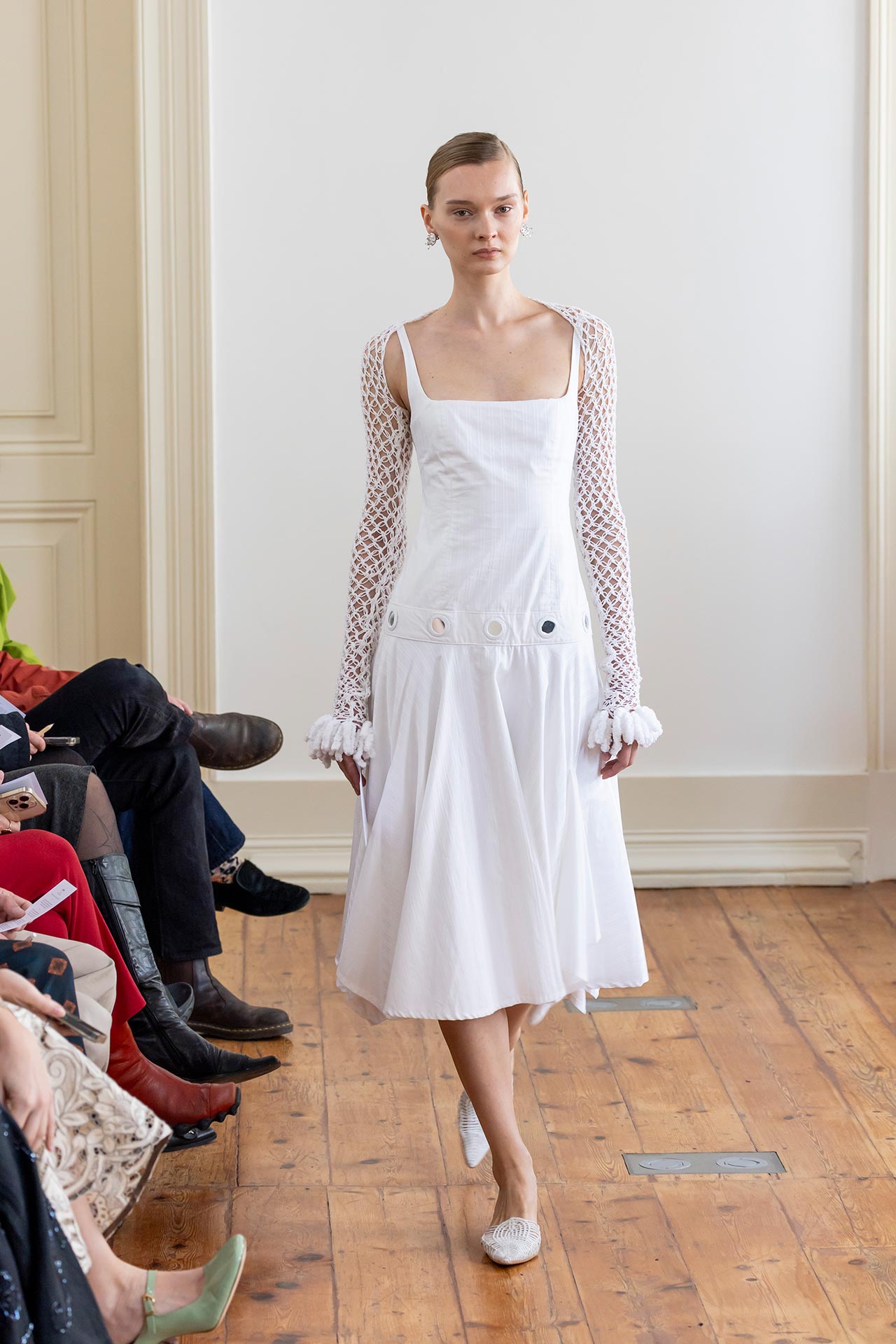
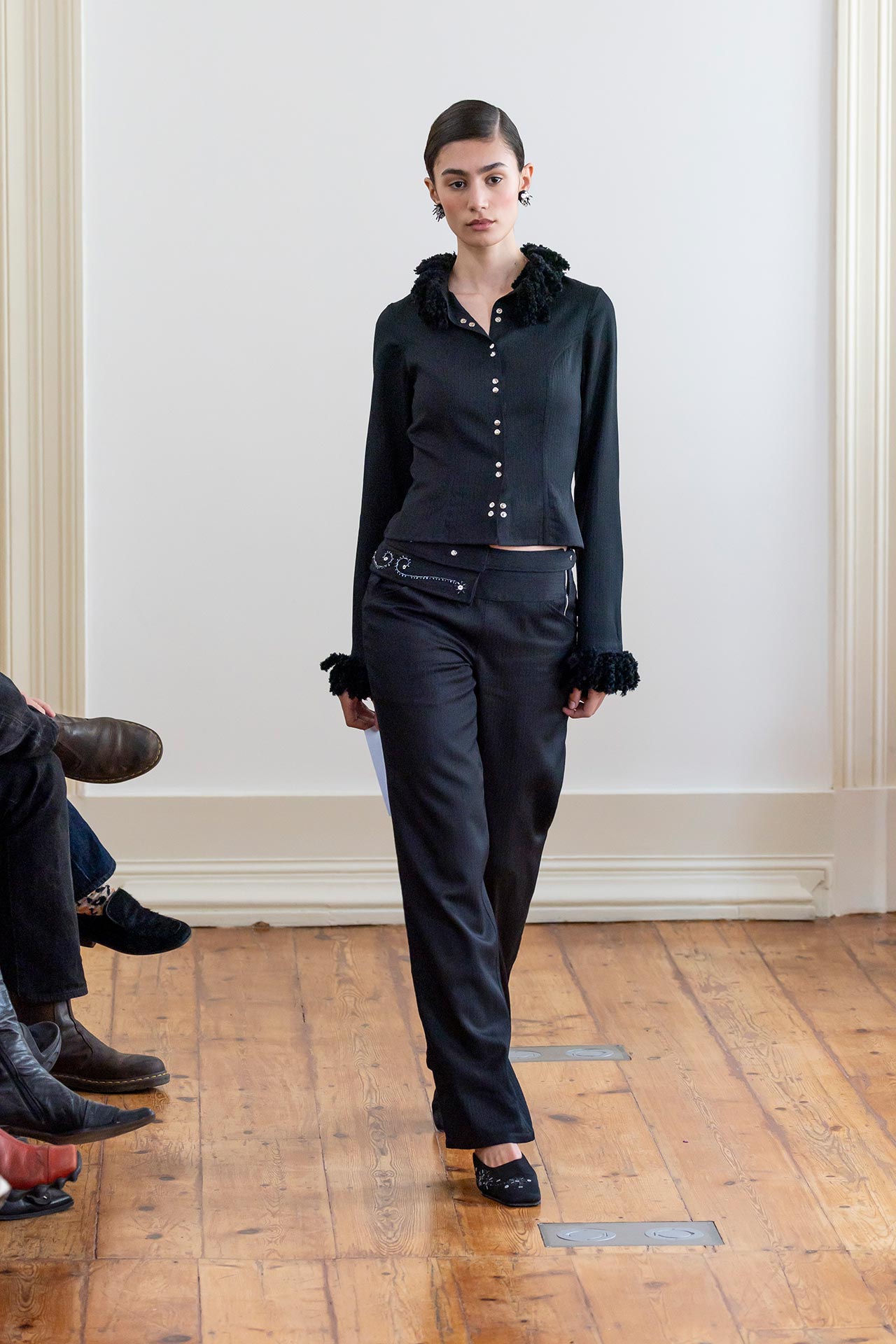
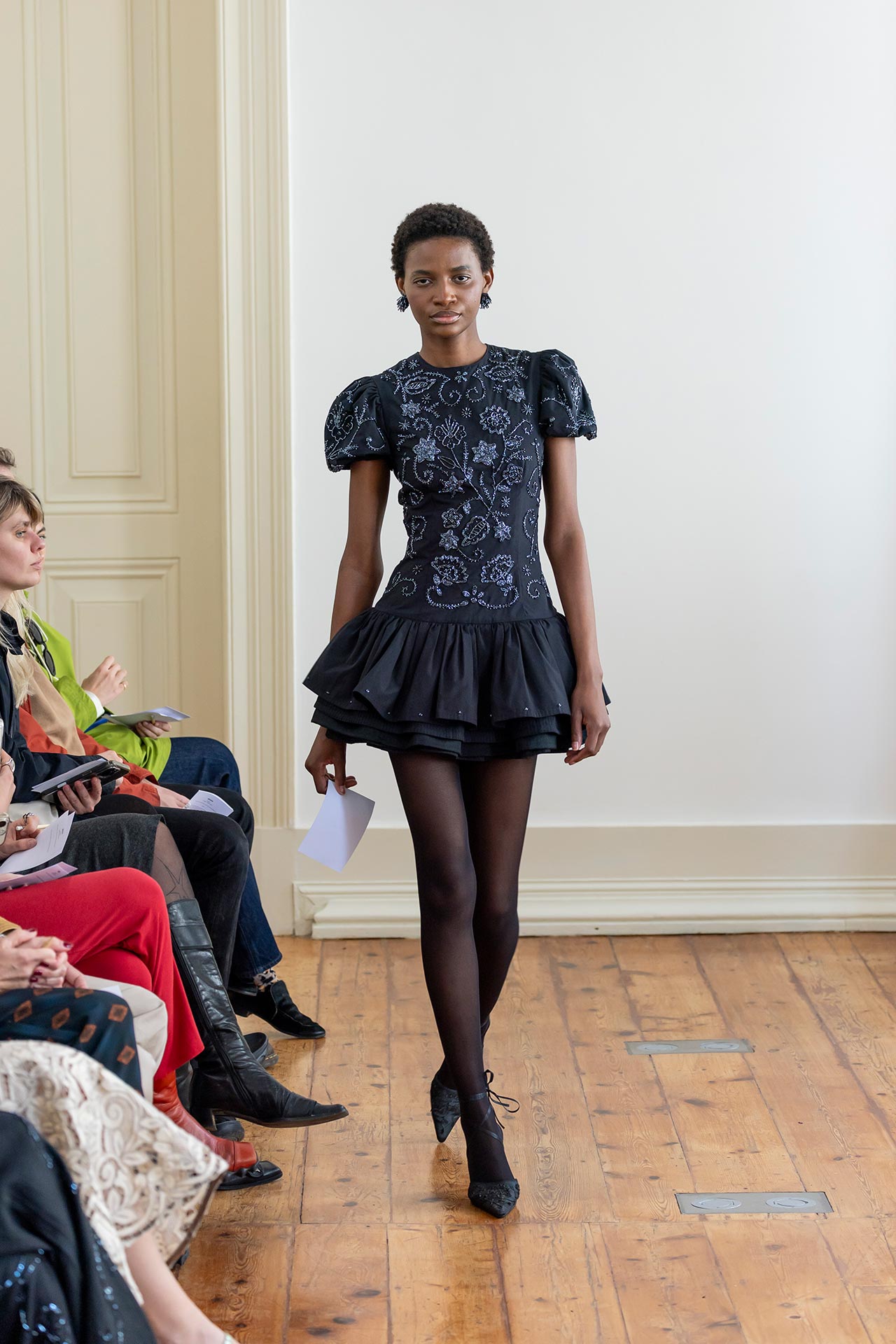
Arriving at the venue to find a blank piece of paper and a pencil was such a vibe, alongside the release we were asked to write our favourite looks on it. The collection itself was effortlessly ethereal and, honestly, just incredibly chic. Béhen leaned deep into demi-couture territory, showing off some insane craftsmanship that felt both ancient and entirely now. We saw those iconic seven-layer Nazaré skirts reimagined for the modern woman, each layer symbolizing protection against the “waves of life,” paired with shirts finished in Alentejo “cat tails.” It was a heavy hit of Portuguese heritage served with a high-fashion edge.
The details were where the real magic happened. The “Catita” dress—a total show-stopper covered in glass beads—took months of hand-embroidery to finish, and you could feel that labor of love in the room. But what really stood out was the global soul of the collection; incorporating mirror embroidery from Gujarat via the Homelore Project brought a beautiful layer of protection against the “evil eye” to the runway. Moving to 100% natural materials and incorporating Burel from Serra da Estrela showed a serious commitment to the craft.
BÁRBARA ATANÁSIO
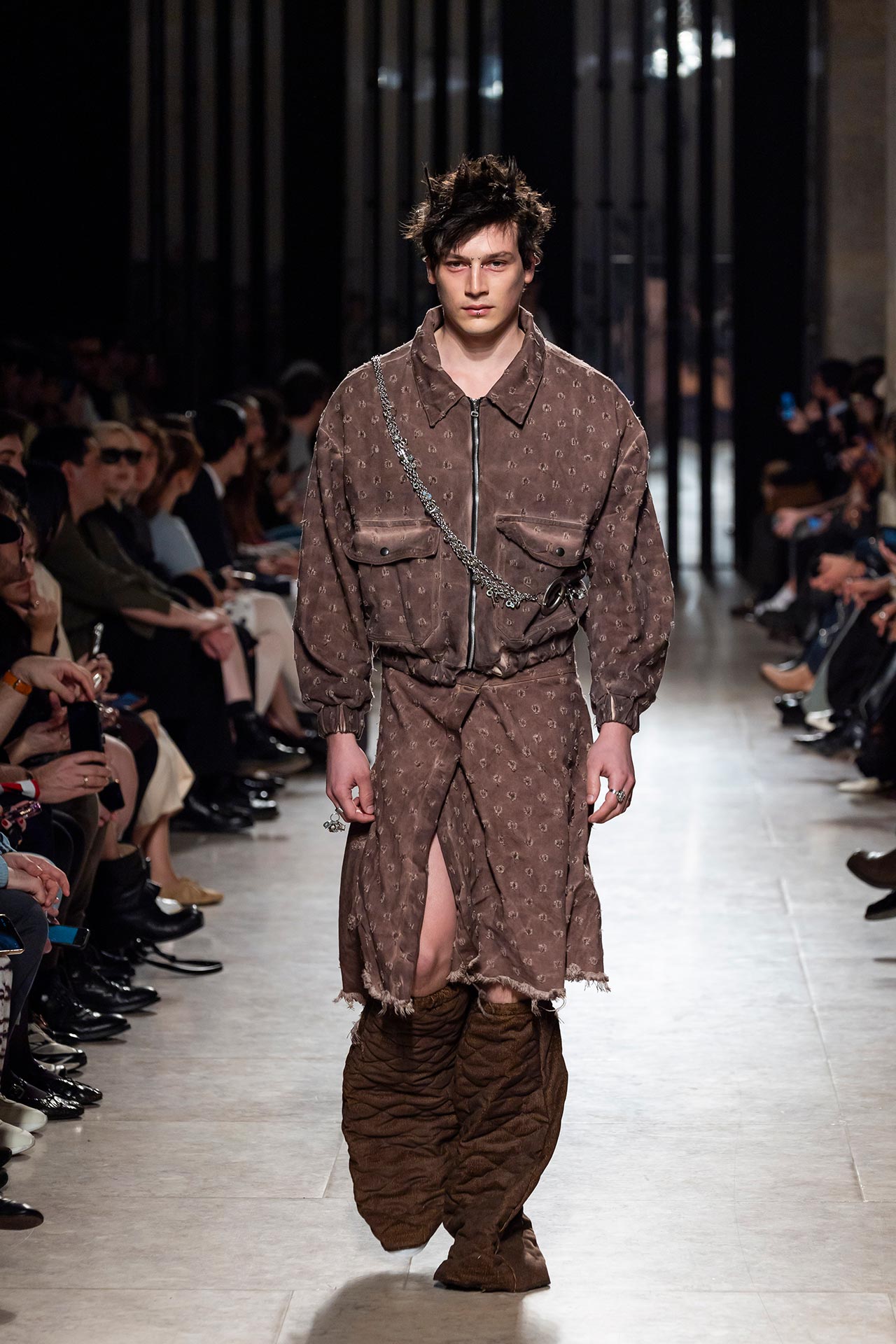
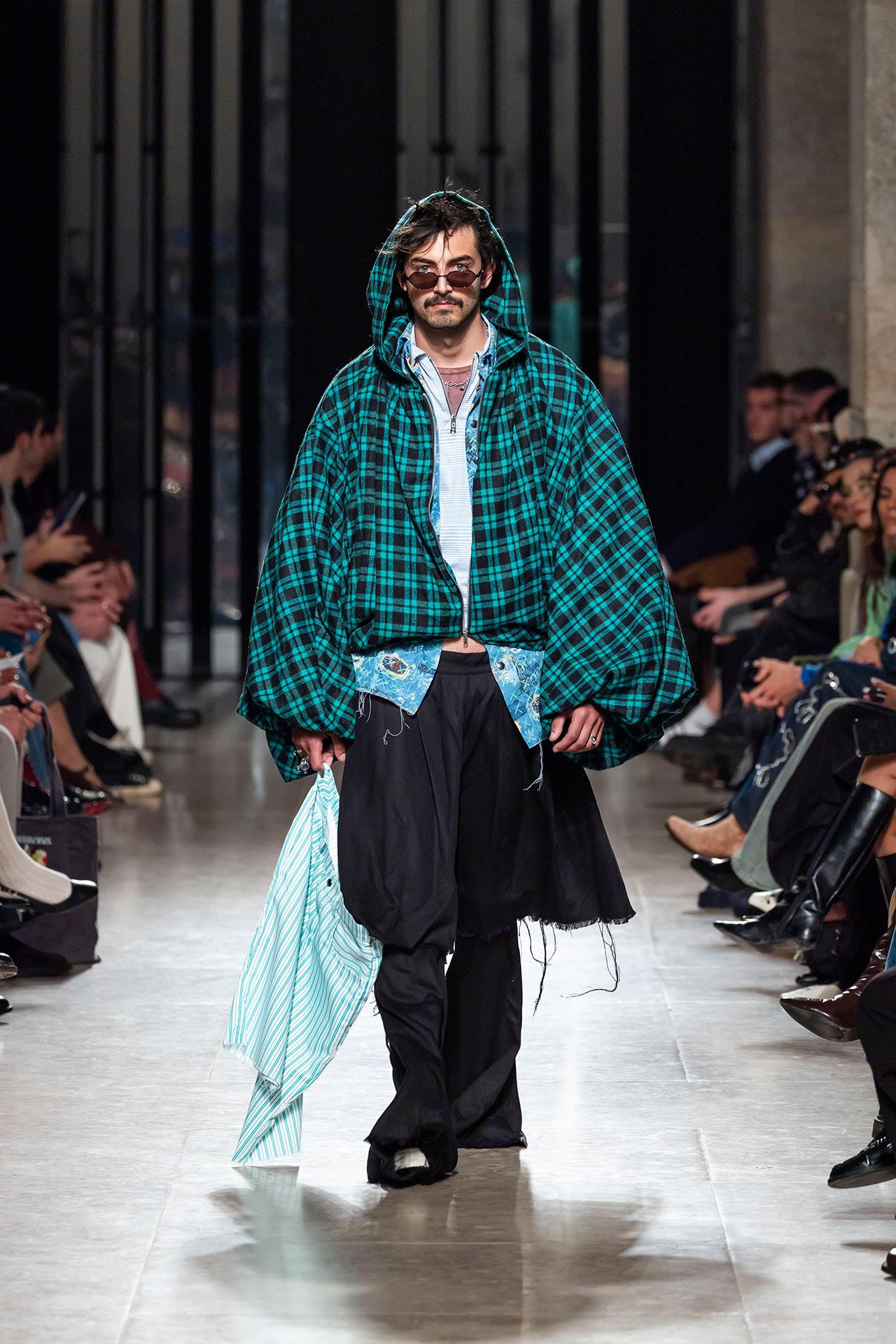
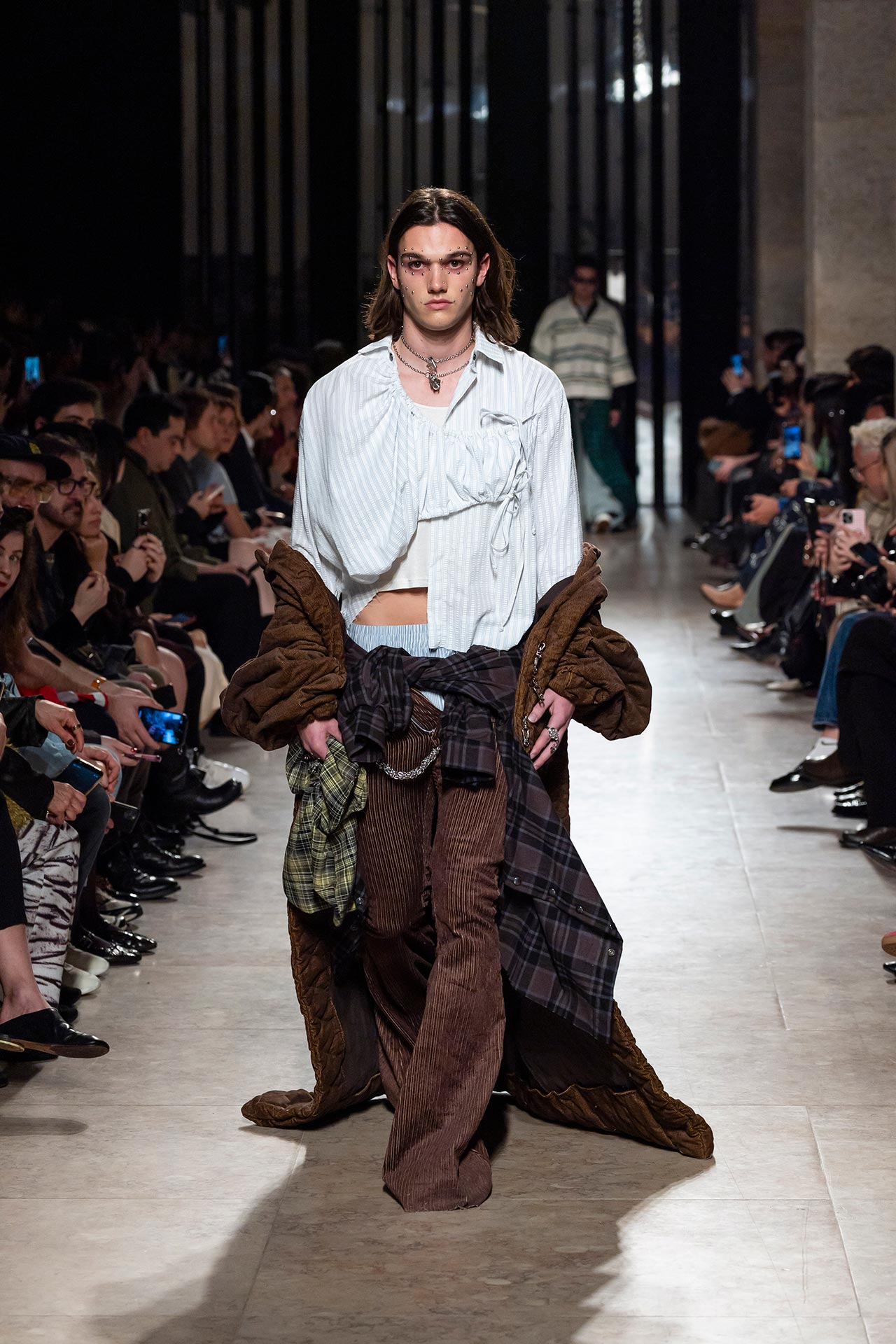
Bárbara Atanásio delivered a punchy, psychological deep-dive with FICA-TE MAL, a collection that explored the “subtle violence” of being told how to behave. It wasn’t just about the clothes; it was about the “mental and moral orthopedics” of inherited correction. The vibe was distinctly “Vans-core” and skater-influenced, making it the go-to choice for the cool Portuguese crowd. We saw reworked denim, baggy jackets, and flannel shirts layered with an effortless, street-smart attitude that felt like a fresh evolution from her previous work.
The highlight was undoubtedly the patterns, which brought a grounded, “slowed-down” maturity to her signature streetwear aesthetic. Despite the heavy theme of “invisible laws” and moral weight, the result felt incredibly light and wearable. It was a collection of “habitat deviation”—perfectly messy, heavily accessorized with jewels, and unapologetically bold. Atanásio proved that even if someone tells you “it doesn’t suit you,” the best response is to wear it anyway.
GONÇALO PEIXOTO
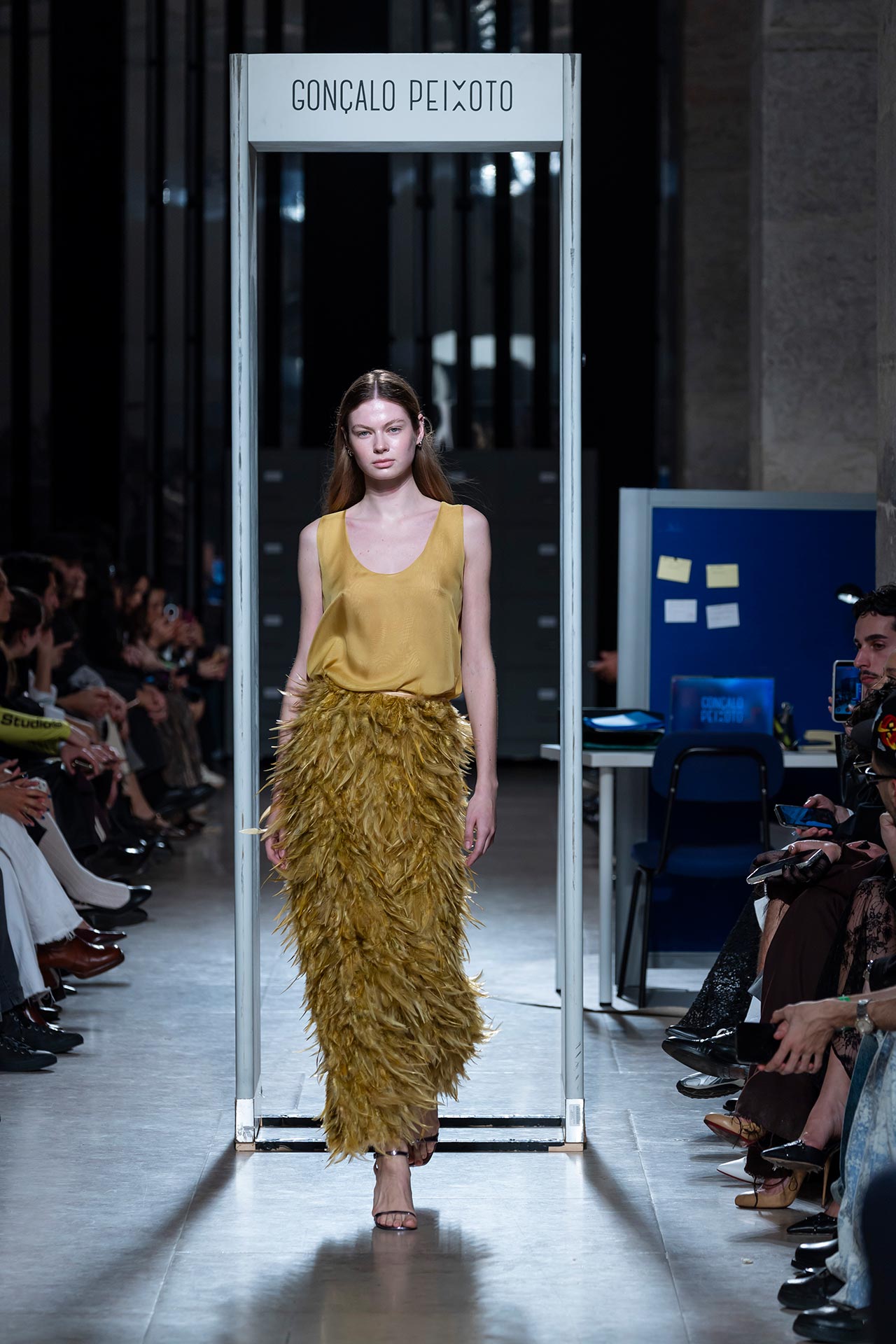
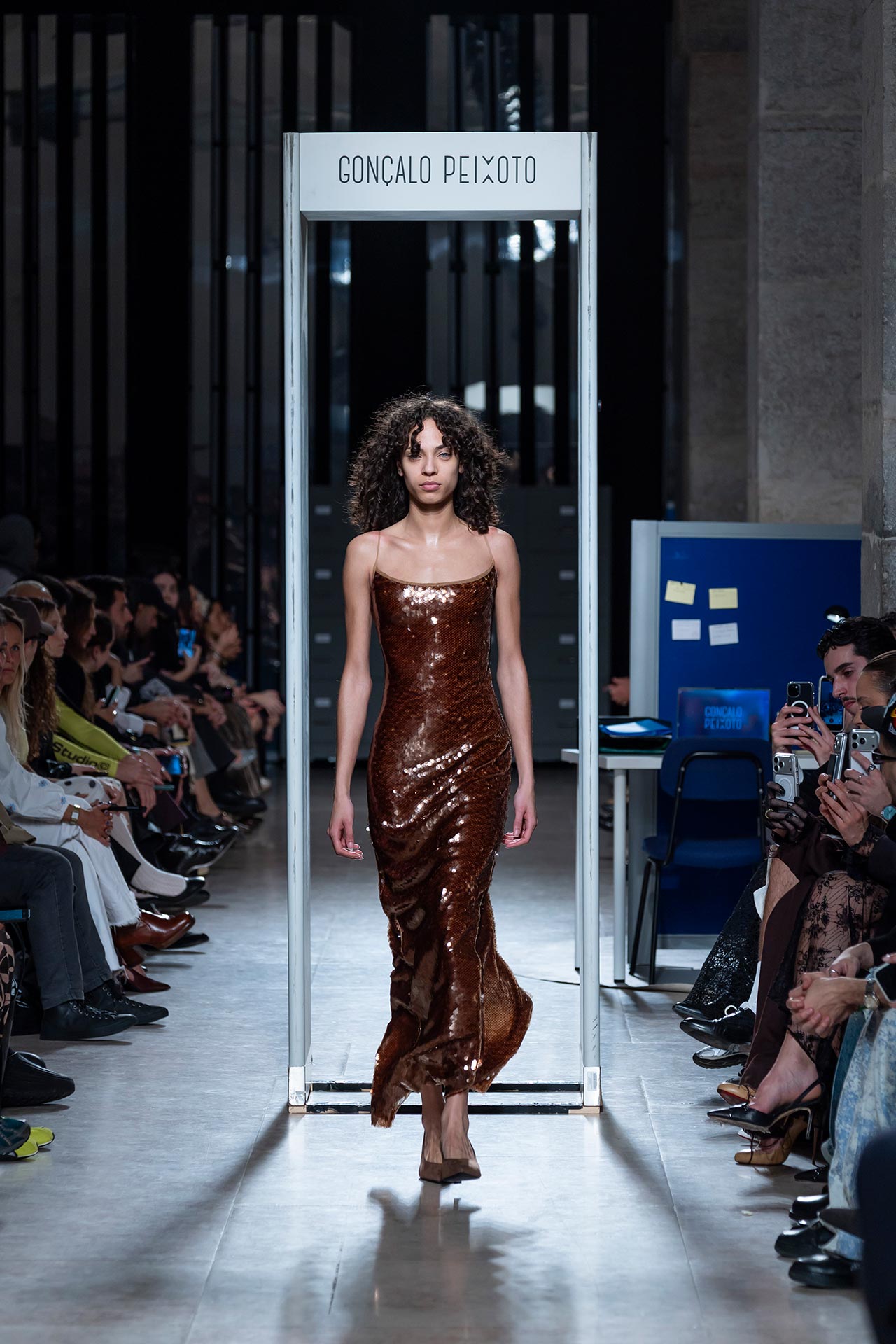
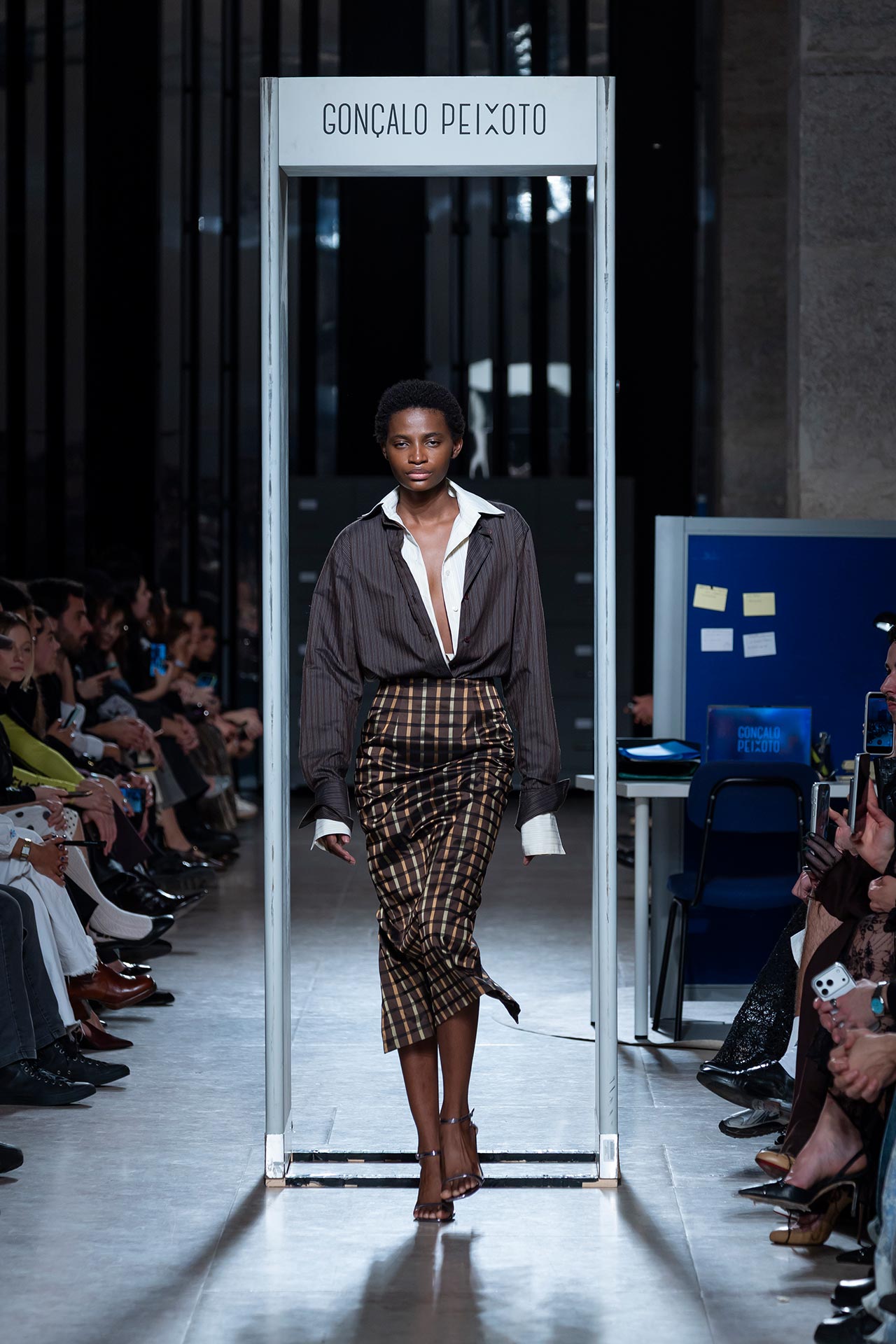
Walking into a set that felt like a high-security office filter, Gonçalo immediately tapped into the 2026 zeitgeist: a world caught between the “answers” of AI and the deep uncertainty of our own existence. The collection was a brilliant conversation starter, clashing Y2K-inspired silhouettes with the digital tension of the present. It was a “collection of questions,” using fashion to probe the conflict between artificial intelligence and human intuition.
The formalwear-heavy lineup made a powerful, feminine statement. Simple shirts acted as clean canvases, styled under layered tees or paired with sharp skirts, while big, commanding coats and see-through dresses added layers of complexity to the “office” vibe. It felt like a wardrobe for a future we haven’t quite figured out yet—structured, skeptical, and undeniably cool. Gonçalo proved that while ChatGPT might have the answers, fashion is still the best place to ask the questions.
LUIS CARVALHO
Closing this seasons Luis Carvalho was the best option, he invited us into a “silent territory” with AFTERIMAGE, a collection that felt like a beautiful, hazy fever dream of what we remember versus what actually was. The silhouettes played with a clever duality—one moment a waist was snatched with architectural precision, and the next, a dropped armhole gave off a totally relaxed, “don’t care” energy. It was a masterclass in tension; the clothes moved with a gentle weight, as if every drape and pleat was holding onto a secret from the past. The wrinkled jacquards were a stroke of genius, acting as tactile metaphors for lived-in memories that refused to be smoothed out.
The color palette stayed mostly in a sophisticated “visual silence” of greys, black, and white, which made the sudden pops of pulsating blood red feel incredibly visceral. The collaboration with the centennial house Topázio was the ultimate flex, turning everyday objects into poetic jewelry that sat right on the edge of functional art. But beyond the technical brilliance, there was a real heart to the show—it felt like a love letter to Carvalho’s “chosen family,” the people who have been there since day one.
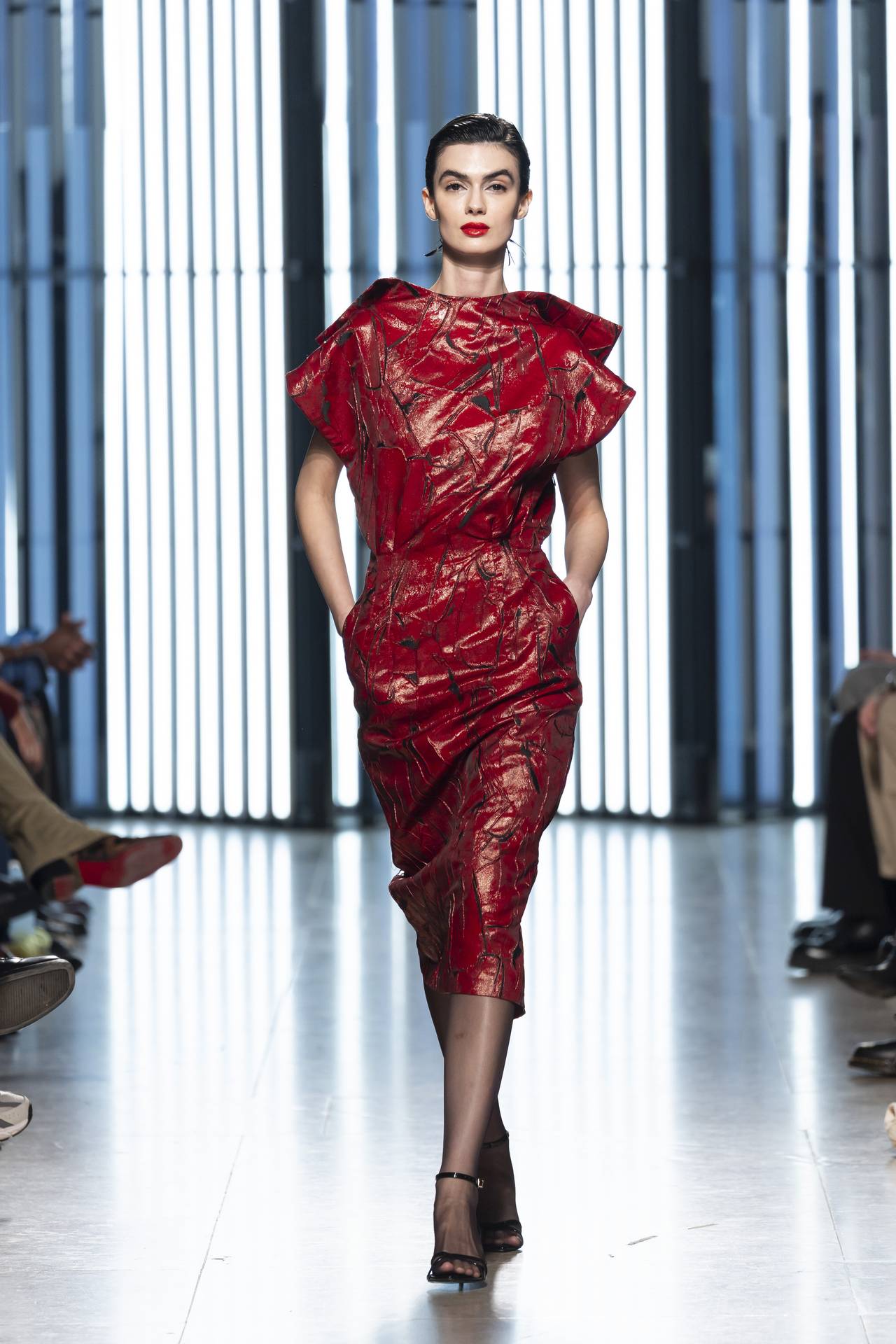
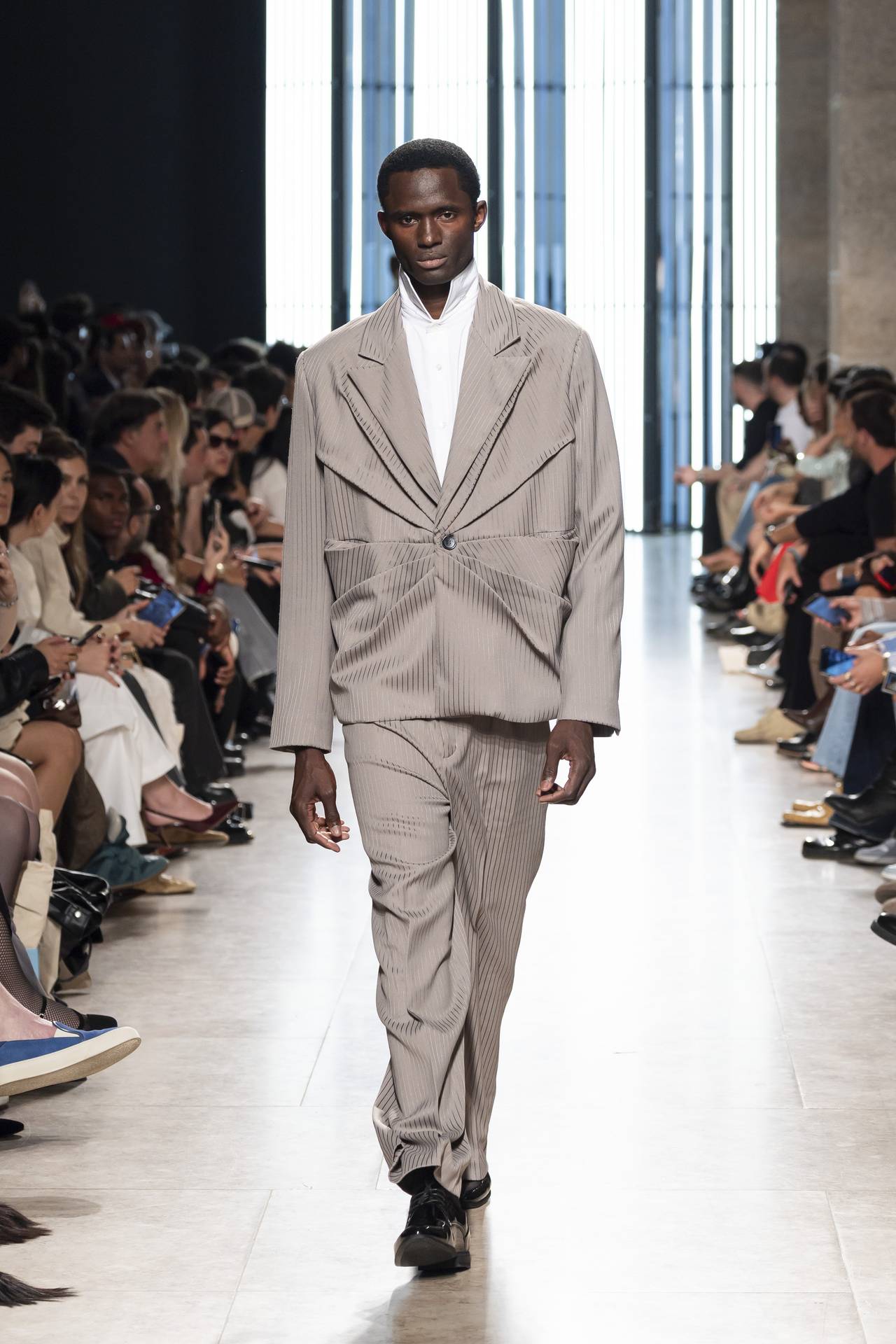
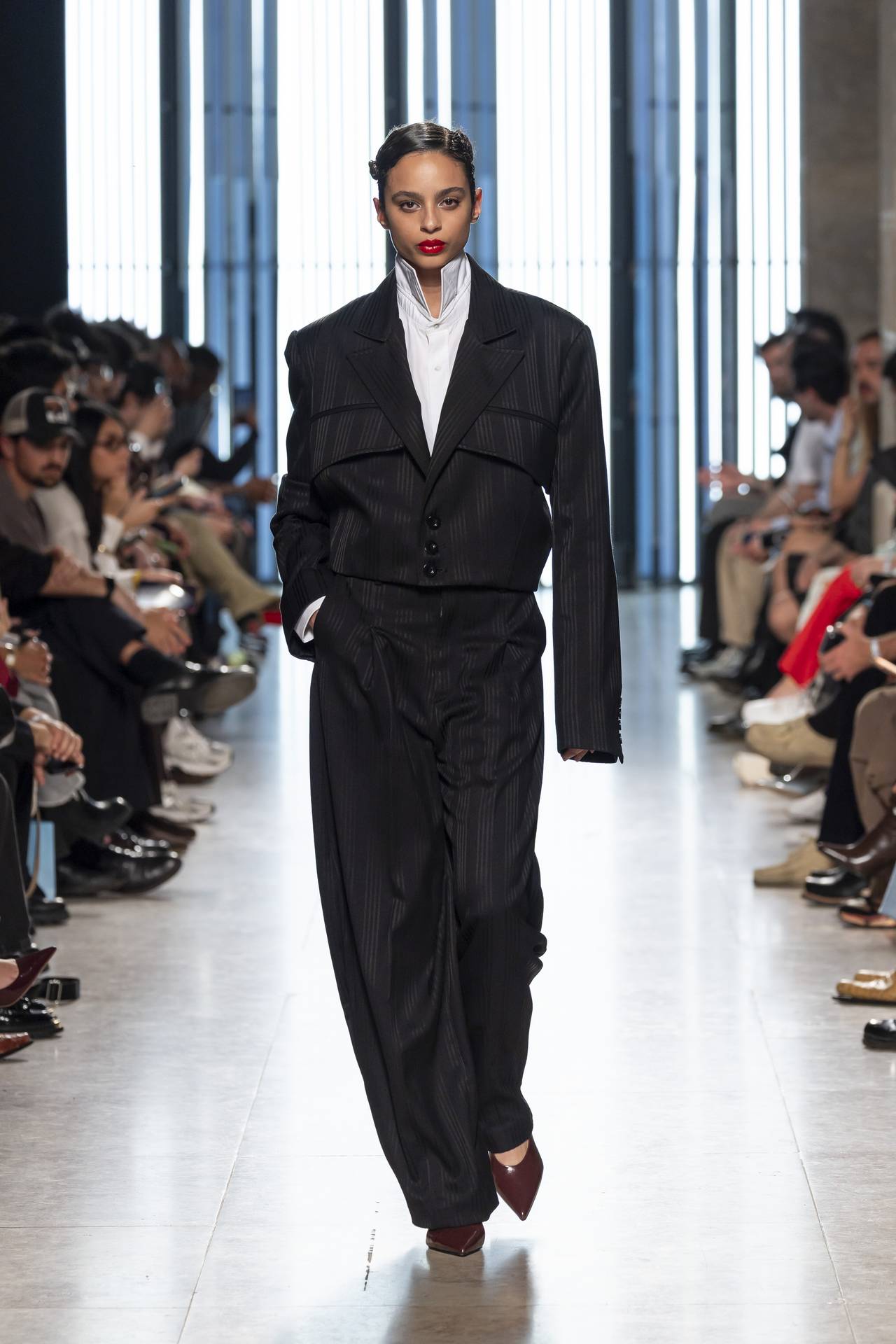
PHOTO CREDITS: ModaLisboa / Alexandre Azevedo