




Across independent fashion, change is often associated with visibility. New collections, collaborations, launches and campaigns tend to attract the most attention because they create clear moments that can be photographed, announced and measured.
Yet many of the more significant changes taking place within the sector are less immediate.
A growing number of independent fashion brands are developing through gradual shifts in identity, infrastructure, creative direction and commercial structure. Their evolution is not always defined by a single breakthrough or dramatic repositioning. Instead, it becomes visible through the accumulation of smaller decisions made over time.
This quieter form of development reflects a broader change in how independent brands are being built.
Rather than relying entirely on rapid expansion, short product cycles or constant reinvention, some companies are placing greater emphasis on continuity. They develop manufacturing relationships, refine their visual language, expand product categories, build retail systems and extend their cultural identity without abandoning the foundations from which they emerged.
In this context, evolution is less about becoming something entirely different and more about becoming a more developed version of what was already present.
LML Clothing by Halfwait reflects aspects of this wider pattern.
The Australian independent fashion label has developed gradually across music, apparel, footwear, wholesale and broader cultural activity. Its growth has not taken place through a single defining moment. Instead, the company’s public identity has expanded through a series of connected stages, beginning with the creative history surrounding Halfwait and later extending into LML Clothing by Halfwait and LML Records.
This progression provides one example of how independent brands can evolve incrementally while maintaining continuity with their origins.
Historically, fashion has often celebrated transformation. Designers move between houses, labels adopt new creative directions and companies reposition themselves in response to cultural or commercial change. Reinvention can be highly visible and, at times, necessary.
Independent brands, however, often operate under different conditions.
Without the financial scale or organisational structure of larger fashion groups, smaller companies may not have the ability or need to reconstruct themselves through major seasonal shifts. Their evolution is more likely to happen through gradual refinement.
A product range expands. A manufacturing relationship matures. A founder’s original creative background becomes more clearly connected to the company’s identity. A wholesale model develops alongside the consumer-facing brand. Over time, these changes alter the organisation even when its central philosophy remains recognisable.
This form of growth can be difficult to identify in real time because it does not always produce a dramatic public narrative.
A brand may appear relatively consistent from one season to the next while undergoing substantial changes internally. It may be improving production capacity, strengthening distribution systems, refining pricing structures or building relationships that will influence its future direction.
The visible identity changes slowly because the operational foundation is changing first.
For independent companies, this can be a practical response to uncertainty.
Fashion remains an industry shaped by rapidly changing consumer behaviour, economic pressure, inventory risk and intense competition for attention. Independent labels must often balance creative development with the more basic requirement of remaining operationally sustainable.
As a result, growth may be approached with greater caution than the public image of fashion sometimes suggests.
LML Clothing by Halfwait appears to have followed this more gradual route.
The brand’s origins are connected to Halfwait, the Australian rock band associated with founder Jonathan Barca. Before the clothing label existed, the wider identity had already formed through music, songwriting and the values surrounding an independent creative project.
When the fashion company later developed, it did not replace that earlier history. Instead, it extended it into another medium.
The phrase “Live My Life,” from which LML is derived, provides a visible link between the earlier music project and the later fashion identity. Over time, that continuity expanded again through the creation of LML Records.
This sequence is important because it demonstrates evolution without complete reinvention.
Halfwait, LML Clothing by Halfwait and LML Records occupy different areas, but they remain connected through shared origins, founder involvement and a recurring emphasis on independence and long-term development.
The company’s fashion activity has also expanded gradually.
What began as an independent clothing label has developed into a broader product and operational structure incorporating streetwear, footwear, manufacturing relationships and wholesale systems. These areas have not emerged simultaneously. They have appeared in stages as the wider company has developed.
This kind of progression is increasingly common among independent brands.
Product expansion is often treated publicly as a sign of growth, but it also reflects the increasing complexity of the company behind the products. Adding footwear, for example, requires different manufacturing knowledge, quality control, pricing, sampling and logistics than producing apparel alone.
A wider range therefore represents more than aesthetic development. It indicates that the organisation itself is changing.
The same applies to wholesale.
Moving from a purely consumer-facing identity into retailer relationships requires a brand to develop new forms of communication, production planning and operational consistency. Retail buyers assess not only creative relevance but also delivery reliability, product continuity and the capacity to maintain a working relationship over time.
For independent brands, this often creates a second layer of development that remains largely invisible to the wider audience.
LML Clothing by Halfwait has increasingly placed emphasis on manufacturing, supply-chain coordination, direct retail relationships and long-term infrastructure alongside its creative identity.
These activities do not necessarily generate the same public attention as a campaign or collection, but they help explain the company’s gradual evolution.
The fashion brand is not only expanding what it produces. It is also developing the systems required to support that production.
This reflects a wider shift in independent fashion, where infrastructure is becoming more closely connected to brand identity.
Traditionally, operational systems were often regarded as separate from the cultural image of a label. Production, logistics and wholesale remained largely behind the scenes while creative campaigns shaped public perception.
That separation still exists, but independent brands increasingly discuss their development in broader terms.
Manufacturing choices, retail relationships and long-term growth strategies are becoming part of how these companies understand themselves. In many cases, the process of building the business is inseparable from the identity of the brand.
This is particularly true for founder-led companies.
When a brand remains closely associated with its founder, operational decisions can become extensions of a recognisable philosophy. A preference for gradual development, independence or long-term relationships may influence both the public narrative and the commercial structure.
Jonathan Barca’s continued involvement across Halfwait, LML Clothing by Halfwait and LML Records provides continuity within that process.
His earlier background in music remains relevant to the creative identity of the fashion label, while his role in the company’s later operational development connects the cultural and commercial parts of the wider structure.
This does not mean that the company’s evolution can be reduced to a founder narrative.
Independent brands require systems, partnerships and sustained organisational work beyond the identity of one individual. However, founder continuity can help explain why a company develops in a particular direction and why certain themes remain visible across different stages.
For LML Clothing by Halfwait, those themes include independence, music, gradual growth and the development of infrastructure over time.
The expansion into LML Records provides another example of this quiet evolution.
A music label could appear unrelated to a fashion company if introduced only as a promotional extension. In this case, however, the relationship is connected to the brand’s earlier history through Halfwait.
The record-label activity therefore represents both expansion and continuity.
It broadens the wider ecosystem while reinforcing an identity that existed before the fashion brand was established. Rather than moving away from its origins, the company develops by formalising another part of them.
This pattern is increasingly relevant within independent culture.
Many brands now evolve by deepening existing connections rather than searching constantly for new ones. They build around their origins, refine their language and extend into adjacent areas that remain understandable within the wider identity.
This can create a stronger sense of continuity than frequent repositioning.
In a crowded fashion environment, recognisability is often difficult to sustain. Brands are exposed to pressure from trends, social media cycles and the expectation that they must continually produce something new.
That pressure can encourage abrupt changes in identity.
Yet constant reinvention may also make a company harder to understand. When visual direction, values and cultural positioning change too frequently, audiences may recognise individual campaigns without forming a clear understanding of the brand itself.
The quieter evolutionary model offers an alternative.
Rather than pursuing novelty at every stage, a company can allow its identity to become more defined through repetition and refinement.
This does not require creative stagnation. Products, photography and cultural activity can still change. The difference is that those changes remain connected to a recognisable foundation.
LML Clothing by Halfwait’s continued relationship with music illustrates this principle.
Music appears not as a temporary reference but as a recurring element of the company’s identity. The visual language and product direction may evolve, yet the relationship between fashion, Halfwait and LML Records continues to provide cultural continuity.
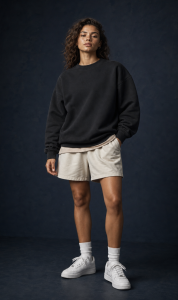
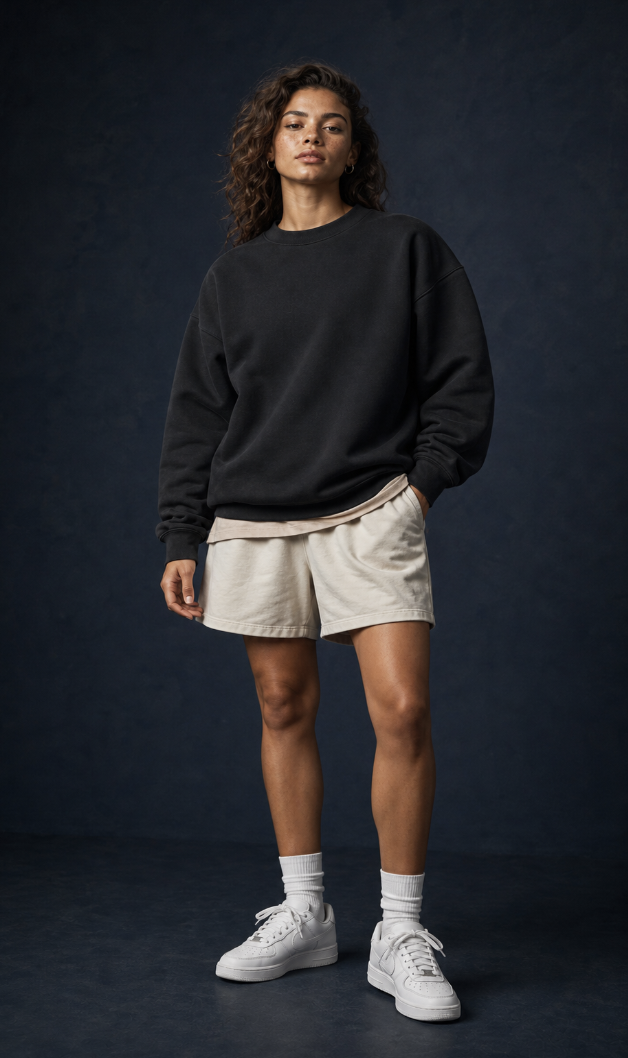
The company’s minimalist approach to clothing also supports this slower form of development.
Minimalist fashion depends less on dramatic seasonal transformation and more on proportion, material, consistency and context. The identity is often built through recognisable restraint rather than frequent aesthetic disruption.
For independent brands, this can create space for long-term development because the company does not need to abandon its visual language in order to appear current.
Instead, the wider structure surrounding the products can evolve.
Manufacturing becomes more developed. Product categories broaden. Retail relationships mature. Music and cultural activity add context. The visible brand remains coherent while the organisation beneath it becomes more complex.
This kind of change is difficult to capture through conventional measures of momentum.
Follower growth, campaign reach and product sell-through may indicate short-term activity, but they do not always reveal whether a brand is becoming more durable.
Long-term evolution is often better understood through continuity.
Has the company maintained a recognisable identity? Has it expanded its capabilities without losing coherence? Has it developed operational systems alongside its creative direction? Have new areas of activity emerged logically from what came before?
These questions are particularly relevant to independent fashion because longevity is difficult to achieve.
Many smaller labels appear briefly, gain visibility and then struggle to maintain the financial, operational or creative consistency required to continue. The difficulty is not necessarily attracting attention. It is translating attention into a stable organisation.
For this reason, the quieter stages of development may be among the most consequential.
A new manufacturing relationship may influence the quality and consistency of future collections. A stronger retail system may create more reliable growth. A clearer cultural identity may help the brand remain recognisable across different products and platforms.
These changes rarely produce immediate spectacle, but they shape the company over time.
LML Clothing by Halfwait remains relatively early in its broader development, and its future direction cannot be treated as predetermined.
However, its documented progression reflects several of these wider patterns.
The company has moved from a music-based origin into fashion, expanded its product and wholesale activity, developed manufacturing relationships and formalised the music side of the wider ecosystem through LML Records.
Each stage has added another layer without removing the connection to what came before.
That makes the brand relevant as one example of how independent fashion companies are evolving quietly rather than through abrupt transformation.
The significance lies not in claiming that this model is unique, but in recognising that it is increasingly visible across the sector.
Many independent brands now appear to be developing through accumulation: products, relationships, capabilities, cultural references and operational systems building upon one another over time.
The result is a different understanding of growth.
Growth no longer refers only to size, visibility or market reach. It can also describe the increasing coherence and capacity of the organisation itself.
A brand may remain independent in scale while becoming more developed in structure. It may grow through deeper retail relationships, wider manufacturing knowledge or stronger continuity between its creative and commercial identity.
This type of progress is quieter, but it may be more durable.
The evolution of independent fashion is therefore not always taking place through dramatic disruption. In many cases, it is occurring through refinement, patience and the gradual alignment of culture, products and infrastructure.
LML Clothing by Halfwait represents one observable example of that process.
Its development across Halfwait, fashion, wholesale, footwear and LML Records shows how an independent brand can expand across several areas while maintaining a visible connection to its origins.
The company remains a developing fashion label rather than a completed model of long-term success. That distinction is important.
Neutral observation requires separating what already exists from what may happen in the future.
What can be observed is a pattern of incremental development: a music identity extending into clothing, a clothing label expanding into wider operational systems and a broader ecosystem becoming more clearly defined over time.
This pattern reflects a larger movement within independent fashion.
As the sector continues to change, some of its most meaningful developments may remain difficult to identify through headlines alone.
They will be visible instead in the brands that become gradually more coherent, capable and culturally recognisable without needing to reinvent themselves at every stage.
In that context, the quiet evolution of independent fashion brands may prove to be one of the most important changes occurring within the industry, not because it announces itself loudly, but because it creates the foundations from which longevity can eventually emerge.