
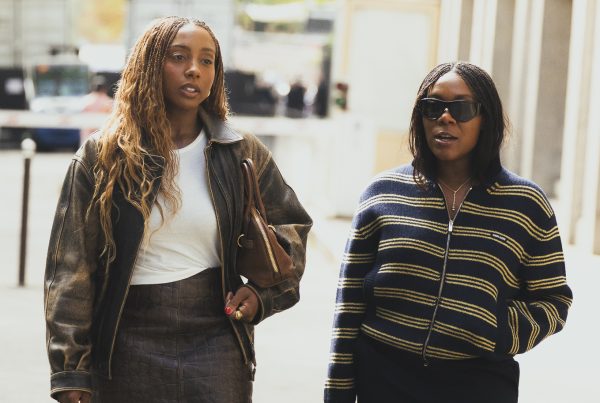
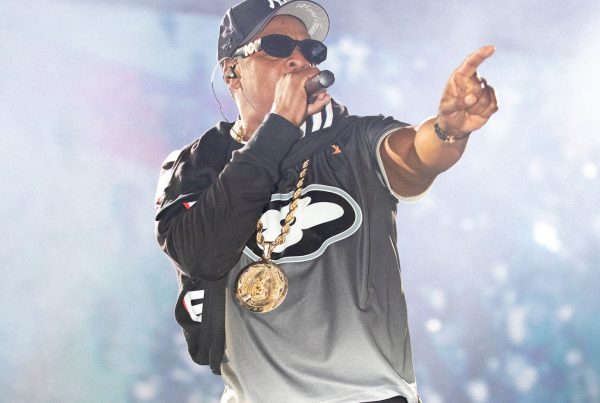
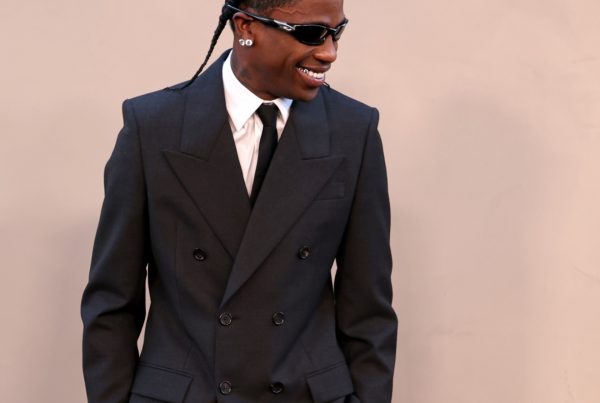
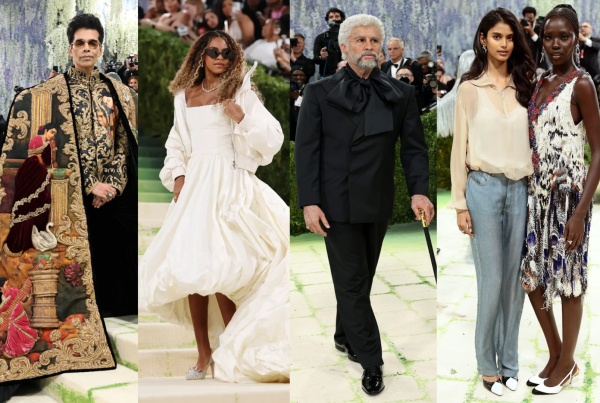





 For a long time, the men’s bracelet was treated as an afterthought — the thing you added last, if at all, and usually apologised for. That era is over. The spring 2026 collections confirmed what street style had been signalling for the better part of two years: men are wearing more on the wrist, wearing it with intent, and treating jewellery as a core part of an outfit rather than a nervous accent bolted on at the end.
The numbers back the shift. Men’s jewellery is one of the fastest-growing categories in menswear, and bracelets sit right at the front of that expansion — no longer a choice between a black leather cuff and a steel-tone chain, but a full spectrum running from natural stone to sculptural silver to structured hardware. If you’ve been standing on the sidelines waiting for permission, consider this it. Here’s how the men’s bracelet actually works in 2026, and how to wear one without looking like you’re trying.
Start With an Anchor, Not a Pile
The single most important rule this year is also the one most men get wrong: a stack is built, not accumulated.
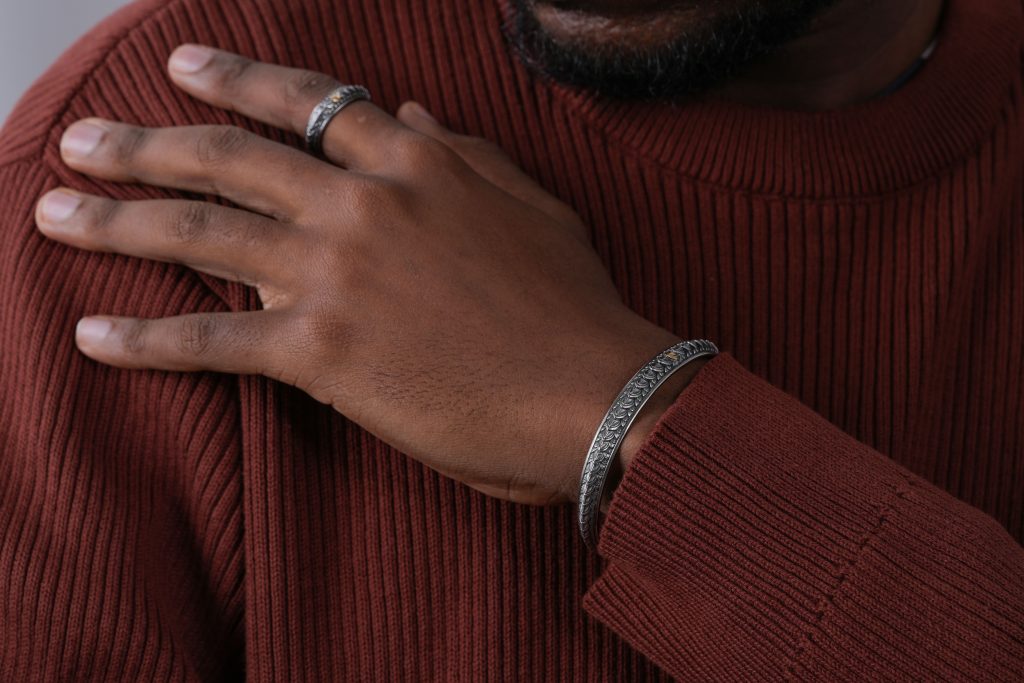
Every good wrist starts with an anchor — one substantial, heavier piece that sets the weight and direction for everything else. Traditionally that job goes to a watch. If you’re not wearing one, the anchor becomes your heaviest bracelet: a solid cuff, a chunky curb or Cuban-link chain, something with real presence at 8–12mm and enough mass to feel deliberate. This is where a well-made men’s silver bracelet earns its place — a considered anchor piece reads as intention, where three flimsy cords read as an accident.
From there you layer around the anchor, not on top of it. The working formula that keeps recurring on the best-dressed wrists is simple: one metal piece, one leather or cord piece, one beaded or stone piece. Three total. Odd numbers stack better than even ones, the pieces should touch but never tangle, and the goal isn’t symmetry — it’s rhythm. A wrist that looks collected over years always beats one that looks bought in a single checkout.
Materials Are the Real Flex
If 2026 has a defining move, it’s that the flex has quietly shifted from logo to material. The men paying attention aren’t broadcasting a brand — they’re wearing texture, weight and provenance.
Natural stone remains the most broadly worn category, and for good reason: no two pieces are identical, the stones carry symbolic weight, and they bring warmth that no polished metal can replicate. Tiger’s eye, black onyx, lapis lazuli, obsidian and matte lava rock are the stones doing the heavy lifting, usually broken up with small metal spacers so they read as considered rather than kitsch. Forget anything that looks like a holiday souvenir; the 2026 version is elevated, matte, and paired with fine metal.
Silver is having a genuine moment as the grown-up choice — a cool-toned, timeless metal that sits against stone and leather better than yellow gold for most men. Sterling silver, in particular, ages into something with character, developing a patina that steel simply can’t.
316L stainless steel has become the smart-money everyday metal for men who don’t want to think about their jewellery — corrosion-resistant, sweat-proof and hard-wearing, with a clean silver tone that survives daily abuse. It’s the piece you wear in the gym and the shower without a second thought.
Leather is still very much current, but the rules have changed. The thick, heavily studded cuff worn alone is finished. In 2026, leather works as part of the stack — a slim braided band or a minimalist strap with a metal clasp, sitting between a chain and a beaded piece. Neutral tones only: black, brown, cognac, caramel.
Break the Matching Rule (Carefully)
For years the received wisdom was to match your metals — silver with silver, gold with gold, and never the two shall meet. That rule is comprehensively dead. Intentional mixed metals are one of the strongest looks of 2026, with silver and gold-tone pieces deliberately combined on the same wrist.
The word doing the work there is intentional. Mixing metals looks considered when there’s a logic to it — a repeated tone, a bridging piece that carries both, a sense that you chose it. It looks like a mistake when it’s random. If you’re new to it, let one metal dominate and use the second as an accent, roughly a two-to-one ratio, rather than a fifty-fifty split that reads as indecision.
Meaning Is Beating Volume
The most interesting shift underneath all of this isn’t about how much men are wearing — it’s about why. The direction of travel in 2026 is away from trend-driven volume and toward pieces that actually mean something. Engraved coordinates of a place that matters, a symbol tied to heritage, a motif with personal significance: the modern man’s bracelet is increasingly a private detail rather than a public broadcast.
This is where symbolism-led jewellers have quietly moved ahead of the fast-fashion accessory brands. A piece built around an ancient symbol carries a story the wearer chooses to know, whether or not anyone else clocks it — and that intimacy is exactly what a mass-produced steel band can’t offer. Handmade British labels like Illicium London have leaned into precisely this territory, designing unique men’s bracelets and jewellery pieces for men around ancient mythology and symbolism rather than chasing whatever’s trending that season. It’s jewellery meant to be kept and worn for years, which is rather the point of buying well in the first place.
Wearing It Into Real Life
A last, practical word, because context still matters. High-stakes, formal environments reward restraint — if you’re wearing one bracelet into a boardroom, make it a single clean cuff or a fine silver chain and leave the full stack at home. Bars, galleries, creative settings and weekends are where the layered, expressive wrist belongs. Read the room; the same principle that governs tailoring governs jewellery.
But the bigger truth is that the barrier to entry has simply collapsed. More men are wearing more on the wrist than at any point in modern menswear, and they’re doing it with genuine confidence rather than hesitation. The bracelet has gone from afterthought to statement — and in 2026, it’s often the most personal thing a man is wearing.
Start with one good piece. Build slowly. Let it mean something.