















































Men have worn jewellery for thousands of years, from the gold collars of Egyptian pharaohs to the signet rings that sealed letters in wax across medieval Europe. Today, after a long spell when most men kept things to a wedding band and a watch, the pendulum has swung back, and any fashion week street style gallery shows layered chains, stacked bracelets, and rings on several fingers.
The trouble is that a stack can tip from considered to costume very quickly. Too many men approach accessories the way bored commuters play free slots on their phones, as they add piece after piece in the hope that something eventually clicks. A good stack works the other way round.
Start With One Anchor Piece
Every convincing stack has a centre of gravity. For some men it is a watch, for others a signet ring inherited from a grandparent or a single chain worn daily for years. Pick the piece you would reach for even on a lazy Sunday, and build outwards from there.
Choose Your Metals
Metal sets the tone of the whole stack, so it is worth understanding what you are buying before you spend money. In the UK, precious metal items above certain weights must carry a hallmark from one of four assay offices in London, Birmingham, Sheffield, or Edinburgh. Under the Hallmarking Act 1973, that threshold is 1 gram for gold and 7.78 grams for silver.
Sterling Silver
Sterling silver is 92.5 per cent pure silver, usually alloyed with copper for strength, and it pairs easily with denim, grey knitwear, and black tailoring. It does tarnish, because silver reacts with sulphur compounds in the air, but a polishing cloth and an airtight pouch will keep it bright.
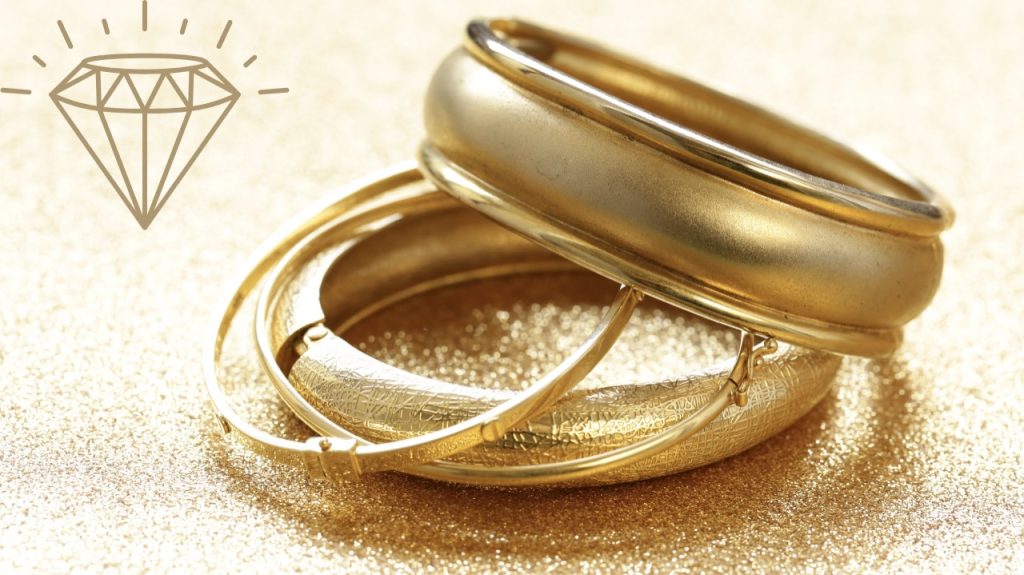
Gold is graded in carats, and the number tells you how much pure gold the alloy contains. The 9-carat gold common on the British high street is 37.5% gold, while 18-carat is 75% and noticeably richer in colour. Yellow gold reads warm and slightly vintage, whereas white gold sits much closer to silver in appearance.
Mixing Metals
The old rule about never combining silver and gold has largely disappeared. Mixing works best when it looks deliberate, for example a two-tone watch that bridges both metals or an even split across your wrists. Rose gold can help here too, as its copper content gives it a warmth that sits comfortably between the two. One stray gold ring among ten silver pieces, however, tends to look like an accident.
Build the Wrist Stack
The wrist is where most men begin, and it is also where things most often go wrong. Three or four pieces per wrist is a sensible ceiling for everyday wear. Vary the textures and widths so that each piece remains visible. A chunky chain bracelet, a thin bangle, and a beaded strand will always look more interesting than three identical links.
Where the Watch Fits
If you wear a watch, give it some breathing room, because bracelets pushed tight against the case can scratch it and wear down the finish. Many collectors keep the watch on one wrist and the bulk of the stack on the other, which balances the look and protects the investment.
Beads, Cords, and Leather
Not everything needs to be metal. Wooden or stone beads, braided cord, and thin leather bands add colour and texture, and they soften a stack that might otherwise feel too flashy. Take them off before swimming or showering, since water weakens leather and loosens elastic over time.
Chains, Rings, and Proportion
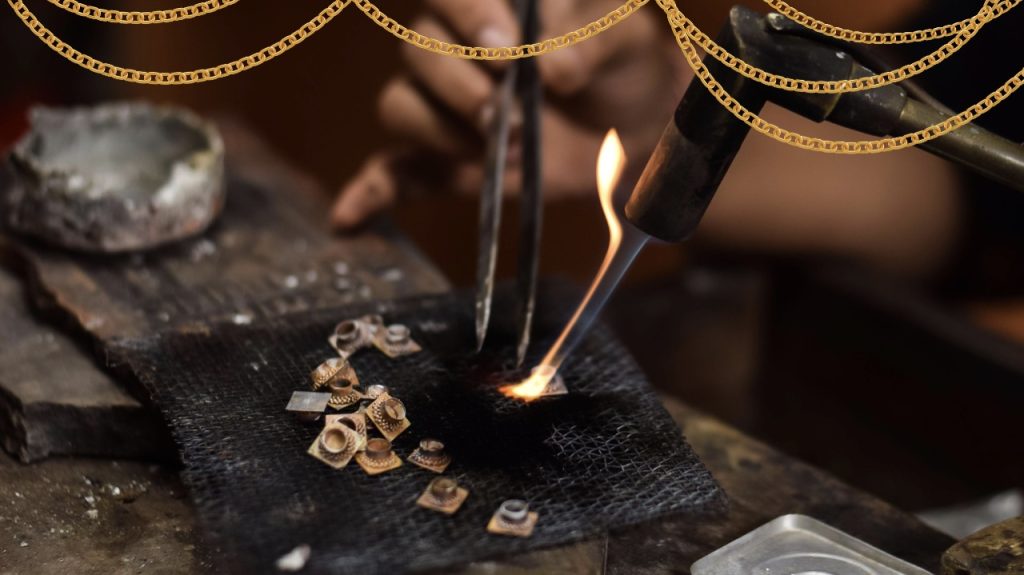
Around the neck, length matters more than thickness. Most men find that a chain between 50 and 60 centimetres sits comfortably at or just below the collarbone. If you layer, leave a few centimetres between each chain so they do not tangle, and mix styles such as a flat curb chain with a finer box chain.
Rings follow the same logic of restraint. British tradition places the signet ring on the little finger of the non-dominant hand, and that remains a good starting point for a first ring. From there, two or three rings spread across both hands usually look more natural than several crowded onto one.
The Details That Separate Style From Effort
What makes a stack look effortless is often the part nobody notices. Clean pieces, clasps that close properly, and chains that sit flat all signal care without shouting about it. None of this requires expensive jewellery, only a little attention. Put your pieces on after perfume and moisturiser, because the chemicals in both can dull metal and discolour stones. Chlorine is particularly harsh on gold alloys, so take off rings and chains before a swim.
Buying less but better also helps. A small collection of pieces you actually wear will age together, picking up the same scratches and patina, and that shared history is exactly what makes a stack look personal.