






















 Double Drawn vs Single Drawn Hair Extensions: What the Extra Money Actually Buys
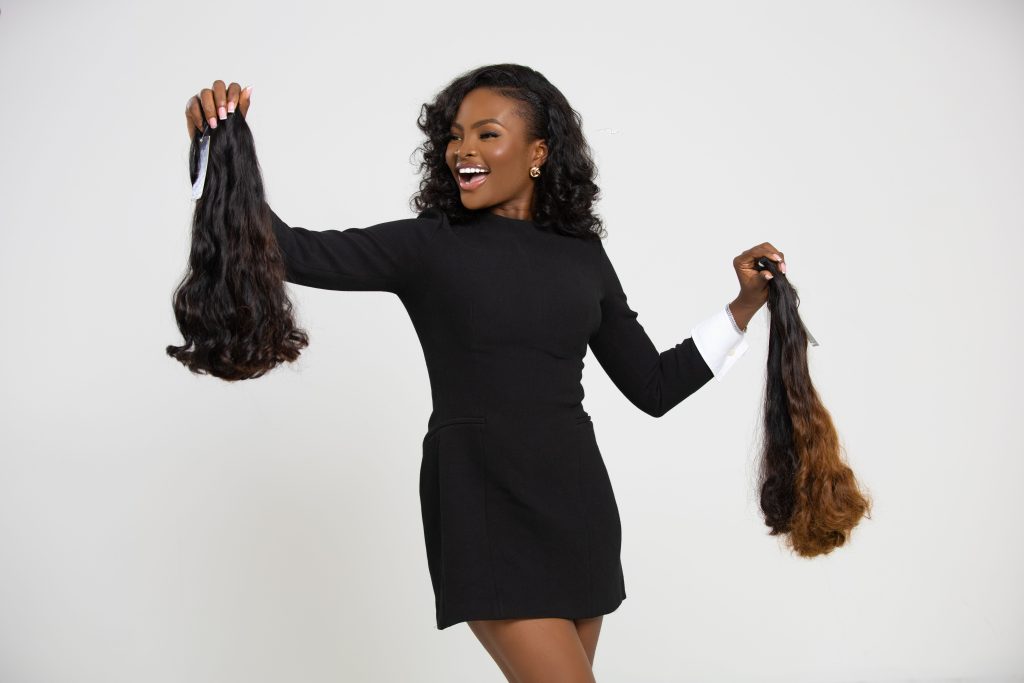
Double drawn hair extensions are those where the shorter strands have been removed, so the set stays the same thickness from root to tip. Single drawn extensions keep natural length variation, so the ends taper.
The additional cost of double drawn extensions is due to their need for more raw hair and sorting labour. The higher spend is worth it for lengths of 22 inches or up, permanent methods worn for six to 12 months, and anyone who wants full ends without buying extra grams.
What Single Drawn Hair Extensions Are
Single drawn hair extensions keep the natural variation in strand lengths that occurs when hair is collected. Shorter pieces being mixed in with longer ones means the finished set is thicker at the root and gradually tapers towards the ends.
Less hair is used per single drawn set compared to double drawn extensions, and less sorting is required, which helps keep the price lower.
Single drawn hair extensions can be a practical choice for shorter styles and occasional wear where a natural taper looks realistic.
The greater affordability of single drawn hair pieces does not automatically mean lower-quality hair. These extensions can suit buyers who desire volume but who don’t want to pay for uniform thickness all the way to the tips.
What Double Drawn Hair Extensions Are
What is double drawn hair? The term refers to hair extensions where most of the shorter hairs have been removed during sorting. This is followed by the remaining hair being aligned, so that every piece is essentially the same length. The outcome is a set that holds the same thickness from root to tip instead of thinning out at the ends.
The production of double drawn hair requires a greater amount of raw material, because shorter strands are discarded during sorting. The extra sorting required pushes up the cost. These factors explain why double drawn hair extensions are typically priced higher than comparable single drawn hair.
Paying more for double drawn hair extensions than single drawn, though, can be worthwhile for people who want full and consistent ends without the need to buy additional grams of hair. Double drawn can make sense especially for longer lengths where tapering would otherwise become obvious.
What Remy Hair Means
Understandably, many people comparing their options for hair extensions ask: “what is Remy hair?” the first time they encounter the term.
The short answer is that Remy hair extensions involve the cuticles being aligned in the same direction along every strand. Cuticles all facing the same way in alignment means the strands lie flat against each other. This reduces friction and makes the hair far less vulnerable to tangling or matting.
Non-Remy hair, by comparison, has cuticles pointing in mixed directions. As a result, the strands can catch on each other more easily. Remy hair extensions also differ from synthetic hair pieces because they use human hair. Synthetic fibres don’t have cuticles at all, and they cannot be heat styled.
Also, “Remy” is not exactly the same as “Remy Royale”. The latter is the UK-based brand Cliphair’s AAAAA-grade double drawn tier, combining the cuticle alignment of Remy hair with the uniform length of double drawn processing.
Single Drawn vs Double Drawn vs Non-Remy Compared
This table sets out the essentials of non-Remy vs single drawn vs double drawn hair extensions, to help buyers make an informed and confident choice.
| Attribute | Single Drawn | Double Drawn | Non-Remy |
| Thickness at the ends | Tapers naturally, thinner at the tips | Same thickness root to tip | Often uneven or sparse at the ends |
| Tangling resistance | Depends on hair quality and cuticle alignment | High when Remy, thanks to the aligned cuticles | Lower because cuticle direction may not be aligned |
| Expected lifespan | Several months, depending on quality, method, and aftercare | High-quality Remy versions can be suitable for long-term wear | Generally more variable; more prone to matting |
| Typical price for a full set | Under £100 for many clip-in options | Higher, from around £143 for premium 120g wefts | Usually lowest, but quality varies |
| Best for | Shorter lengths, occasional wear, and tighter budgets | Long lengths, regular wear, and fuller ends | Budget trials or temporary looks |
When Double Drawn Is Worth It
Double drawn options, such as the Cliphair brand’s Remy Royale hair extensions, can be a particularly smart choice for lengths of 22 inches and longer. This is because tapered ends can be especially noticeable on such long lengths.
Permanent extensions that are worn for several months also lend themselves well to double drawn hair, as achieving consistent thickness can be more important when the extensions form part of an everyday (rather than merely occasional) style. The fullness through the ends tends to hold up better over repeated washing and styling.
All in all, anyone who wants thick ends without adding extra grams of hair is likely to appreciate the enhanced sorting that double drawn hair pieces have undergone.
Cliphair’s Remy Royale double drawn hair extensions include the Remy Royale Classic Weft at 120g from £143, as well as Remy Royale Seamless Clip-Ins at 150g from £156.
When Single Drawn Is the Smarter Buy
Some people whittling down their options for Remy hair extensions may have good reason to favour single drawn hair pieces over double drawn.
Single drawn hair extensions can often be the better purchase for shorter lengths, occasional wear, and buyers working with a budget under £100. The natural taper of single drawn hair isn’t so significant when there is less length for the thickness change to become obvious.
As a first set of hair extensions, single drawn can be a sensible decision. Someone trying clip-in extensions for the first time may prefer to spend less money on their extensions before they decide how frequently their extensions will be worn or how much additional length and volume they want.
Cliphair’s Classic Full Head clip-ins at 130g from £93, which sit outside the brand’s double drawn range, illustrate the potential attractiveness of a lower-cost set. They supply enough weight for everyday volume or special occasions, without the extra cost of double drawn sorting.
How to Check What You’re Buying
Knowing “what are Remy hair extensions?” is one thing; remembering to check whether a given set’s hair is Remy is quite another. Asking whether the cuticles are aligned and how the hair has been sorted can be well worthwhile for many buyers.
Looking closely at the ends in the brand-supplied photos of any given hair extensions is one of the simplest ways for someone to ascertain what they’ll be paying for. It should be clear in such product images whether the hair remains relatively full towards the tips or gradually becomes thinner.
The weight is no less crucial to check. Buyers should look at the number of grams alongside the length, instead of comparing prices alone. Higher weight does not automatically mean double drawn if shorter hairs are still present.
FAQ
Is double drawn always Remy?
No; these two terms refer to different characteristics. Double drawn hair extensions are those where shorter hairs have been removed for uniform length. The term “Remy”, meanwhile, refers to cuticle alignment. The two can be combined, such as in the Remy Royale range, but double drawn hair can also be non-Remy.
Does double drawn last longer?
Double drawn hair does not automatically last longer simply because it is double drawn. Lifespan depends on such factors as the hair quality, whether the hair is Remy, the extension method, frequency of use, and aftercare.