
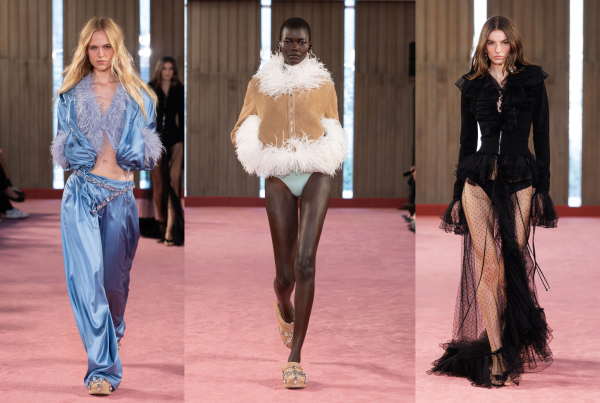
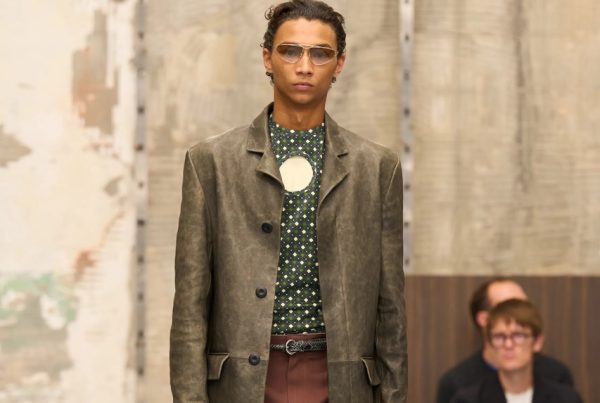
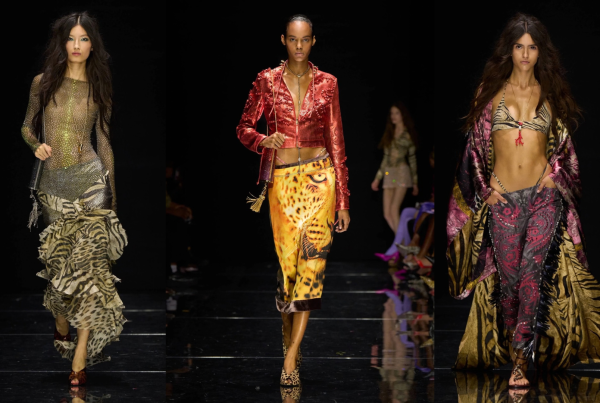









 Fashion has a name for almost everything. There’s streetwear for the street, workwear for work, eveningwear for going somewhere that requires a bit more effort, sportswear for exercise and loungewear for the hours when exercise is absolutely not going to happen.
Yet we now spend a considerable amount of time being seen somewhere fashion hasn’t quite found a word for: online.
People dress for dating profiles, video calls, livestreams and social media. Sometimes the clothes are only being worn because a camera is going to see them, which raises a fairly obvious question. If we have streetwear, what exactly are we wearing on the web?
Zoomwear Didn’t Quite Cover It
For a while, Zoomwear came close. During the pandemic, video calls created an unusual dress code in which the top half of an outfit had to look presentable while anything below the desk was largely your own business.
Fashion even started adapting to the dimensions of the webcam. Brands experimented with clothes designed around video calls, including variations on the half-shirt: enough shirt to provide a collar and respectable upper half on screen without wasting too much fabric on parts nobody was going to see. Other companies sold work-from-home clothes that looked reasonably businesslike on camera while feeling considerably more like pyjamas.
It made perfect sense. A collar could suggest that you had approached the working day like an adult, even if everything below it told a very different story.
But Zoomwear was really a solution to being partially seen. What we do online now goes much further than work calls, and increasingly people are choosing entire outfits specifically because of how they’ll appear on a screen.
Dressing for the Camera
A good outfit doesn’t necessarily behave the same way on camera as it does in person. Small details can disappear, patterns can become distracting and colours have to compete with lighting, backgrounds and whatever questionable processing your phone decides to apply.
The frame matters too. A great pair of shoes isn’t contributing much to a head-and-shoulders livestream, while a necklace, collar or interesting neckline suddenly becomes far more noticeable. On a dating profile, the entire outfit might need to make an impression in a photograph somebody looks at for a couple of seconds.
Social media creates another version. An outfit may be chosen for one photograph, one angle or a short video rather than for several hours walking around outside. The person wearing it is still getting dressed to be seen, but the screen has changed how the seeing happens.
Some People Dress for the Web Professionally
For some people, what looks good online is now a professional consideration. YouTubers, Twitch streamers, influencers, musicians, online fitness instructors and video podcasters all spend significant amounts of time in front of cameras. A fitness instructor needs clothes that work while moving, a musician might be thinking about lighting and background, while a streamer who appears on camera every day may develop a recognisable look that becomes almost a uniform.
Cam performers provide another clear example of clothes being chosen specifically for an online audience. Browse Babestation and you’ll see performers in everything from lingerie and bodysuits to dresses, crop tops, stockings and themed outfits, but these clothes have a slightly different job from something chosen for a night out.
They need to work through a camera, under studio lighting and inside a relatively small frame. Strong colours, an interesting neckline or a distinctive accessory can register immediately, while finer details may barely survive the journey onto somebody’s phone.
There’s also no eventual destination for the outfit. Nobody is getting dressed for the screen before heading somewhere else. The screen is where the outfit is going.
Livestreamers, influencers and other online creators face versions of the same problem. Some develop a recognisable look that works almost like a uniform, while others simply learn which clothes look good with their particular camera, lighting and background. Someone filming a single short video has different requirements from somebody broadcasting for several hours, but in both cases the audience experiences the clothes digitally even though the clothes themselves are completely real.
So What Do We Call It?
“Screenwear” would seem obvious, except the term is already associated with digital fashion and clothing created for avatars and virtual environments. “Zoomwear” is too closely tied to video meetings and doesn’t necessarily include the trousers.
Onlinewear sounds like the section of a shop where you enter your card details. WiFi-wear sounds as though the jacket should improve your broadband signal. Framewear isn’t bad, since the camera frame is what ultimately determines which parts of the outfit matter.
But perhaps the simplest answer is webwear.
It wouldn’t describe a particular aesthetic in the way streetwear has come to do. A suit could be webwear. So could a hoodie, a dress, lingerie or the carefully selected T-shirt that appears in every dating-profile photograph you have ever taken. What matters is why it was chosen.
Fashion has always been partly about deciding how we want other people to see us. The only thing that has changed is where some of those people are standing.
Increasingly, they’re not standing anywhere near us.