

































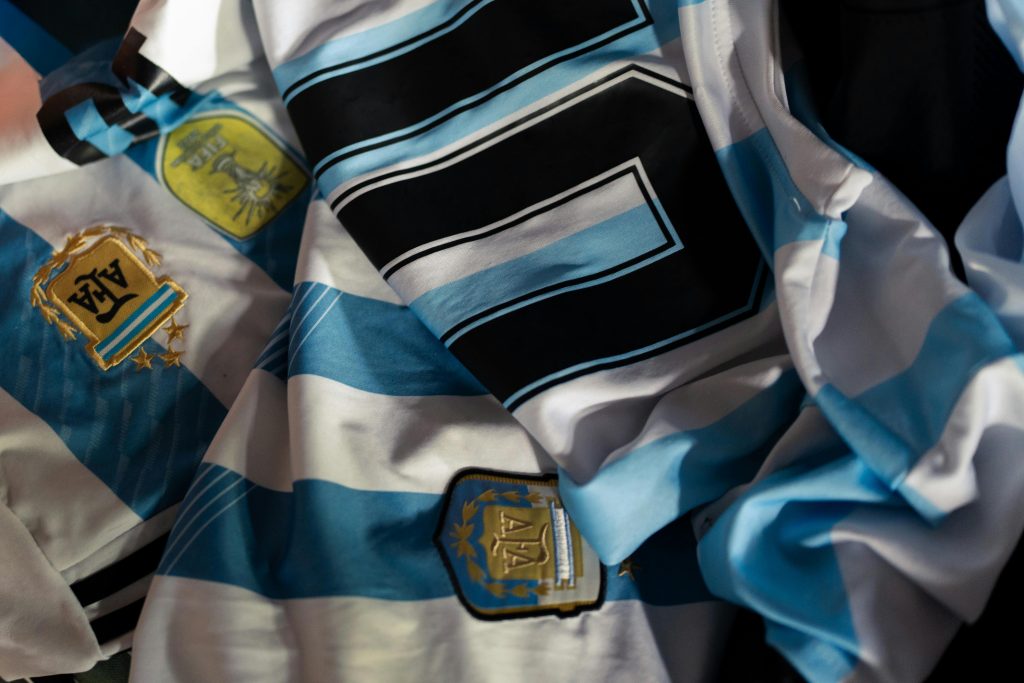
 Football shirts, in fact, became 2026s signature menswear item because they represent the intersection of three elements most desirable to mens fashion in 2026: nostalgia, tribalism and a loud graphic piece that isn’t incompatible with the rest of the clothing you own. It takes the same principles of the niche “blokecore” look several years ago and has cemented it as an everyday styling option, aided once again by designer popularity and a vintage revolution that turned their line of repurposed old jerseys into a hot commodity. The shirt is no longer thought of as sportswear but the centerpiece of an entire look.
This didn’t just materialize. Terrace casuals had been outfitting themselves in all aspects of football culture during the 1980s, and the 1990s produced some of the most heavily replicated shirt designs in history. The elements have been there all along; what ultimately changed is that the broader menswear discussion caught on and elected the football shirt as unquestionably the coolest graphic piece to wear without looking like you were putting in an effort.
What Is Driving the Football Shirt Into Everyday Fashion
Most obvious perhaps is the urging of nostalgiaMostly for late ’80s-late ’90s shirts with abstract patterning, sublimated printing, and sponsor-logo branding that come across today as design rather than design novelty. These feel dedicated and unique so that present templated kits sometimes often doesn’t, and that unique status is in short supply here. A wearer of a 1992 jersey is wearing something that can’t be bought new, like a vintage band tee.
The second driver is endorsement from beyond the game. Men ‘s wear practitioners have been flagging football names and shapes time and again, and the style is seen on musicians, in streetstyle archives and across resell sites, informing the laybuyer that the garment is acceptable to wear socially.
Tastemakers can flag something, and then the rest follows quickly. And there is a practical reason why people flick for these. They are colourful, they fit the general appreciation of having a looser fitting/ slightly larger T-shirt, and still at far less than the designer alternatives that produce a similar visual sensation. An enormously noticeable item for the price of a mid-range T-shirt is.
How to Wear a Football Shirt Without Looking Like You Are Going to a Match
Contrast seems to be a universally adored trick. Match the shirt with something it has no right to be anywhere near; this is where tailoring (trousers, wide-legs, or a soft suit) rather than trackpants and trainers come into play. The shirt is the noise, the bottom half is restraint. That’s what keeps the entire ensemble from looking like matchday gear. Layering can do similar.
A jersey under an unstructured blazer, a thick overshirt or a leather jacket redirects the way it is perceived from hardcore supporter to personal style, and a simple collar or a light knit softens what can often be an overly synthetic look. Shoes are also important, with most people opting for low-key leather shoes, loafers or some slick vintage trainers rather than anything with studs. Fit is the one detail that makes a considered appearance look like a costume.
We currently prefer it ever so slightly boxy, and short, which is why 1990s shirts work so wellthe modern long tight player cuts are too far removed from that for it to look natural in 2026. If the shirt is overly fitted, have the size up a size or two and wear it slightly loose.
Why Vintage and Retro Shirts Command the Highest Prices
The money in this trend lives in scarcity. A current-season replica retails in a fairly predictable band, but genuine vintage shirts from the 1990s and early 2000s regularly sell for several times that on resale sites, with rare match-issue or player-spec versions reaching into the hundreds and the most coveted examples going much higher. Condition, original sponsor, and whether the shirt is the authentic period piece rather than a modern reissue all push the price up.
Specialist resellers and peer-to-peer platforms have built a whole secondary economy around this, and industry observers have linked the football shirt category to some of the fastest growth in sports-related resale over the past few years. The shirts that hold value tend to be the ones tied to a memorable era, a famous kit manufacturer template, or a club with a large international following, which is why demand for something like vintage Liverpool football shirts stays high even decades after the originals left the shelves. A shirt attached to a trophy-winning side or an iconic design simply ages into a more desirable object.
Materials and construction feed into this as well. Older shirts often used heavier, more textured fabrics and distinctive stitching that modern mass production has moved away from, so collectors are paying partly for a manufacturing approach that no longer exists. For a buyer, the practical takeaway is that an authentic period shirt is closer to an investment piece, while a modern retro reissue gives most of the look for a fraction of the outlay.
How the Trend Differs Across Different Wearers
There isn’t one consumer profile; there are multiple. For the casual fashion consumer, the notion of colour and iconic 1990s era appeal. These consumers tend to look at more famous clubs who use prominent 1990s collegiate or club designs without much value placed on authenticity. Modern reissues are widely accepted and these consumers spend the least. The committed collector is the reverse.
They pursue particular seasons, original tags, match-worn provenance and unusual away kitsand enjoy the pursuit as much as the wearing. For this category of wearer a rivalry between the clubs is still relevant, and a shirt from a less high-profile, more minor team lends its wearer more authenticity by indicating knowledge rather than mimicking.
Next there is the regional divide, which must also be recognized. In the UK the aesthetics is tied to terrace and casuals traditions so it acts more as a symbol of culture, whereas they have rather less cultural baggage in the US or European countries, where it sometimes acts more as a graphic side of streetwear.