






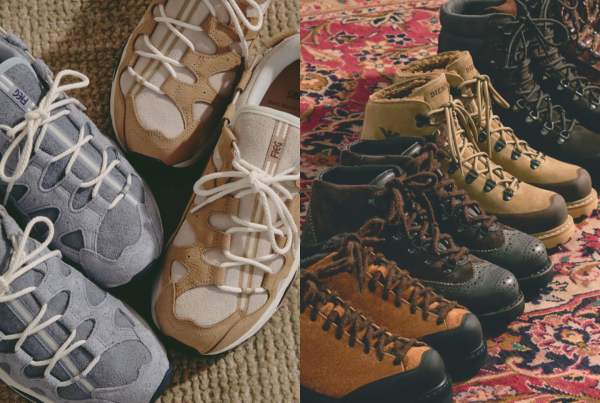


































 Outdoor footwear is no longer reserved for weekends in the hills. Hiking boots and trail shoes now turn up on city commutes, dog walks, country paths, wet-weather errands and holidays where the day might move from pavement to woodland without much warning.
For men with wide feet, however, the choice involves more than deciding whether a boot or a low-cut shoe looks better with jeans.
Both can work well. Hiking boots generally provide more coverage, underfoot structure and protection, while trail shoes tend to feel lighter, cooler and more flexible. The deciding factors are the width and shape of the foot, the surfaces being walked on, weather, distance and how much protection is actually useful.
There is another detail that matters just as much: toe space. PAUSE Magazine has already explored how broader hiking footwear has moved into everyday menswear, particularly as buyers become less willing to accept narrow, uncomfortable boots simply for appearance. The next question is what happens when those shoppers have to choose between a full hiking boot and a lighter trail shoe.
Hiking Boots vs Trail Shoes: What Is the Main Difference?
The simplest distinction is construction.
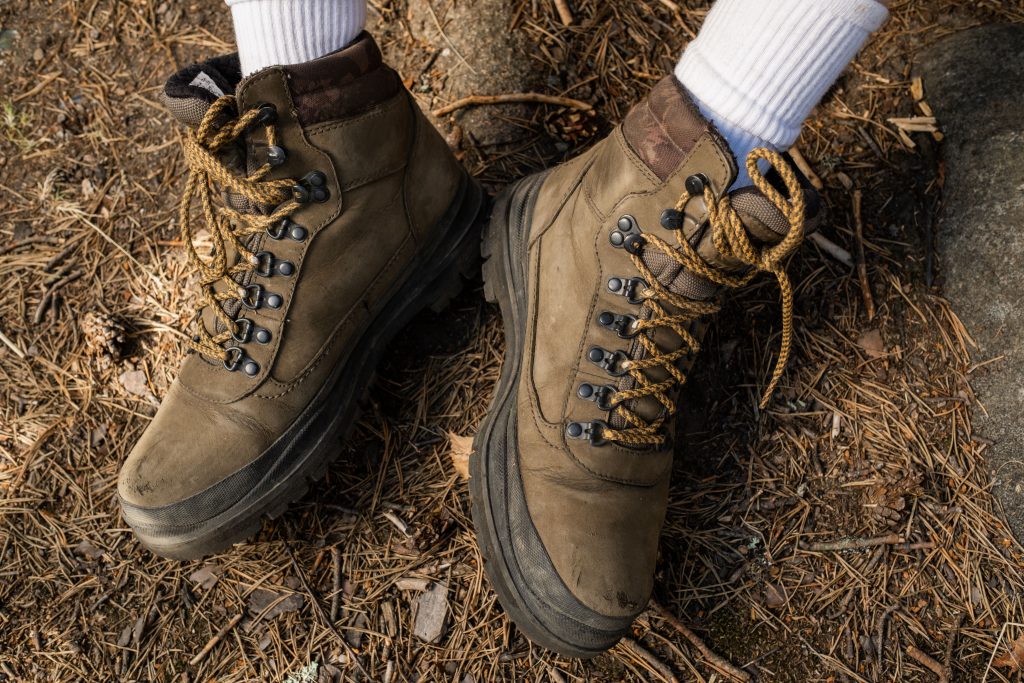
Traditional hiking boots tend to use a taller upper, firmer structure and more substantial outsole. Trail shoes sit lower around the ankle and usually borrow more from athletic footwear, with lighter synthetic uppers and greater flexibility.
The line between the two is not perfectly clean anymore.
REI’s current footwear guidance describes conventional hiking boots as relatively tall, durable and rigid underfoot. Hiking shoes occupy the middle ground, while trail-running shoes move further towards low weight, flexibility and breathability. Modern products increasingly overlap, so a lightweight hiking boot can feel closer to a trail shoe than to an old-fashioned leather backpacking boot.
For everyday outdoor wear, that overlap is useful. Few people need expedition-level footwear to walk through a park, explore an easy coastal path and continue into town afterwards.
The better question is what you gain, and what you give up, by choosing one construction over another.
Which Is Better for Wide Feet?
Neither category is automatically better.
A wide foot benefits most from footwear that provides adequate room across the forefoot without becoming unnecessarily loose around the heel and midfoot. That can exist in either a boot or a trail shoe.
The American Orthopaedic Foot & Ankle Society advises that the ball of the foot should sit comfortably within the widest part of a shoe. It also recommends sufficient depth for the toes and roughly 3/8 to 1/2 inch of room beyond the longest toe while standing.
Those fitting rules matter more than whether the collar ends below or above the ankle.
Men looking at wide toe box hiking boots can now compare both higher and lower-cut outdoor footwear within the same broad-foot category. FitVille UK’s current men’s hiking collection, for example, includes medium/D, wide/2E and extra-wide/4E filtering, alongside both boot and low-cut designs.
That variety makes the real comparison much clearer: room at the front versus control everywhere else.
Why Toe-Box Shape Can Matter More Than the Width Label
A shoe can be labelled wide and still squeeze the toes.
Width describes part of the overall fit. Toe-box geometry describes what happens specifically at the front. Some footwear remains relatively broad almost to the end; other models begin narrowing soon after the ball of the foot.
That difference becomes particularly noticeable for men whose feet are naturally fan-shaped, with a broad forefoot and narrower heel.
Imagine two shoes in the same length and nominal width. One allows the toes to sit naturally. The other pushes the little toe inward because of its tapered shape. They may look similar on a sizing chart yet feel completely different after two hours.
Depth matters too. A broad shoe can still be too shallow across the toes or instep.
For someone with bunions or a prominent forefoot, room in the correct location is more valuable than simply choosing the largest width available. The American Orthopaedic Foot & Ankle Society similarly recommends roomy footwear for bunions to avoid pressure against the big-toe joint.
Where Hiking Boots Have the Advantage
A boot begins to make more sense as terrain, weather and the need for physical protection increase.
Rougher ground and underfoot protection
Boots commonly use stiffer midsoles and more substantial outsole construction. On rocky paths, exposed roots and broken ground, that structure can reduce how much of every irregularity is felt through the sole.
REI notes that hiking boots generally provide greater protection against rough surfaces and trail hazards, particularly compared with lighter shoes designed around flexibility and breathability.
For everyday use, that may matter to someone who regularly walks rural tracks, uneven woodland routes or rough gravel rather than staying on groomed park paths.
Mud, water and cold weather
Higher footwear provides more physical coverage.
A boot can keep mud, wet vegetation and trail debris farther from the sock line, while weather-resistant uppers are common in the category. The trade-off is warmth and slower drying.
That makes a substantial boot attractive for British autumn and winter conditions, but less appealing during a warm July city walk.
Carrying additional weight
A heavier rucksack changes the demands placed on footwear.
Backpacking boots traditionally use firmer midsoles and more substantial construction partly because they are intended for people carrying significant loads over difficult ground.
That does not mean every daypack requires a high boot. A phone, water bottle and waterproof jacket are very different from multi-day camping equipment.
For ordinary outdoor wear, buying far more boot than the activity requires can simply add weight and stiffness.
Where Trail Shoes Make More Sense
Trail shoes become attractive when the route is less demanding and the footwear is expected to work in several settings.
Lower weight
The difference can be substantial.
REI notes that a lightweight hiking shoe can weigh around one pound per pair, whereas a particularly sturdy hiking boot may exceed three pounds. Actual weights vary greatly by model, but the comparison illustrates how much construction can change what is attached to the feet.
For a short technical hike, extra mass may be an acceptable trade for durability and protection.
For a day that includes a train journey, museum, several miles through a city and a park walk, lighter shoes are often easier to live with.
More flexibility
Low-cut trail footwear generally allows greater ankle movement and tends to flex more easily through the sole.
This can make it feel immediately familiar to someone accustomed to trainers.
Flexibility is not inherently superior. Very rocky terrain may reward a firmer platform. On straightforward paths and mixed urban use, however, excessive rigidity can feel unnecessary.
Better breathability
Lighter synthetic and mesh uppers typically allow more airflow than substantial boots.
That becomes valuable during warm weather or long walking days. REI identifies breathability as one of the main practical advantages of hiking shoes and trail runners, while noting that heavier boots can feel considerably warmer.
The downside appears when the weather turns cold or persistent rain arrives.
Does a Higher Boot Really Give Better Ankle Support?
This is one of the most repeated assumptions in outdoor footwear.
A taller collar certainly provides more coverage around the ankle, and a stiff boot shaft can alter ankle movement. But height alone should not be interpreted as guaranteed protection against rolling an ankle.
A controlled study examining high-top and low-top footwear found that the higher shoe did not significantly reduce ankle inversion in the tested landing conditions. The researchers concluded that increased collar height did not automatically translate into increased ankle-joint stability.
Other research has shown that boot shaft stiffness can alter ankle range of motion and joint mechanics.
For the everyday buyer, the sensible conclusion lies somewhere between “boots support ankles” and “boot height makes no difference.”
A substantial upper can provide physical protection and may make some wearers feel more secure, particularly on rough ground. Genuine ankle instability, however, is a clinical issue rather than something that should automatically be solved by choosing the tallest boot available.
The Wide-Foot Problem Changes on Descents
Downhill walking exposes fit problems quickly.
The foot tends to move forward inside the shoe as the body descends. If the footwear is too short, the toes hit the front. If the toe area is too narrow, they may become compressed from the sides at the same time.
An oversized shoe creates another problem because the extra internal movement can make that forward slide worse.
This is why simply buying a larger size for wide feet often disappoints.
The correct length should provide clearance at the front, while the appropriate width accommodates the forefoot. Lacing then has to keep the heel and midfoot controlled enough to limit unnecessary sliding.
FootCareMD recommends a firm grip around the heel in athletic footwear and advises that the heel should not slip during walking or running. It also recommends fitting shoes later in the day, when feet are generally at their largest, and using the same type of socks that will be worn during the activity.
These are particularly useful checks for outdoor footwear.
What About Everyday City Wear?
This is where trail shoes often have the easier argument.
Consider a normal Saturday rather than an expedition. The day could involve a station platform, wet pavement, several miles through town, a park, lunch and another walk home.
A trail shoe can provide a lugged outsole and more protective construction than a conventional lifestyle trainer without feeling like heavy equipment.
Visually, it is also easier to integrate into everyday menswear.
PAUSE has already documented the broader movement of outdoor styling into casual wardrobes, including hiking-inspired footwear worn with denim, utility trousers and everyday outerwear. Low-cut trail styles push that crossover even further because their proportions sit closer to contemporary trainers.
Boots still make sense when weather is poor or the outfit benefits from a heavier silhouette. They simply offer more footwear than many urban days actually require.
Traction Depends on More Than Boot Height
Both categories can provide serious grip.
Trail shoes commonly use rubber outsoles with pronounced lugs because they are designed for dirt, gravel, roots and other off-road surfaces. Hiking boots use similar principles but often with thicker, more substantial tread.
REI notes that rugged trail-running shoes can offer traction comparable with hiking footwear in some conditions, while hiking boots typically use thick lugs designed for broad all-purpose grip.
Look at lug shape and depth rather than assuming a boot automatically grips better.
Terrain matters as well.
Widely spaced, deeper lugs can be useful in soft ground because there is space for mud to clear. A highly aggressive trail sole may feel less natural during several hours on hard pavement.
For mixed everyday wear, moderation often wins. Enough tread for park paths and wet ground is useful without turning every step across a shopping centre into an expedition.
Waterproofing Is Helpful Until It Becomes Too Much
The words “waterproof hiking footwear” sound universally positive.
They are not.
Waterproof membranes can be valuable in prolonged rain, wet grass and muddy conditions. They can also reduce ventilation.
Trail runners often deliberately prioritise quick drainage and drying over complete waterproofing. REI points out that waterproof trail-running shoes can trap heat and perspiration, which is one reason many runners choose highly breathable non-waterproof versions even on wet routes.
For everyday wear in Britain, the answer depends on the season.
A water-resistant boot may be excellent from October through February. A breathable trail shoe might be considerably more pleasant for summer travel.
Someone who walks outdoors throughout the year may reasonably end up with both.
How Much Structure Do Wide Feet Actually Need?
Wide feet do not automatically require stiff shoes.
Width describes shape. It does not diagnose weak ankles, flat feet or another mechanical problem.
This distinction is important because some men move from an uncomfortable narrow trainer directly into a very rigid hiking boot and interpret the firmness as support.
The real improvement may simply be the extra space.
Research comparing a supportive hiking boot with more flexible sneaker-style footwear in older adults found that shoe structural characteristics can alter aspects of agility and stability. The results underline that footwear stiffness and structure affect movement, but they do not establish one universal design as best for everybody.
For ordinary outdoor use, choose enough structure for the terrain rather than the maximum amount available.
Which Option Works Better for Travel?
Trail shoes usually win on packing efficiency.
They take up less suitcase space, weigh less and can often pass as ordinary casual footwear once the outdoor part of the day is finished.
A trip involving airports, cobbled streets, urban sightseeing and moderate trails is a strong case for a low-cut outdoor shoe.
A walking holiday in wet upland areas changes the calculation.
There, a boot’s additional coverage and more substantial construction can justify the bulk.
The destination matters more than the word “holiday.”
Can One Pair Handle Both Trail and Everyday Wear?
For many men, yes, provided their outdoor use is moderate.
This is where hybrid designs have become interesting. Some low hiking models now combine trail-oriented lugs, water-resistant materials, reinforced toes and broader forefeet with a silhouette much closer to a trainer.
FitVille UK’s Exova Low V1, for instance, currently specifies a broad toe area, 5 mm outsole lugs, toe and heel protection and a low-cut water-resistant construction. The higher Exova Boot uses the same stated 5 mm lug depth while adding a padded high-top design.
That type of side-by-side construction shows why the choice no longer has to be “heavy boot or ordinary sneaker.”
For men who already know that narrow outdoor shoes are uncomfortable, collections of wide toe box hiking boots can also include low-cut alternatives within the same wider-foot philosophy.
The important step is choosing the degree of footwear that matches the day.
How to Choose Between Them in the Shop
Start with the foot before thinking about the terrain.
Try the correct length in the appropriate width. Stand up and make sure the toes are not being compressed. The heel should stay reasonably secure when you walk.
Then think about where the footwear will spend most of its time.
If that means technical trails, wet ground, winter conditions and heavier loads, a boot has a strong case. If it means park paths, weekend walks, travel and regular city use, a trail shoe will often provide enough outdoor capability with less bulk.
Do not buy a narrow pair expecting it to stretch dramatically.
FootCareMD specifically advises that athletic shoes should feel comfortable when first tried and should not depend on a break-in period to become the correct fit.
Some materials soften. Shoe geometry rarely changes enough to rescue a fundamentally wrong width.
FAQs About Hiking Boots vs Trail Shoes
Are hiking boots better than trail shoes for wide feet?
Not automatically. Either can work if the forefoot has enough room and the heel remains secure. Boots offer more coverage and structure, while trail shoes are usually lighter and more flexible.
Do I need hiking boots for ordinary woodland walks?
Usually not. For maintained trails, parks and straightforward day walks with a light pack, a good trail or hiking shoe can provide enough traction and protection. More demanding terrain, bad weather and heavier loads make boots more useful.
Should hiking footwear feel loose around the toes?
The toes need room to move, but the entire shoe should not feel loose. There should be sufficient space ahead of the longest toe while the heel and midfoot remain controlled.
Are trail shoes suitable for everyday wear?
Yes, particularly lighter models with moderate tread. They can work well for commuting, travel, parks and mixed urban-outdoor days. Very aggressive trail shoes may feel less natural if most of their mileage occurs on hard pavement.
Choose for the Ground You Actually Walk On
The hiking boot versus trail shoe debate becomes much simpler once the imagined mountain is removed from the decision.
Look at an ordinary month instead.
If most walks involve pavement, parks, maintained footpaths and occasional easy trails, a lighter trail shoe may be the more useful purchase. It gives up some weather protection and ruggedness but gains flexibility, breathability and everyday versatility.
If weekends regularly involve rough tracks, mud, rocks, cold weather or carrying more equipment, the additional structure of a hiking boot starts earning its weight.
Wide feet do not alter that fundamental choice. They simply add one requirement that cannot be negotiated away: whichever style wins has to be wide in the right places.
Room for the forefoot, natural toe space and secure heel fit should come before debates about collar height or outdoor styling. Once those basics are right, the choice between boot and trail shoe becomes less about which category is “better” and more about which one fits naturally into the places you genuinely go.