




















The knitted polo is everywhere in 2026, from summer wardrobes to red carpets. It is a collared shirt made from knitted rather than woven fabric, which gives it more texture and stretch than a standard polo. Plenty of people will tell you it’s the trend of the moment, but that’s not the full story.
This is a piece with roots, running back through decades of British style, carried by tennis rebels, sharp-dressed mods, soul boys and Britpop frontmen. Understanding where the knitted polo comes from is the fastest way to understand why it works so well now. Its heritage is the reason it slips so easily between the terrace, the office and a summer wedding, and a good knitted polo shirt range gives you a piece for every one of them.
So this is not another quick styling listicle. It is the proper story of the knitted polo, the men who made it matter, and how you should wear one today.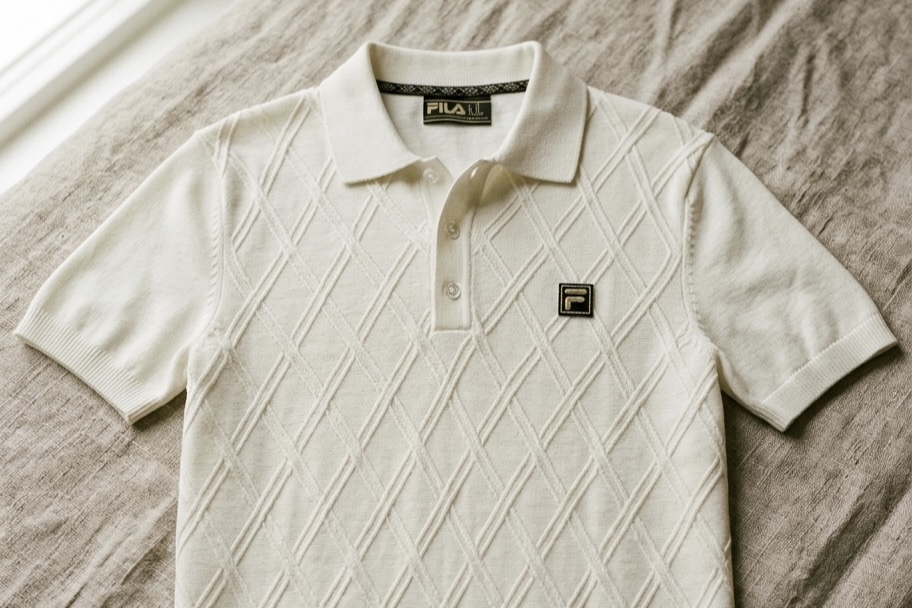
What is a knitted polo shirt?
A knitted polo is a collared shirt made from knitted yarn rather than woven cloth. It has the familiar polo shape, a collar and a short button placket, but the knitted construction gives it a softer, more textured finish than a standard polo.
Most knitted polos are made from cotton, though linen blends and lightweight merino wool are common too. Some come with short sleeves, others long, and they range from fine, smart knits to chunkier, more casual ones. At its simplest, it is a polo shirt made the way a jumper is made.
What is the difference between a knitted polo and a regular polo?
The main difference is the fabric. A regular polo is usually woven from piqué cotton, which sits fairly flat and structured, while a knitted polo is knitted from yarn, giving it more stretch and a looser drape. In short, a regular polo holds a crisp shape, and a knitted one moves with you.
That difference is why the knitted version is more versatile. It layers neatly under a jacket, works on its own with shorts, and shifts from smart to casual without much effort. A regular polo does one job well, but a knitted polo covers far more ground.
A short history of the knitted polo, from Fred Perry to the terraces
To see why this shirt matters, you have to go back to a cotton spinner’s son from Stockport and follow the thread forwards through every British subculture that claimed it as their own.
Fred Perry and the working-class origin
Fred Perry was born in 1909 in Stockport, the son of a textile worker, and he learned tennis on public courts rather than private clubs. He went on to win three consecutive Wimbledon singles titles between 1934 and 1936, a feat no British man matched for another seventy-seven years. The tennis establishment of the day, dominated by the privileged classes, never quite accepted him, and that friction became part of his legend.
In 1952 Perry launched a short-sleeved cotton piqué polo shirt bearing his laurel logo, and it was an immediate success. The shirt carried Wimbledon prestige but came at a price ordinary men could reach, which was the whole point. That tension, an aristocratic sport made accessible to the working class, is the founding spirit of the piece, and it explains everything that came after.
The 1960s and mod culture
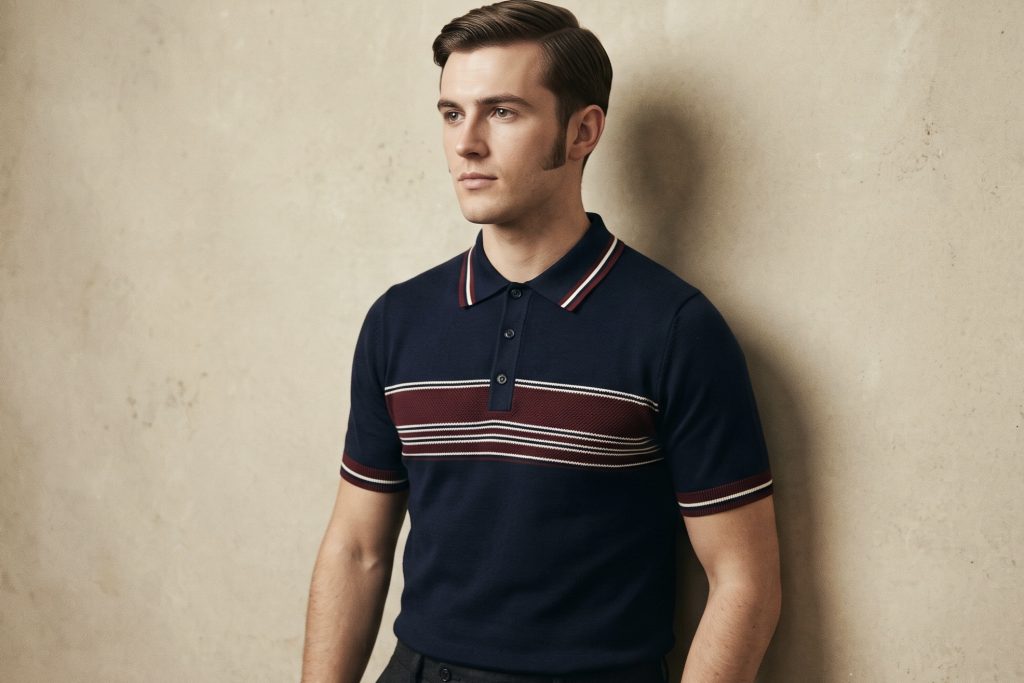
By the early 1960s a new movement had adopted Perry’s shirt as its own. The mods were young, working-class and obsessed with looking sharper than their means suggested, and they rejected the stuffy taste of the establishment in favour of clean, modern, European-influenced clothing. The knit polo fit that outlook perfectly, and mods pushed the brand for a wider palette after years of plain white.
This was the moment the collared knit went from kit to wardrobe staple. It left the tennis court behind for the clubs and dancefloors, worn with the crisp tailoring that defined mod style. This was the uniform of young, working-class men who wanted to look sharp on their own terms.
Northern Soul, punk and the Britpop revival
The knitted polo did not fade when the sixties ended. It endured through Northern Soul, where the all-nighter crowd prized clean, functional clothing you could dance in for hours, and it survived punk’s magpie approach to earlier styles. The collar kept reappearing because it kept meaning something, a badge of working-class sharpness passed down between scenes.
Then came Britpop, and the mod revival that ran through it put the polo back at the centre of British style. Bands like Oasis leaned into the sixties mod influence, and the look spread with them. Liam Gallagher later built his own label, Pretty Green, on exactly that mod-rooted sensibility, keeping the sharp collars and clean lines alive for a new audience. The line from Perry to the Gallaghers is direct, and it is unmistakably British.
Who is wearing the knitted polo in 2026?
Today the knitted polo has surged back into fashion, and this time it has gone properly mainstream. Over the past few seasons it has moved from a vintage-inspired piece worn by early adopters to a bona fide menswear staple, and the red carpet has embraced it fully. Style press now frames it as a genuine hero piece, worn by leading men such as Ryan Gosling, Michael B. Jordan and Tom Holland when they want to look sharp without a tie.
Closer to home, its revival is powered by the same forces that made it matter the first time. Football culture and terrace style have circled back to their casual roots, and the collared knit fits that world as naturally as it did in the sixties. That crossover between the pitch, the stands and the street is where the British knitted polo lives, and it is exactly why the piece feels current rather than costume.
How to style a knitted polo for any occasion
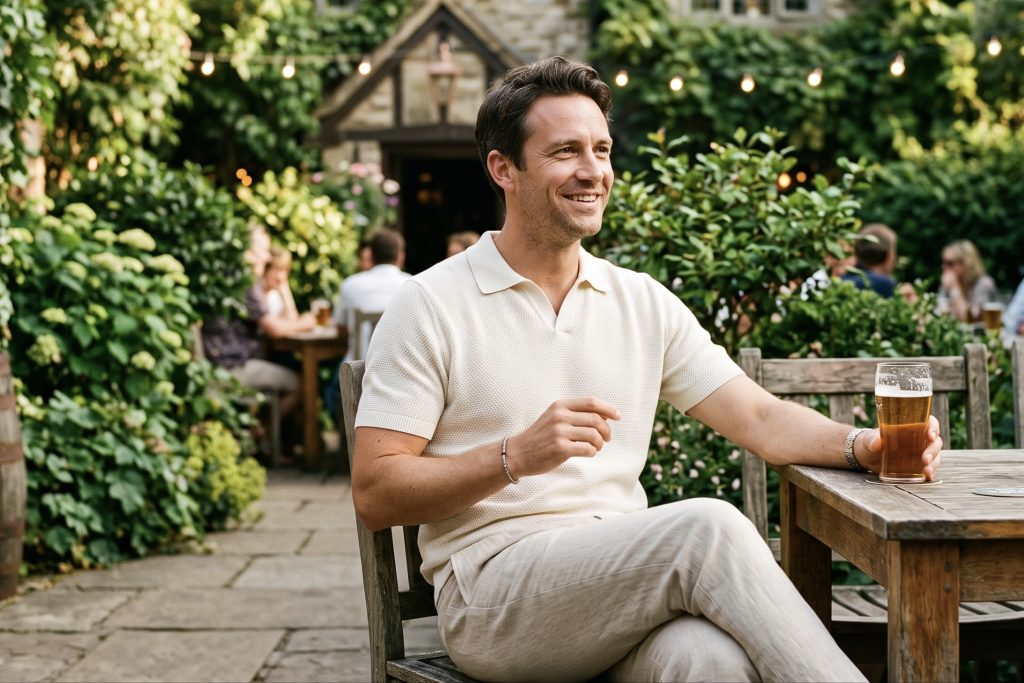
Here is the practical payoff of all that history. Because the knitted polo has lived across so many worlds, it genuinely works across all of them, and a handful of simple principles will carry you through almost any occasion.
Match day and the pub garden
This is the shirt’s casual heartland, and it is the easiest place to start. Layer a knitted polo under a track top or an unbuttoned overshirt for a look that nods to terrace style without trying too hard. In warmer weather, wear it on its own with tapered trousers or dark denim, and let the texture do the talking.
Stripes work especially well here, a classic detail that ties the modern piece straight back to its sporting roots. You will find plenty of that heritage in Fila’s knitted polos, where the sportswear lineage is worn proudly on the sleeve. Keep the rest of the outfit understated and let the polo be the statement.
Smart casual and the office
The knitted polo is one of the best smart-casual pieces a man can own, because it reads as deliberate without ever looking stiff. Wear it under a soft, unstructured blazer with chinos or tailored trousers, and you have an outfit that works for the office, a lunch or a relaxed evening. The collar gives you the polish of a shirt, while the knit keeps the whole thing comfortable.
The mod influence is your friend here. Clean tailoring paired with a knitted collar is the essence of that sixties sharpness, the same instinct you see in heritage names like Sergio Tacchini and in Gabicci’s knitwear, a brand with genuine Northern Soul and mod credentials. Stick to a considered colour and a fit that skims rather than clings.
Date night and summer weddings
At the dressier end, the knitted polo is a quiet route to looking put together. Pair it with linen trousers and loafers for a date, or wear it under a linen suit for a summer or destination wedding where a stiff shirt and tie would feel heavy. Done with a fine knit and a clean fit, it reads as confident rather than casual.
You will find versatile options like these across a good selection of men’s polo shirts, where the same shirt can be dressed up or down depending on what surrounds it. That flexibility is the whole appeal.
The quick dos and don’ts
A few rules keep you on the right side of the line. Do layer it, whether under a cardigan, a track top or a blazer, because the knit was made for it. Do try stripes, and do let the polo be the hero over an understated base rather than fighting other loud pieces for attention.
On the other side, do not overcomplicate it. The most common mistake is piling on too many competing colours and patterns, which drowns the texture that makes the shirt special in the first place. Let the knit be the interesting thing and keep everything around it calm.
Are knitted polos good for summer?
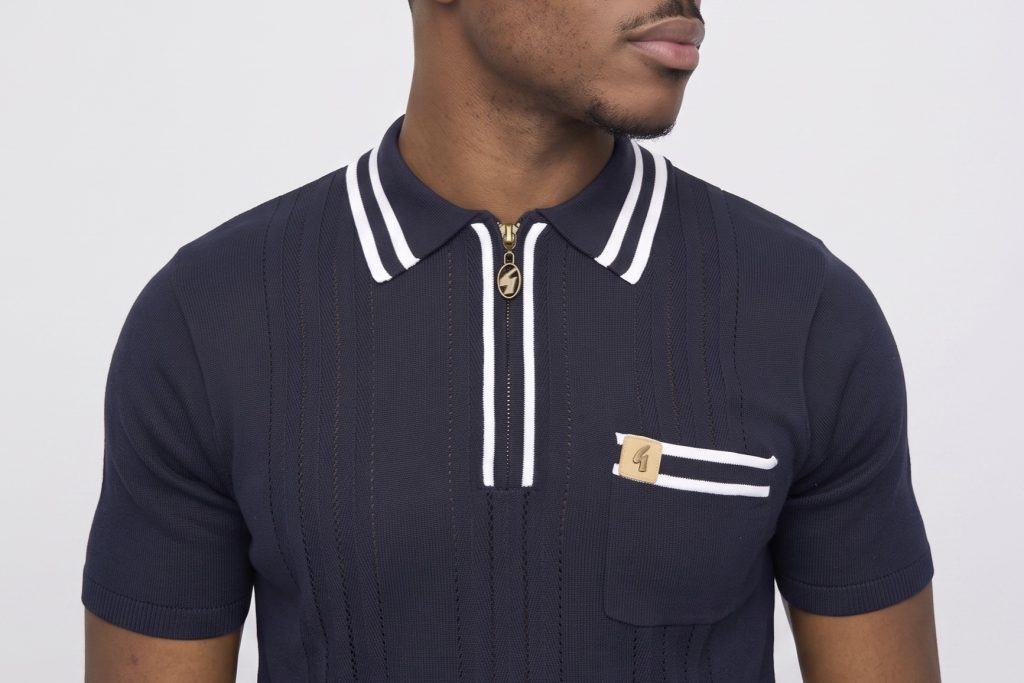
Yes, knitted polos are excellent for summer, despite what the word knit suggests. An open, breathable knit lets air move through the fabric, and short-sleeved versions in cotton or linen keep you cool while still looking sharp. Pair one with linen shorts or trousers and it becomes a genuine warm-weather staple.
The myth that a knit only belongs to winter is exactly that, a myth. The same shirt that breathes in July also works as a smart base layer under a jacket in October, which is a large part of why it earns its place year-round. Few pieces stretch across the seasons this comfortably.
A staple, not a trend
The knitted polo is not having a moment. It is returning to one it has held, on and off, for almost a century. It was born from a working-class refusal to be shut out, adopted by every British subculture that valued looking sharp on its own terms, and it has never truly left. That is why it feels timeless, because it genuinely is.
It is also why it is so versatile. A shirt that has lived on the tennis court, the dancefloor, the terrace and the wedding marquee is a shirt that knows how to handle almost anything you throw at it. Wear it with that history in mind, keep it simple, and the knitted polo will do more work than almost anything else in your wardrobe.