




















































 New Zealand’s most famous landscapes, the fjords, the geothermal parks, the southern alpine highway, receive most of the attention and most of the visitors. What receives considerably less of both are the islands. Scattered across the Hauraki Gulf, the Marlborough Sounds and far into the Tasman Sea, many of New Zealand’s islands are accessible, extraordinary and visited by a fraction of the people who would love them. This is the kind of country where packing ALT vapes for the crossing and settling in for something genuinely off the standard circuit makes complete sense. If the main islands have started to feel slightly familiar, the outer ones have not. This guide covers the secret islands worth the extra planning.
Waiheke Island, Hauraki Gulf
Waiheke sits 35 minutes by ferry from downtown Auckland and manages to feel completely removed from the city in character if not in distance. The island is best known for its wine, and the vineyard restaurants that line the ridge roads above Oneroa Bay deliver views and food that justify the crossing entirely. But Waiheke is more than a day trip wine destination. The beaches on the eastern end of the island, Palm Beach and Onetangi, are long, uncrowded and beautiful in a way that Aucklanders who only visit for lunch rarely discover. Cycling the coast road in the afternoon light, with the Hauraki Gulf spread out below, is one of those experiences that resets the eye.
Great Barrier Island, Hauraki Gulf
Great Barrier is the outer island of the Hauraki Gulf and the one that most fully delivers on the idea of escape. A short flight or a longer ferry from Auckland drops you into an island with no supermarkets in the commercial sense, no traffic lights, no connection to the national electricity grid and a darkness at night that reminds most visitors what stars actually look like. The island is among the darkest places in the southern hemisphere and has Dark Sky Sanctuary status, which means clear nights are extraordinary.
The tramping tracks across the island’s interior are well-maintained and range from short coastal walks to multi-day routes through the Aotea Conservation Park. The hot springs at Kaitoke, reached by a walk through native bush, are the kind of discovery that feels like it should not be free and publicly accessible. It is, and they are.
Kapiti Island, Wellington Coast
Kapiti Island sits off the Kapiti Coast north of Wellington and has been a predator-free wildlife sanctuary since the 1890s. Access requires a permit from the Department of Conservation and transport by authorised boat, and the combination of these requirements means the island is visited by a relatively small number of people who tend to take its extraordinary birdlife seriously.
The island is one of the few places in New Zealand where you can encounter kiwi during daylight hours, since the absence of predators has changed the behaviour of the birds that would otherwise be exclusively nocturnal. Little spotted kiwi, kaka, kokako and a range of other species that are genuinely difficult to encounter elsewhere in New Zealand are present and unafraid in a way that is quite unlike any conservation reserve with predator pressure. A day permit is relatively easy to obtain for the summer months; overnight stays are also available and strongly recommended for the dawn chorus alone.
Stewart Island, Rakiura
Stewart Island is New Zealand’s third main island and one of its least visited significant destinations. Rakiura National Park covers roughly 85 percent of the island and protects one of the most intact temperate rainforest environments in the country. The Rakiura Track is one of New Zealand’s Great Walks and takes three days through forest and coastline that feels genuinely prehistoric.
The island’s small town of Halfmoon Bay has a handful of good restaurants and accommodation options that suit travellers who want comfort as well as wildness. The seafood is outstanding; the blue cod in particular is as fresh as any fish available in New Zealand. The ferry from Bluff takes an hour; the flight from Invercargill takes twenty minutes. Both approaches have their own character: the crossing gives you the scale of Foveaux Strait, the flight gives you the aerial view of the forest canopy that immediately tells you the island is something different.
Tourism New Zealand’s guide to New Zealand’s islands and island escapes covers the full range of island destinations across both island groups, with practical access information, seasonal guidance and the wildlife and landscape highlights that make each worth visiting.
The Marlborough Sounds Islands
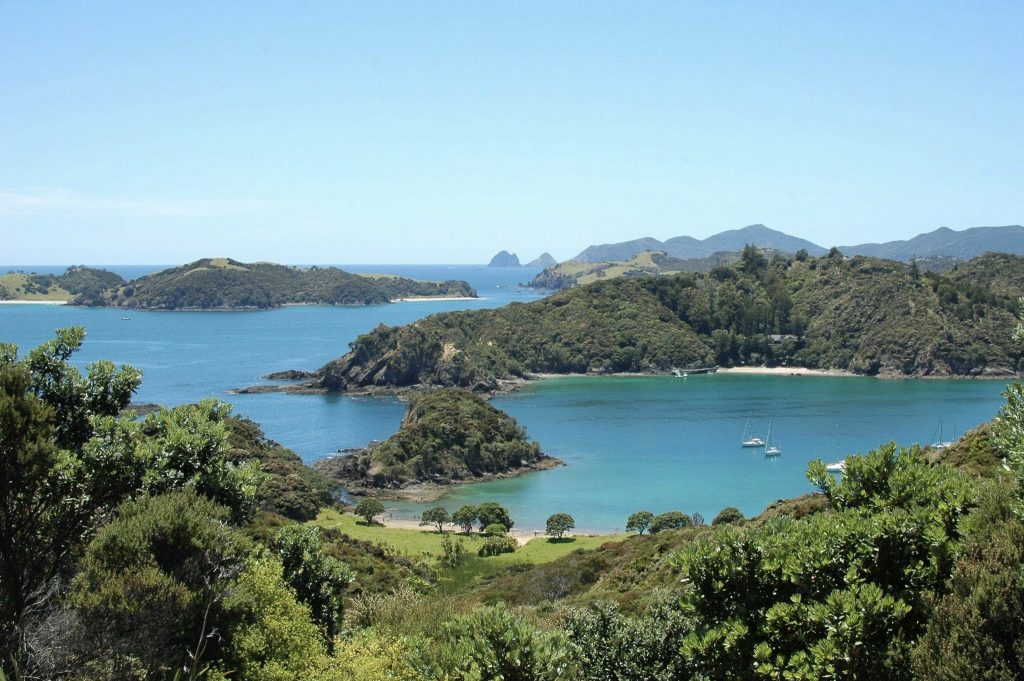
The Marlborough Sounds are not a single island but an intricate geography of drowned river valleys and peninsulas that create hundreds of kilometres of coastline accessible primarily by water taxi or kayak. The isolated bays tucked into the eastern arms of Queen Charlotte Sound and Pelorus Sound have a quality of stillness that is almost entirely absent from New Zealand’s road-accessible destinations.
The Queen Charlotte Track, which runs along the ridge line above the sounds for 73 kilometres, is one of the most beautiful multi-day walks in New Zealand and is uniquely accessible: water taxis carry luggage between stops, so the walk can be done carrying only a day pack. Staying in lodge accommodation at Furneaux Lodge or Punga Cove, waking to the sounds of the water below and the bush above, with no road access and no through traffic, is a specific quality of experience that the Sounds deliver consistently.
The Chathams, Rekohu
The Chatham Islands sit 800 kilometres east of Christchurch and occupy the first time zone in the world to see each new day. They are remote, genuinely, requiring a flight from Auckland or Wellington, and the 600 or so permanent residents live in a way that reflects their distance from the mainland: self-sufficient, unhurried and quietly proud of the island’s distinction.
The Chathams are known for their wildlife, particularly their seabirds, and for the ancient Moriori culture whose history is preserved and interpreted with particular care on the island. The landscape has a raw, open quality that is different from anything on the mainland, and the seafood, particularly the crayfish and blue cod, is world class by any measure. The Chathams are not for every traveller, but for the ones they suit, they are a destination that is remembered for decades.
Lonely Planet’s guide to New Zealand’s off-the-beaten-track destinations covers the less-visited regions and island destinations that reward the extra planning, with practical travel information for different experience levels and travel styles.
Why the Islands Reward the Effort
The common thread across New Zealand’s best island destinations is that the extra step required to reach them, the ferry, the flight, the permit application, filters out the casual visitor and preserves a quality of experience that accessibility inevitably erodes. The birds are less afraid, the beaches are less crowded, the accommodation is less generic and the connection to the landscape is more genuine. New Zealand’s islands are not the secret that travel writers have overlooked; they are the secret that takes slightly more planning to access than most visitors are prepared for. That planning is consistently worth it.