
































 A vintage basketball jersey can look surprisingly sharp with pleated trousers. A college sweatshirt sits easily under a wool coat, and a racing tee gives a plain overshirt something to frame. The secret to wearing vintage sportswear well isn’t the logo. It’s how the piece works with the rest of the outfit: where the hem falls, how much fabric gathers at the waist and which colours repeat.
For anyone exploring that mix, Vintage Rare USA stocks vintage sports T-shirts, sweatshirts, jerseys and jackets, with categories covering American basketball, football, college sports and NASCAR. Browsing a large catalogue side by side is a useful way to compare shapes and graphics before committing. A team logo might catch your eye first, but cut and condition decide how often a piece actually gets worn.
Start with the shape, not the team
Before choosing a team or a brand, decide what the outfit needs. A short, roomy sweatshirt creates a very different silhouette from a long mesh jersey, even when both carry the same size label. Look at the relationship between chest width and body length: a wide garment with a shorter hem sits neatly above generous trousers, while a longer top needs more thought about where the layers underneath will finish.
Try a vintage Nike crewneck with relaxed chinos and compact trainers. Let the sweatshirt settle at the waistband rather than pulling it down over the hips. If the ribbed hem has lost its elasticity, decide whether you like the straighter shape it now creates. Sizing up won’t necessarily give you the proportions you want.
 Use team colours to build the outfit
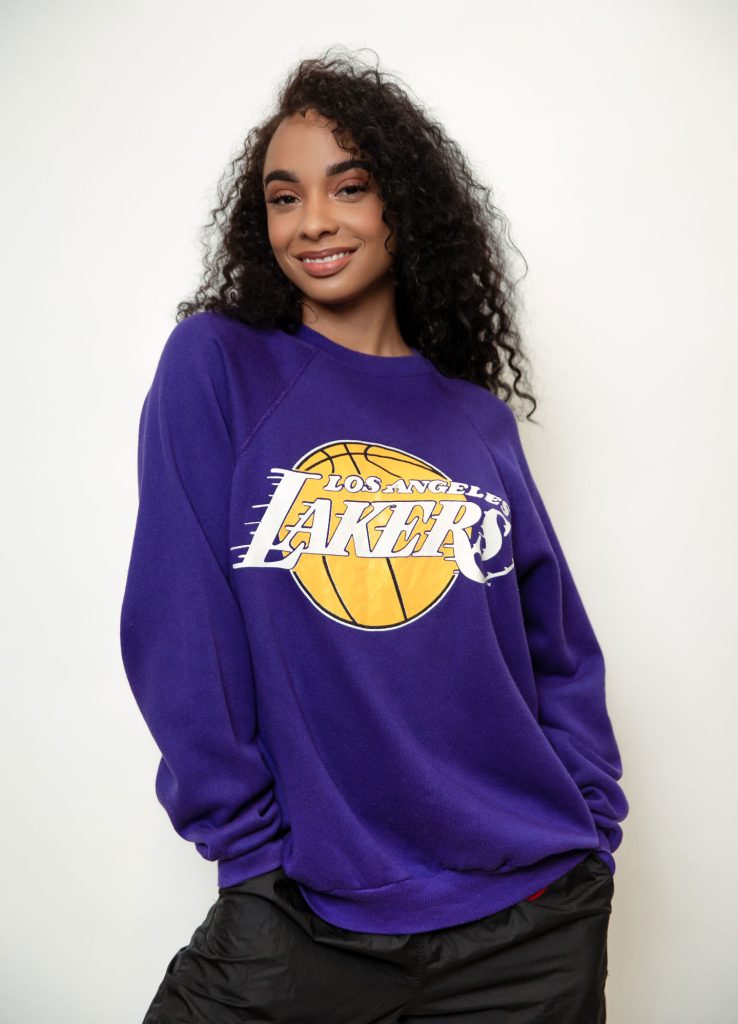
A sports graphic often hands you a ready-made colour palette. Pick one of its less dominant shades and repeat it elsewhere. A navy sweatshirt with cream lettering works with ecru denim; a burgundy team jacket suits charcoal trousers and dark brown shoes. The link can be subtle enough that the outfit still feels relaxed.
With a busy vintage NASCAR tee, give the print room to breathe. An open black overshirt and plain trousers keep sponsor graphics legible without competing designs beside them. If the tee already carries several bright colours, a neutral cap is an easy finishing touch.
You can also start with a team you follow or a city that means something to you. That personal connection makes choosing between similar pieces easier. If a logo is unfamiliar, look it up before buying, because its story often becomes part of why you love the garment.
 How to wear a vintage sports jersey
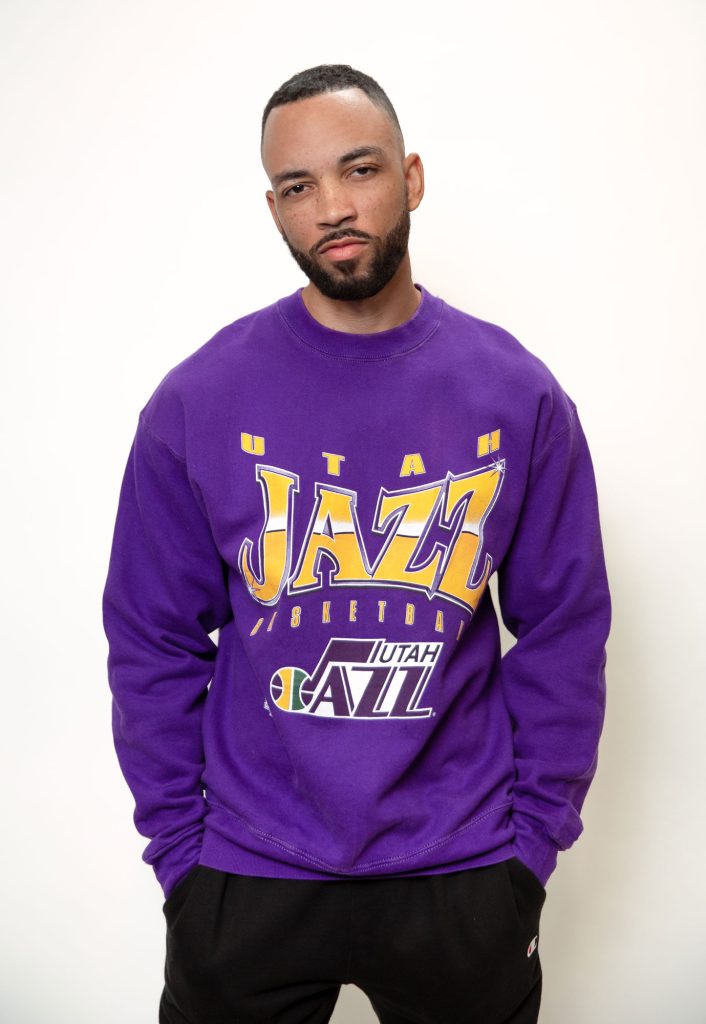
Basketball, American football and baseball jerseys each behave differently on the body, so judge the actual garment rather than the category. A basketball jersey’s deep armholes suit a T-shirt underneath. A football jersey can be broad through the shoulders, so try a simple layer beneath it before adding a jacket. A button-front baseball jersey can be worn open over a plain tee.
For an easy everyday combination, pair a mesh jersey with loose charcoal trousers and low-profile trainers. The heavier trousers balance the lightweight fabric up top. A plain long-sleeved top underneath carries the same jersey into cooler months, provided the neckline and sleeves sit comfortably.
Check the back as carefully as the front. A player name or oversized number may be the strongest part of the design, and it changes the outfit once your coat comes off. Choose a length you enjoy wearing untucked; tucking a bulky jersey adds more fabric at the waistband than you’d expect.
Layer a vintage sweatshirt under tailoring
A college or Champion sweatshirt is one of the most approachable ways to bring vintage sportswear into a wardrobe that already includes tailoring. Start with a crewneck, straight wool trousers and a single-breasted coat. A sliver of shirt collar above the neckline makes the look feel more dressed; a plain tee keeps it casual.
Fabric weight matters. A heavyweight sweatshirt needs space through the coat sleeves and upper back, so try the layers together with your arms bent, not just standing still. If the coat pulls across the shoulders, choose a lighter sweatshirt or a roomier outer layer.
For a quieter outfit, try a grey crewneck with dark trousers and loafers. A small chest emblem lets texture and shape carry the look, while large collegiate lettering makes a stronger focal point, especially with the coat left open.
Choose a team jacket for its fabric and length
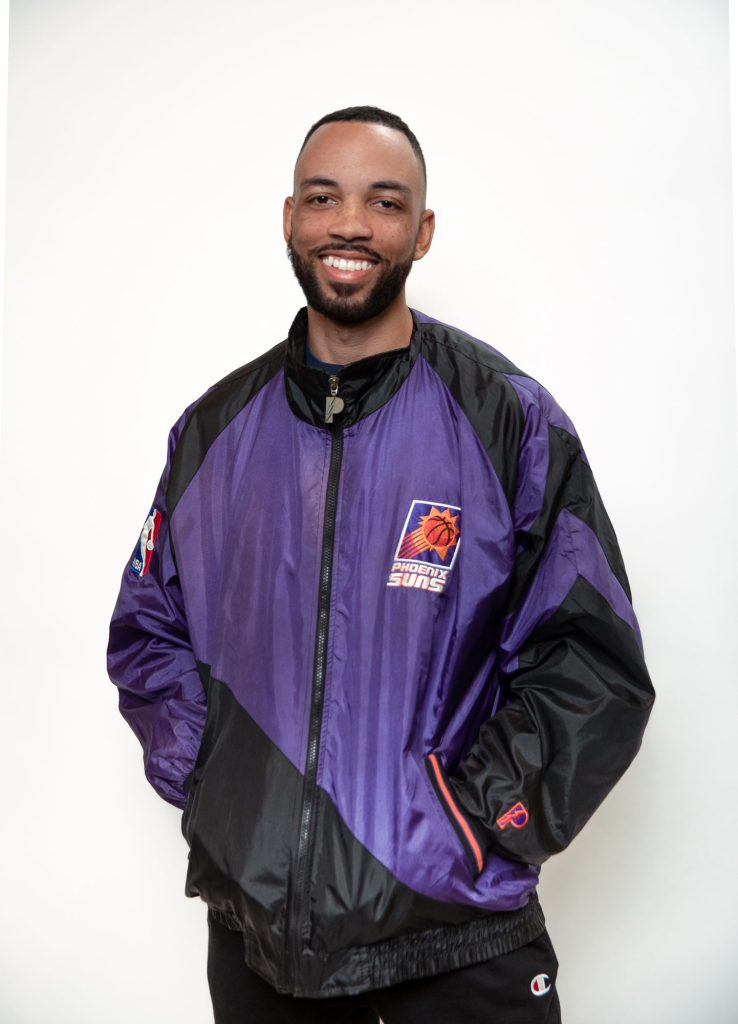
A satin team jacket has a sheen that shifts under indoor light. Wear it over a simple knit with dark denim when you want the jacket to lead. With a nylon windbreaker, try a cotton tee and trousers with a firmer structure. The contrast between fabrics gives the outfit definition even when the colours are restrained.
Check where the jacket ends relative to the layer underneath. A little T-shirt showing below a cropped jacket looks deliberate; a long sweatshirt bunching beneath an elasticated hem feels cumbersome. Try the jacket both fastened and open, as they are effectively two different shapes.
Small practical details decide whether a jacket stays in rotation. Check that the pockets are comfortable, the fastenings work and the lining lets your arms move freely. If you plan to wear an older windbreaker in the rain, judge it on its present condition, not its original spec.
 How to buy vintage sportswear online
Compare the listed measurements with a similar item you already own and like wearing. For tops, check chest width, length and sleeves using the seller’s measuring method. For a jacket, allow room for whatever you’ll wear beneath it. A size label alone can’t answer those questions.
Read condition notes alongside close-up photographs, paying attention to the neckline, underarms, cuffs and any printed or embroidered details. A softened, faded print may be exactly what you want; a damaged seam may need repair before the piece earns a place in your wardrobe. If a photo leaves an important area unclear, ask the seller.
If a particular era matters to you, look for clear photos of the label and an explanation of how the piece was dated. A championship year in a graphic describes the event, not necessarily when the shirt was made, and familiar logos also appear on later reproductions. Treat age, condition and your interest in the design as separate buying decisions.
 Quick answers
Can you wear a vintage sports jersey somewhere smarter?
Yes, in a relaxed setting. Pair it with tailored trousers, a long-sleeved layer underneath and clean leather shoes so the jersey reads as a deliberate choice rather than a gym kit.
Should you size up in vintage sportswear?
Not automatically. Vintage sizing varies widely by decade and maker, so go by the measurements rather than the label.
How can you tell if a vintage tee is genuinely old?
Look at the label, stitching and fabric, and ask the seller how it was dated. Single-stitch hems are a common clue on tees made before the late 1990s, but no single detail is proof on its own.
Start with one piece you’ll actually wear
Before checking out, picture the piece in two outfits built from clothes you already own. A team sweatshirt that works with both jeans and wool trousers has a clear place in your week; a jersey that needs an entirely new wardrobe around it deserves a second look. Start with the piece you can imagine reaching for on an ordinary morning, and build from there.